admin
admin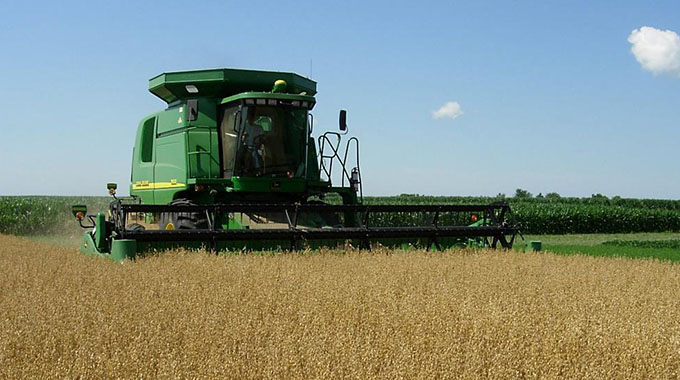
An ambitious, but potentially achievable target of a wheat harvest of 415 000 tonnes was set last week, giving Zimbabwe for the first time ever self-sufficiency with perhaps a small carry over into the next harvest.
A lot of planning has already been put into the scheme, as Vice President Constantino Chiwenga made it clear last week, to make sure that a practical inputs and funding arrangement, backed by proper contracts and funded largely through the private sector, is organised.
There are many factors that allow farmers to triple the land area devoted to wheat.
First, since irrigation is used throughout with no significant rainfall in Zimbabwe’s winter months, there is very little risk from adverse weather.
If the irrigation water is there and the pumps and other irrigation equipment are working, then it is easy to work out how much a farmer can grow.
It is here where there may be a gap between the target and the actual area planted.
In all business sectors, and this includes farming, there are people who are overoptimistic and promise more than they can deliver.
But even if some farmers have exaggerated their irrigation potential, and even if there is non-functioning equipment listed as functional, it should still be possible to come close to the target.
And at worst, doubling the crop would still be a major achievement.
The second area is finance.
Here, banks and finance houses are faced with lower than usual risks when lending to farmers.
Not only is the irrigation a positive factor, but farmers with access to irrigation and experience in growing irrigated crops are likely to be among the better farmers.
Wheat, like tobacco, is not subject to side marketing.
You cannot, for example, buy a bucket full of wheat in Mbare Musika. All wheat, just like all tobacco, has to be sold within the formal system so cheating and welshing on loans becomes impossible.
And that irrigation equipment is useful as initial collateral before the actual crop in the ground takes over.
Because it is so easy to check that a farmer does have the land, equipment and access to water required for the crop, the problem of cheats entering the system when contracts are awarded is negligible.
Farmers still face three other problems, and the Government has made arrangement to sort these out. First pumps need electricity.
A minority of farmers have already installed solar panels to drive their pumps, but while the capital costs pay for themselves in time, by savings on Zesa power, not every farmer has the savings.
So most still rely on Zesa and even the farmers with solar will produce more if they have water at night as well as during the day.
Zesa has promised that it will supply uninterrupted power to farmers. This is in some ways the most important requirement.
A lot of farmers who needed supplementary irrigation during the summer cropping season, thanks to the abnormal distribution of rain showers, have complained that intermittent supplies did reduce their harvests.
The second is some sort of assurance that they will not lose money. Vice President Chiwenga did not announce a fixed pre-planting price. It is a bit premature for that since no one really knows how inflation will run over the next few months.
What he did announce was that as the harvest is gathered, the farmers will get a price that covers their costs with a 20 percent mark-up.
We assume that these will be costs of the efficient farmers, thus applying pressure on all to manage their costs effectively so that they get the full margin, and do not chew most of it up in unnecessary costs.
The third requirement will be the harvesting. Mechanical operations involve hiring and sharing of equipment. Some intervention may well be required to ensure that equipment owners cannot profiteer.
As a side note it is perhaps worth noting that all wheat, and its simpler ancestors, was harvested by hand up to the middle of the 19th century and that even today there are many parts of the world where hand harvesting continues.
Even if Zimbabwe becomes self-sufficient in bread wheat, there might still be need for small imports of the harder durum wheats, which have yet to be grown successfully in the country despite more than 55 years of modern irrigated wheat production, but these imports will be minor. Being self-sufficient will bring huge benefits to the country and to the consumers. For a start shortages end.
No longer will people have to worry where a ship is docking.
Secondly prices are fixed at the end of the harvest. We will know exactly how much our wheat will cost for the next 12 months.
The foreign currency costs for a major import cease, although a modest part of those savings go on some fertiliser and chemical raw materials.
But the biggest single advantage is that we will be using our own soil, our own sunshine, our own water and our own working hours to grow and harvest the wheat, adding to our national wealth rather than someone else’s.



 Online Reporter