admin
admin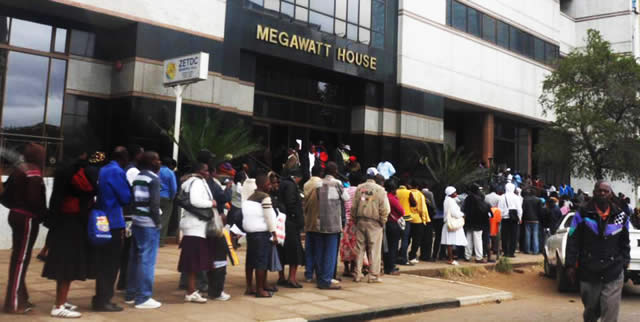
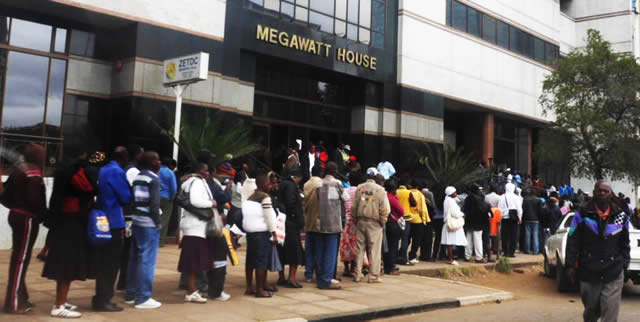 ZESA Holdings subsidiary Zimbabwe Electricity Transmission and Distribution Company, plans for new strategies to collect about $80 million a month to recover nearly a billion dollars owed by customers are a welcome development that could help improve power supply.
Managing director Engineer Julian Chinembiri told The Herald in a recent interview that the strategies, specific to different categories of the company’s customer base, would soon be presented to the company’s board and its parent ministry of Energy and Power Development, for approval.
Given the challenging economic environment, it is a no brainer that there are few opportunities to increase revenue inflows and the possibility of a tariff increase are almost non-existent after recent attempts to hike the rates were turned down by the Zimbabwe Energy Regulatory Authority.
As such, we strongly believe that while efforts are in overdrive at central Government level to address challenges besetting the economy, solutions at individual company level to sustain operations should be applauded, which in Zesa’s case involves recovering what the utility is owed.
Arguably, if successfully implemented, the strategies will make available significant funds that the power utility can commit to maintenance, replacing vandalised and stolen electricity infrastructure as well as expanding the company’s network thereby growing its revenue base.
This is because availability of financial resources is critical to efficient generation, transmission, distribution of electricity as well as minimising interruptions to supply of the vitally important commodity of electricity, which in turn is one of the basic enablers for economic growth.
We also applaud the company’s plans to increase the number of customers on prepaid meters, which is a sure way of ensuring that customers pay for power and also stay cognisant of the need to save the energy while this would prevent further accumulation of unpaid bills.
Already, Zesa has completed the first phase where about 530 000 customers were placed on prepaid metering system and adjudicated on a tender for an additional 150 000 gadgets for the prepaid system underway.
Recently, the company reached an agreement with ferro-chrome producers to go on prepaid metres.
We also understand the utility plans to roll out smart metering technology, an advanced and intelligent form of the prepaid metering system, targeting large consumers of power, which will improve revenue inflows.
The plans by Zesa to improve the flow of financial resources to improve consistent of supply of power deserve all the support and should be implanted in the fastest way possible, considering its strategic importance.
This is particularly so given that Zesa recently secured $150 million under a debt factoring arrangement it entered into with the Africa Export-Import Bank. Debt factoring is a form of commercial finance which allows a business to sell its debtors (accounts receivable) to a third party in return for an immediate cash advance.
The transaction was on the back of cash flow streams guaranteed by revenues from customers on prepaid (meters) and Zesa will use the money to pay its creditors including suppliers to re-establish good commercial relationships.
The suppliers are mostly regional power producers where Zesa imports power to boost local supply.
It must be noted that adequate financial resources are critical to minimise supply and distribution interruptions for a country already battling to stem out debilitating shortages due to limited generation capacity while enhancing creditworthiness and capacity of the company to reinvest in capital projects.


 Online Reporter