Online Reporter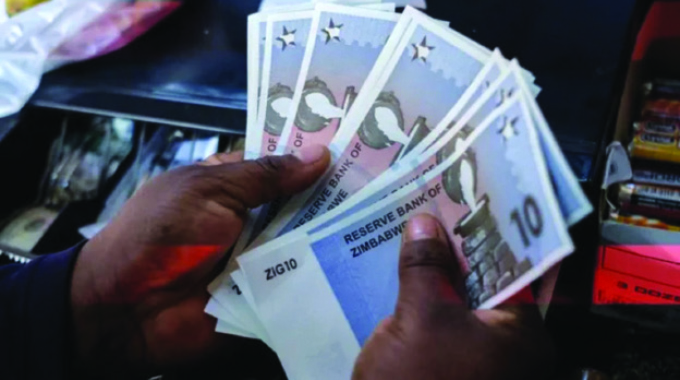
ZIMBABWE’s low inflation environment is continuing with monthly inflation falling to 0,3 percent in June in ZiG terms, and -0,2 percent in US dollar terms, the near concurrence showing exchange rate stability.
The May monthly inflation in ZiG terms of 0,9 percent reflected the result of the lifting of any regulation on what exchange rates retailers could use. With the strength of the ZiG having been established before the removal of the regulation, all that happened was that most retailers rounded up their till rate from ZiG31 and some cents to ZiG32 and that tiny movement saw monthly inflation rise very slightly.
However, retaining the May exchange rates at the tills in June meant that prices remained almost identical that month in ZiG terms and the tiny increases in price noted were thus because of rises in prices by producers.
This retail rate stability seems destined to last. Already one major retailer has moved their exchange rate to ZiG31,95, hardly a major drop on the more common ZiG32, but a sign that in a competitive market, looking for price advantages of a seventh of one percent seems worth at least a try.
The retail exchange rate is very close to what the black market dealers pay when they buy US dollar notes, the small premium in the parallel market being chewed up by the large margin dealers in that market charge between their buy and sell rates.
This has meant that black market dealers no longer hang around the entrances to supermarkets or irritate customers in-store by offering to exchange their foreign currency.
While efforts in the past saw police action against these dealers, they have been pushed off the streets these days because no one is really interested in doing business with them. Market forces have seen them off.
Those quoting parallel rates almost always choose the ask rate in that market, what the dealers charge for US$1, rather than the significantly lower bid rate, what they pay.
While banks tend to work on something a little under 5 percent between the two rates, it is not unusual for a parallel market dealer to work on a 20 percent margin.
Other recent news has shown two positive trends for the ZiG, the percentage rise in local transactions using this currency to 43 percent and rising, so that a majority of local transactions are likely to be in local currency with two or three months, and the trend of those with ZiG bank accounts to let the money stick in the bank a bit longer instead of spending it as quickly as possible.
These signs of normality are driven by the currency stability and low inflation. There will almost certainly be some drift down in the ZiG compared to major currencies like the euro or US dollar, since that is normal in developing country currencies.
But the drift for something like the rand is very slow and that is likely to be seen in future ZiG drift.
There are still those who like to look at annual inflation rates and here the ZiG stability since the rate adjustment by the Reserve Bank of Zimbabwe in September last year, with just that odd monthly jump in both US dollar and ZiG inflation in December, will only really be reflected in the annual rates from the September or October annual figure when the 12-month rise in the consumer price index will be the 12 low inflation months.
The jump of more than 10 percent in US dollar prices in December last year has never really been explained by those who pushed up the prices in that supposedly stable currency. But before that, and since then, US dollar prices were just creeping up by roughly the US rate and reasonable stability in the ZiG rate since that September adjustment has seen the ZiG inflation rate roughly following the US dollar rate and thus showing the growing strength of the currency.
Annual inflation rates are not much use in looking at trends when we are dealing with different environments; they simply tell you what happened, not what is happening or likely to happen.
The annual rates from October onwards will be showing the trend and thus be useful.
The far better guide at present is the growing long series of monthly rates since the authorities managed to get the exchange rate of the new currency at the correct level, backed by the successful efforts of the Government with its fiscal policy and the Reserve Bank with its monetary policy of making sure there are no taps of creating money out of nothing, what is often called printing money.
ZiG stability and consequent low ZiG inflation is these days driven by the working and highly conservative policies of the fiscal and monetary authorities, the fundamentals, working through market forces rather than by attempts to set exchange rates by fiat, the position that obtained since the end of 1965.
This switch means that everything is now based on something solid and real.
At the same time, the growth in foreign currency inflows and the growth in the surpluses of inflows over outflows has provided another source of strength for the stability of exchange rates.
In normal economies with a local currency for all local transactions, the exchange rate is largely fixed by the current account, showing what forex flows in and out, and this is more likely to be the position in Zimbabwe as we steadily progress to that normal single internal currency.