Online Reporter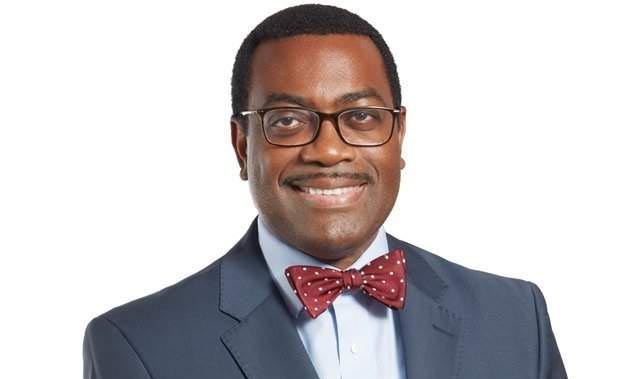
WITH the finalisation over the next few months of the Second National Development Strategy, taking over from NDS1, which closes at the end of this year, the Government hopes for considerably more capital spending by being able to borrow, where appropriate, longer term concessionary financing.
A lot of work has already been done on clearing Zimbabwe’s debt arrears and creating a suitable and agreed debt resolution process, the more complex version of the planned payment system that sees ordinary people clear their debts.
During this process, Zimbabwe has been showing the commitment that was demanded when President Mnangagwa set up the process towards the end of 2022, bringing in Dr Akinwumi Adesina, who is now outgoing president of the African Development Bank (AfDB), and former Mozambique president Joachim Chissano, the High-Level Facilitator, to lead and support the process.
Both facilitators were willing to take major public roles because they saw that serious commitment by the Zimbabwean Government, so they would be helping to implement success rather than trying to cover up failure.
The AfDB, despite being one of the international banks owed arrears, was willing to make the essential finance available for the working out of the new process, again a sign of its commitment and its trust in Zimbabwe.
Meanwhile, talks are progressing well with the International Monetary Fund, which tends to take the leading role in signing off on a country’s financial health. Zimbabwe is willing to go far with the IMF, including what amounts to letting the fund see the books and making sure that everything is being run properly.
Zimbabwe has been building up its solid reputation for fiscal and monetary conservative structures during the Second Republic, basically refusing to borrow or print money for running the country’s administration, and even on the capital budget expecting the taxpayers to carry the load with just some short term borrowing where it can be guaranteed that a new source of income will be created that can service and pay off that borrowing.
This has hampered Zimbabwe’s growth, impressive as that has been under the Second Republic. Most Developing countries are able to borrow prudently for building up the sort of infrastructure that creates new income streams just not instantly and immediately.
This is why concessionary finance arrangements exist, to make this possible by making the interest payments affordable over the longer period required until enough income is generated to service and pay off the debt.
Just like private citizens, Zimbabwe is expected to pay off what it borrows, and obviously like a private citizen it needs lower rates of interest and other concessions if it is going to borrow for the equivalent of longer-term borrowing, such as for a housing mortgage.
The debt arrears clearance process is unlikely to see any cancellation of Zimbabwe’s debt. We are already better off than the standards set for that to happen. But what we must hope happens is that the bulk of the debt arrears can be rescheduled and that an agreed payment process is put in place that will also give priority to any special debts that need to be paid off earlier.
This is not unusual and the fact that the European Union has now moved away from the sanctions regime means that there are enough votes for any agreement that meets global standards and is considered serious and sensible.
Zimbabwe’s commitment will be needed, but as Zimbabwe has been active in showing this commitment over almost three years of talks, having already made a lot of internal and necessary reforms to its finances, we trust that we will be accepted.
Longer term concessionary financing is not going to be a solution to all our capital needs. We will need to continue our very strong investment drive to maximise the inflows of private sector finance. We will need to make sure our budget retains the capital budget as the second largest item after civil service staff costs.
Even once we are in a position to apply for some of the special schemes, we will need to show that we are serious, that we are making a significant contribution ourselves and not expecting the fund provider to carry the load and the risk.
In some ways, although at a quite different level, the relationship between a global or regional finance provider and a country has similarities of the relationship between a banker and business customer.
Just as a banker prefers customers who follow the rules and the contracts, so the financial institutions want their country customers to do the same. Emergencies arise and these can be taken care of, but generally it needs to be a smooth relationship.
The rise of Zimbabwean arrears was unfortunate and not always the fault of Zimbabwe. But the solidity of the pro-reform Second Republic first created the opportunity for a process to start, and then allowed that process to continue.
So long as we maintain our commitment to serious financial arrangements using our own and other people’s money, we will soon be back in the group of the majority of countries who have good relations with the international finance community.



 Bongani Ndlovu