admin
adminparalysed their potential to think creatively for their own development.
They tend to forget that Zimbabweans being children of Nehanda, Chingaira, Mzilikazi just to mention a few, have been euro-centralised to the bone marrow via the Western conceptualised type of education have become alien not only to their own communities, but to their families and their self-esteem.
What they fail to comprehend is that a baby monkey’s ability to jump from one branch to the other does not make it a baboon.
The greatest challenge that Africa faces is whether it can develop its own talent in line with the thinking of its pan-Africanist fathers like Nkrumah, Nyerere among others. It is sad to note that even after independence, the African intelligencia or intellectuals have failed to spearhead or lead the African continent to greater heights.
The common man and woman are still mired in abject poverty as these intellectuals and academics look up to Europe for solutions in solving the plight of their fellow countrymen. The dosages of good governance, democracy and trade liberalism they are getting from their European mentors have actually worsened the living standards of their poor African brothers and sisters.
None of them has attempted to look for African solutions to solve African problems. African engineers, lawyers, doctors, politicians, lecturers and so on lack the wisdom of coming up with theories and programmes of action that will develop and enhance the welfare of their nations.
This is mainly because they do “not realise” that there are many contradictions that exist between European education which is individualistic and elitist and African education which is people or society centred. Paulo Freire has observed that “there is no such thing as a neutral education process.
Education either functions as an instrument which is used to enable the integration of the younger generation into the desired system and bring about conformity to it, or it becomes the “practice of freedom”, the means by which men and women deal critically and creatively with reality and discover how to participate in the transformation of the world.
One of Africa’s illustrious sons Sekou Toure said “You must be a living part of Africa and her thought; you must be an element of that popular energy which entirely called forth for the freeing, the progress and happiness of Africa.”
One cannot help reflecting whether the so called educated sons of Zimbabwe are not wallowing in mental immiseration by failing to defend the Zimbabwean way of life and the Zimbabwean people’s God given space. Mararike correctly noted that slavery of the mind is far more destructive than slavery of the body or the exploitation of people’s material resources.
It is in this light that as Zimbabweans we need to reflect on the contributions being made by our own erstwhile university and college lecturers, politicians as well as our students. It is a fact that if Zimbabwe as a nation is to be a success story of a people who freed themselves from the neo-imperialist yoke of oppression to become a beacon of Africa’s development then lecturers, politicians and students must be at the forefront in defending their country and people’s interests. They should desist from working like arsonists and be Africa’s gallant fire fighters.
Fafunwa a renowned educationist defines education as “the aggregate of all the processes by which a child or young adult develops abilities, attitudes and other forms of behaviour which are of positive value to the society in which he lives”.
It is a fact that a period of trial is often needed to determine whether you are going in the right direction or not. A Zimbabwean who is educated must arguably be seen promoting Zimbabwean values as to influence the manner in which his/her society will develop. What is clear and espoused in this definition is the fact that education recognises the development of individuals, who are patriotic and have been mentally liberated and concern themselves with physical and vocational development of their society.
Another scholar, Aggarwal contends that education is the development of all those capacities in the individual which will enable him to control his environment. This is a functional definition that portrays education as an instrument of personal change. This shows that education is a developmental process.
It is painstaking to realise that in this day and age we do have sections amongst us who are already campaigning for a constitution that was simply cut and pasted and is not in any way a reflection of the views of the people.
The argument is that our Copac learned friends are simply there to lead the process and what they must simply do is to enforce the people’s democratic dictatorship so that we deprive reactionaries amongst ourselves from taking us back to where we are coming from. It cannot be denied that the Copac team is made up of people who are educated in the true sense of the word, but they must wake themselves up to the reality that education is a lifelong process; neither is it terminal nor is there age limit to education; it is undeniably a lifelong process, from the womb to the grave.
Surely, our departed lawyers like Chairman Herbert Chitepo, Dr Edison Sithole and Eddison Zvobgo would not have come up with such a flawed document. People’s views must be respected, it is their views that must make up the constitution. This is what Chitepo, Sithole and Zvobgo would have precisely done.
It is these men whose unquenchable passion for black freedom and genuine unadulterated independence propelled them to become revolutionaries and rise against the colonial system. The constitution making is a revolutionary process. It is a fact that there is no half way house to a revolution.
We are indeed African children of the global village, but our lives and those of future generations must be protected by a well written constitution. We must continue to fight for this good, for our survival must be in honour, a survival with growth, with freedom, with justice and glory.
What then will be the essence of being educated and being a people’s representative if as leaders of the people we want to impose our will on the people who elected us. It cannot be refuted that Mao was correct in saying that the combination of democracy for the people and dictatorship over reactionaries brings about a people’s democratic dictatorship.
According to Oladele Abiodun Balogun, education refers to any act or experience that has a formative effect on the mind, character or physical ability of the individual. In this sense, education in the Zimbabwean context must be firmly fixed in our experiences and the experiences of our parents in their struggle for Zimbabwe to become what it is today.
If we are to be educated Zimbabweans then we must be aware of where we are coming from. We must be fully informed of what Murenga, Mukwati, Chingaira, Chitepo, Takawira and others stood and fought for. As educated people we must represent our societies and defend the position of our fore bearers at all costs.
We must not simply be interested in exhibiting our Eurocentric grammatical prowess, but our education must make us true Zimbabweans. If we are to reflect on who an educated person is, then being an educated person must not be one’s ability is to memorise and speak English through and through.
One should always use his English as a weapon against the oppressor and not as a tool to endear foreigners to exploit his people. Educated people should be proud of how they are able to liberate themselves, claim their heritage and become custodians of their own lives, it is only then that we can become people of character.
Akinpelu gives us a vivid picture of what we as Africans understand to be the traits of an educated person. He says: “The educated man can be described as one who combines expertise in some specific economic skills with soundness of character and wisdom in judgment. He is one who is equipped to handle successfully the problems of living in his immediate and extended family, who is well versed in the folklore and genealogies of his ancestors, who has some skill to handle some minor health problems and where to obtain advice and help in major ones, who stands well with the ancestral spirits of his family and knows how to observe their worship; who has the ability to discharge his social and political duties; who is wise and shrewd in judgment; who expresses himself not in too many words but rather in proverbs and analogies leaving his hearers to unravel his thoughts; who is self-controlled under provocation, dignified in sorrow and restrained in success; and finally and most importantly, who is of excellent character”.
Politicians on the other hand should be able to discharge their social and political duties. They must show that they are one with the people. In fact they must show that there is a symbiotic relationship between them and the people they represent.
They must be respectable and discharge their duties transparently. An educated student, lecturer, politician among others must desist from greed, individualism and being involved in all sorts of evil social vices. An educated African individual must be able to make sound judgment especially on issues that are very central to the development of his or her nation or country.
This entails that a pragmatic and prudent politician must not mortgage state resources to foreigners. He must make it a point that whatever decision he makes is for the benefit of his people, so that they will break the dependency cycle that will keep the masses in perpetual servitude.
An educated person, be it a student at any tertiary institution must put others before self. Tertiary education must benefit the societies where the graduates are coming from. It is the manner in which they interact and fit themselves within society that determines whether they can be regarded as educated or not, if they lack a good character then there education has no value. If lecturers do not inculcate Ubuntu or hunhuism at university level then they are detaching themselves and the students that they teach from the societies where they will be coming from and therefore this becomes a waste of resources.
If they are politicians and they are not of good character this plunges the nation into turmoil. Education must be culturally functional in order to promote social responsibility, job orientation, political participation as well as spiritual and moral values.
Darlington Mahuku and Bowden Mbanje are lecturers in International Relations, and Peace and Governance with Bindura University of Science Education.


Online Reporter
- Herald
- July 31, 2026
- 3 views
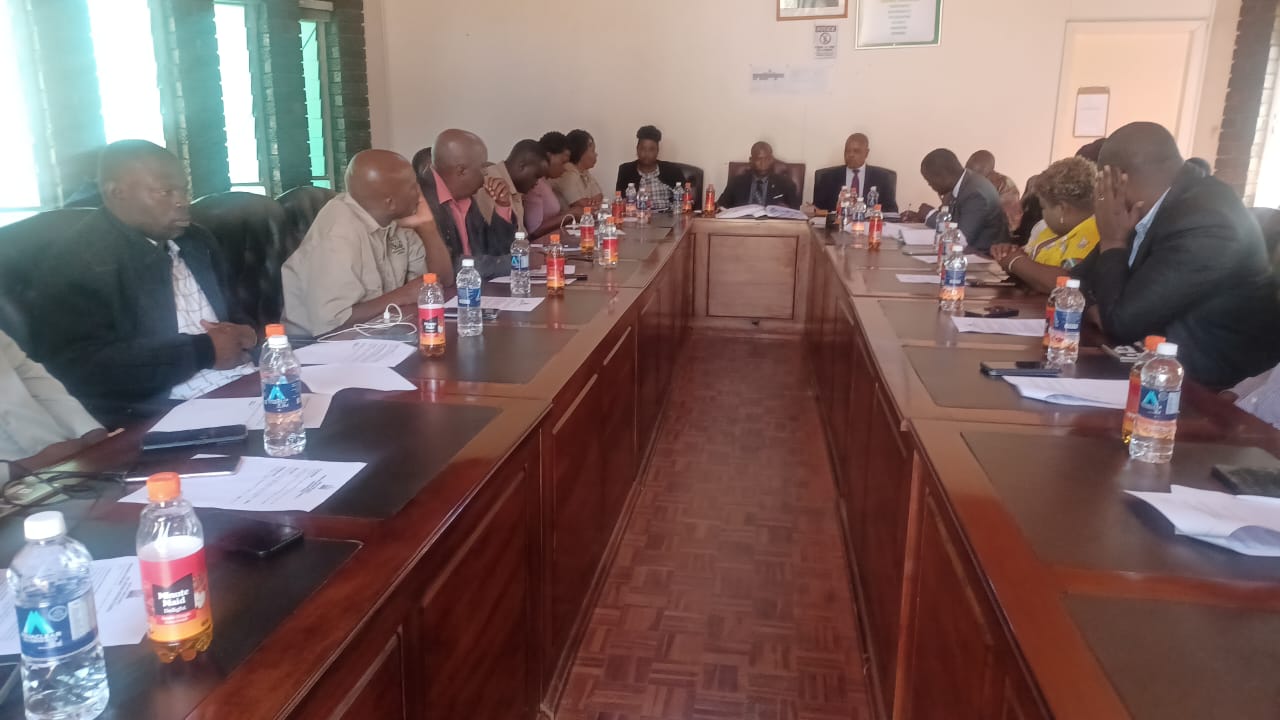
Norton Town Council renews integrity pledges
Diana Nherera Norton Town Council councillors and management on Thursday renewed their integrity pledges as part of the local authority’s commitment to promoting ethical conduct and combating corruption. Speaking…