admin
admin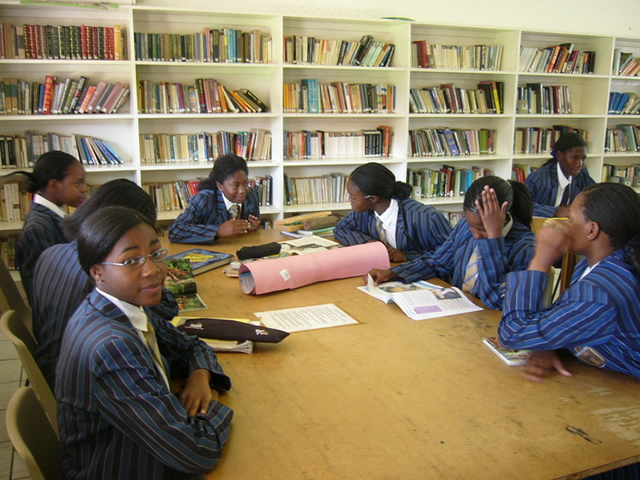
Stanely Mushava : Features Correspondent
A content gap has been brought about by the newly incepted education curriculum. School libraries are up for an overhaul as the Ministry of Primary and Secondary Education looks to make the sector more responsive to the needs and experiences of contemporary Zimbabwe. New learning areas and cross-cutting themes have cropped up in the Curriculum Framework for Primary and Secondary Education which the ministry is implementing in stages over the next seven years.
The areas, including Physical Education; Information and Communication Technology (ICT); Heritage Studies; Visual and Performing Arts; Family, Religious and Moral Education; Combined Science, require all-new reading material from Early Childhood Development (ECD) to Advanced Level.
The ministry is soliciting new content from publishers set to the dual design of building accomplished citizens while driving national development in the increasingly competitive global context.
Primary and Secondary Minister Dr Lazarus Dokora has insisted that the process underway is making a new curriculum rather than making an old curriculum new, hence the need for entirely fresh content.
That will see whole stacks being stripped of the familiar textbooks and new content, written within the parameters of the new curriculum, taking over.
Publishers are commissioning authors to write while the ministry approves proposals deemed to fit the requisite rigour, relevance and contemporaneity.
Representatives from ZPH Publishers, College Press, Heritage Publishing House, Consultus Publishing Services, Wesi Booksellers, Mazvitapa Publishers, Oxford University Press and Priority Project Publishers said they were already in the process of developing or acquiring new books.
They are, however, waiting for the issuing of the definitive syllabi to finalise their content.
Some of the major academic publishers spoke to Herald Review on the book value chain’s progress in the new dispensation.
“We want the drafts issued by the ministry to develop content for the new curriculum. As ZPH, we are approaching 85 percent of the required material,” ZPH Publishers director Blazio Tafireyi told The Herald Review.
“We are working with the curriculum section of the Ministry of Education at every stage in order to stay within the curriculum framework. We make proposals for a particular learning area which the ministry has to look at and approve,” Tafireyi said.
One of the major openings under the new curriculum is content for local languages.
Zimbabwe’s Constitution recognised Chewa, Chibarwe, English, Kalanga, Koisan, Nambya, Ndau, Ndebele, Shangani, Shona, sign language, Sotho, Tonga, Tswana, Venda and Xhosa as the country’s official languages.
The new curriculum constitution has accordingly adopted the languages, where a few “major” languages were previously available for study in schools.
Publishers have taken up the task and material for all the languages is currently work in progress.
“We have developed content for sign language, Tonga, Shona, Ndebele and English. Beyond the official list, we are taking on languages like Swahili,”
Swahili, French, Mandarin and Portuguese are some of the “cosmopolitan” languages embraced by the new curriculum.
“One of the exciting new areas, ICTs, is also shaping up well. This has not been done before at the level now required by the ministry but there is expertise among our people which we are harnessing into books to make it readily accessible to pupils,” Tafireyi said.
He said relevant research is underway to meet the challenge of entirely new subjects like Mass Displays and material will be available when the details come together.
Publishers struggle with keeping their work profitable in the age of piracy. Most set texts are pirated and sold at marked down prices at street corners.
Schools are also in the habit of buying a few copies for teachers and photocopying them for the students.
Publishers, meeting at the recent stakeholders symposium convened by the ministry, called on Government to protect creators so that they will not be disincentivised from the task of creating and updating material.
They also called for piracy audits in schools, partnerships for the development of new materials and a budget allocation for the purchase of books from the Ministry of Finance.
Publishers welcome the content overhaul as progressive in light of the evolving requirements of Zimbabwe’s economic, civic and cultural setting.
The ministry is looking to create the basis for outcome-based education where education ceases to be a conventional rote but responds to and initiates observable changes in society.
“The new emphasis on science and ICTs was long overdue. National imperatives like growing robust industries result from the kind of education available from the earliest stages,” Tafireyi said.
“Heritage Studies speaks to the need to define clearly what constitutes the Zimbabwean identity and is essential in many ways.
Tafireyi said there is need to take strides from a reactive understanding of history set against the background of colonisation and get to a place where we can stand on our own intellectually and in every other respect.
“So a lot of what makes it great to be Zimbabwe is coming in, building on the past while transcending stereotypes. A people always draw power from a reference point and in our case it is our cultural heritage and our identity.
“Our story does not begin or end with colonisation. There is a rich heritage that must be unearthed and incorporated into the educational content. The new content is speaking to diverse trends as they constitute a rounded education.
“The new areas can be expected to have imperfections. They are to be progressively modified and updated over time in line with Zimbabwean needs and experiences,” Tafireyi said.
While sport is an exclusive industry, there has not been enough effort from the education side to see that Zimbabwe scales up to global opportunities.
“With the new curriculum, young talent is going to be harnessed. Some of the great athletes come from an educational environment that supported not just as extracurricular activity but as a fully fledged learning area.
“Zimbabwean content is coming up and we will reap the benefits in time,” Tafireyi said.
“The same goes for the expressive arts. Imagine if we had 15 people like Oliver Mtukudzi and Thomas Mapfumo. We would be earning a lot of foreign currency just from exporting cultural products. It was an inspired move to bring up these new areas,” he said.
Tafireyi, however, lamented challenges of marrying new content to existing infrastructure.
“The science infrastructure, for example, has not been adequately developed to a point that allows practical engagement across schools. Maybe just three percent of laboratories are fully fledged. The rest either do not have enough apparatus while some do not even have a science lab however, content has to be forward-thinking and at the level of best practice even as the sector evolves,” he said.
A College Press representative said his company is progressing well in tandem with the new curriculum.
“The curriculum is being implemented in stages and we are also developing content from the early stages onward. This works our work manageable and thoroughgoing. Author capacity has not been a problem because Zimbabwe is generally acknowledged as a pool of sharp minds,” he said.
“The ministry’s move is salutary to the resourcefulness of Zimbabwe that has been at the periphery and is now being focused to answer the needs of the curriculum.
“Content is now being developed with the new parameters set by the ministry which is outcome based and responsive to the needs of the Zimbabwean society,” he said.
The publisher said the new curriculum is essentially the democratisation of education because the ministry opened its doors for consultative processes to engage parents, experts and other stakeholders what kind of content they wanted to see in the schools.
“We are already doing most of the newly recognised languages, some of which we have not previously developed content for,” he said.
Minister Dokora has emphasised an all-new approach: “We do not desire to get sugar-coated material. Publishers cannot take a book that was being used before, change the cover and call it new. We are not going to transform on old classics.”
Dokora said the new curriculum has its ears on needs of the globalised 21st century.
“There were two contending tendencies during the consultative process. One group asked: ‘Why change things that are good?’ The other group said: ‘We need to be relevant; we need skills,’” Minister Dokora said.
“‘What are these children going to do after graduating with 10 A’s? Is it enough for them to graduate into selling airtime, with literacy for typing on Whatsapp?’ The consultative process provoked an interesting debate about reform, skills and relevance,” Minister Dokora added.
ICT ventures are also part of the revolution and are developing and deploying e-learning packages and educational applications.
Feedback: [email protected]


 Online Reporter