Chronicle Editor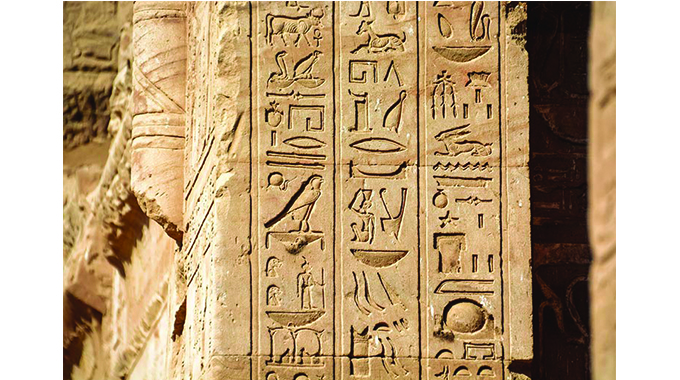
History lessons with Dr Manners Msongelwa
Egypt and Kush: In Egypt, two great civilised groups existed which were Egyptians and Kushians. The Nile River in Egypt is the longest river in Africa. It has two great tributaries which are the Blue Nile and the White Nile. The Nile was the centre of life through trade, transport and agriculture. The early people of the Nile had to learn to understand the river to control its flooding. Dam walls were built to stop the water from flooding the villages. Canals were also built to help water run through the fields. To calculate this Egyptians needed accurate measurements therefore they developed early forms of mathematics and Geometry which they called Geometrics. Egyptians came up with three seasons which they called Arket (the time for planting), Peret (the time for harvesting) and Shemou (the time when the Nile river flooded). Days were counted by phases of the moon called months. The flood cycle started after every 365 days and each month had 30 days and that left them with five extra days which they called Heryou Renepet.
Egyptian writing
The most vital steps to civilisation were the invention of Egyptian writing. The Egyptians adopted a picture way of writing called Hyroglyphics. The most important records of the Egyptians which have come down to us are on papyrus (paper). At first, Egyptians curved their writing on stones e.g. on the walls of Egyptian tombs and temples. They learnt how to make paper from papyrus reeds which grew freely on the Nile banks. The ink was made by mixing soot and vegetable dye. The Egyptian handwriting is called Hieroglyphics which means picture writing or sacred carvings.
Who learnt to write?: Pharaohs and their advisers. Priests learnt to interpret sacred writing. Scribes as they worked in civil services and were professional writers. The sons of rich men learnt to write as part of their education.
What did they write?: They kept records of their everyday business. Plays and stories of all kinds mostly about the gods. Letters of state business to foreign countries or personal letters. Books of medicine, signs and morals based on religious practises as well as social questions. Scribes were present in fields to record the size of the harvest so that proper text/record could be assessed. From this idea modern man developed writing for communication and Egyptian writing has thus made a great contribution to our present civilisation.
Agriculture: Crops such as wheat, barley and sorghum were grown. Their food was made up of bread and fish from the Nile. They kept a lot of sheep and goats but few cattle. Their animals were mainly for paying taxes to the Pharaoh. They also grew flex which helped them to make cloth. ShadufIt was like a see-saw, a bucket was fastened to one end to a pole and a heavy stone to the other side. The pole then supports the crossbeam layered across to short wooden posts. When the bucket is dipped into the river, a heavy stone acts as a centre weight and the bucket can rise easily and tipped into the irrigation charets. Today we have irrigation in most of our country but the idea was borrowed from Egypt and as years passed by Egyptians grew crops as a result of the irrigation system.
Pyramids: Pyramids were the mightiest tombs of all built by the Pharaohs for their burials. Together there were 80 pyramids which were built near the Nile. The first pyramid was built for Pharaoh Zhoza and it was designed by an Architect/Imhotep. It was made out of a tomb layered out of different levels and this gave an impression of steps and it was given the name Heroe. The largest was built for Pharaoh Khufu and it stands at Gizi near the city of Cairo, it took many years to build and many men were required for the construction. Pyramids were built during the season of Shemou where no work was done in the fields.
Egyptian beliefs: They believed in life after death and looked forward to the same kind of life which they were living on earth in the next world. The book of the dead was listed two sins which a man had to avoid which were cheating and killing. The Egyptians believed the soul left the body to be judged by Osiris the underworld god. The heart of the dead was placed on a huge scale and weighed against its sins, guilty souls were at once devoured by the jackal-headed god Anubis but good souls entered the world of the dead and the company gods. The soul that had been judged worth of eternal life could eventually enter the body but only if it was properly preserved and laid in a tomb. The re-entry of the soul into the body explained why Egyptians preserved the body of the dead (mummified).For kings and rich man, the preserving process of the body would last over two months, vital organs were first removed and stored in Alabo Jars while the body itself was dried and treated with spices of essence. NB: Much of Egyptian culture, writing and was lost and other point changed under the rule of the Greeks, however, the Greeks learnt more from Egyptian arts, religion, architecture and science.
Egyptian gods Horus — The sky god, his eyes were the moon and the sun. Ptah — He invented the arts, the god of the capital menu. Hathor — She was the goddess of beauty. Osiris — He was a god of the underworld. Rechoralchty (Ra) — He was the sun god. The word Pharaoh came from Per-au which means great house of leader. Pharaoh was the head of state and high priest; he governed with the assistance of Advisors, Generals and Priests. The Pharaoh was seen as a god and different from other humans. Women played a very important rule in the state and 4 women became Pharaohs themselves. Means of production and distribution of wealth was in the hands of the Pharaoh. Building of the temple and mining were state businesses. Most people were peasant farmers who worked and lived on land which belonged to the Pharaoh. The land was given as payment to the priest, officials and soldiers. Land which was owned could be passed from parents to their children. Those who worked for the Pharaoh were paid in regular gifts like grain, fish and other things. There were also crafted people who were involved as potters and sculptors. The survival of the economy of the society depended upon the growth and distribution of land. Peasant farmers grew wheat and barley.
λ Dr Manners Msongelwa is the president of History Teachers of Zimbabwe and a Teacher at Camelot College in Kwekwe


 Online Reporter