admin
admin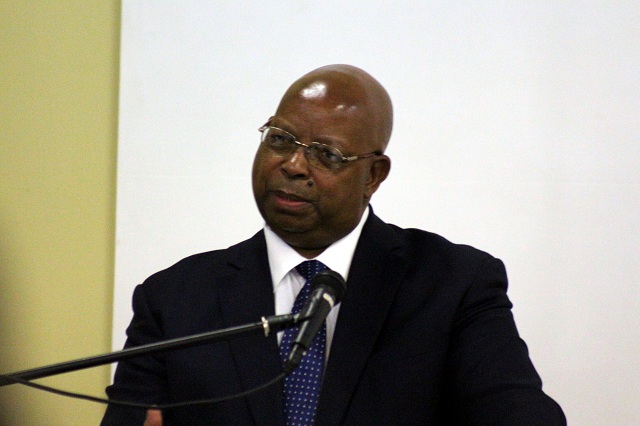
Roberta Katunga, Senior Business Reporter
DIPLOMATIC missions in foreign countries must transition from political diplomacy to investment economic diplomacy to adapt to the changing Foreign Service and enhance ease of doing business in the country, an official said.
Speaking at the Ease of Doing Business Indaba in Bulawayo on Friday, Speaker of the House of the National Assembly Advocate Jacob Mudenda said while the country seeks to reform legislation and policies locally, it was important for embassies to complement these efforts and be equipped to market Zimbabwe in their respective diplomatic missions.
Adv Mudenda said it was the duty of all staff at embassies including the ambassador to promote trade and investment as foreign services in other countries are changing.
“Over and above the usual political intrigue, our diplomats abroad must be mandated and equipped with the relevant skills to promote economic and trade relations as one of their primary diplomatic missions. Gone are the days when this was the preserve of the trade attaché,” said Adv Mudenda.
Adv Mudenda said Zimbabwe’s ranking on the World Bank’s Doing Business Report of 2015 which puts her at 155 out of 189 global economies; had a significant bearing on external perceptions and attractiveness to both local and international investors.
He said the continued negative perception of the country had the potential to scare away potential investors. Adv Mudenda said efforts by the Office of the President and Cabinet (OPC) which is responsible for the Ease of Doing Business reform agenda, should put Zimbabwe in the top 20 countries of the rankings.
“These current efforts being undertaken through initiatives such as this Indaba must put us in the top 20 countries in the ease of doing business rankings. Parliament has seen it proper to play its part in the national development agenda and actuate the vision of President Mugabe by contributing to the agenda,” he said.
Adv Mudenda urged people to move from mournful rhetoric to innovative and concrete legislative and policy solutions. Speaking at the same conference Deputy Chief Secretary in the Office of the President and Cabinet Dr Ray Ndhlukula confirmed that a One Stop Shop would be in place before the end of the year.
Addressing questions from Parliamentarians who attended the Indaba on why the previous One Stop Shop which was launched in 2010 during the Government of National Unity failed, Dr Ndhlukula said it did not stipulate the intended objectives and thus did not work.
“The problem was the officers there still had to refer decisions to head office which means the time issue wasn’t eliminated but it still took long for decisions to be made. At the moment we are back to where we were and are researching on how to set up an effective One Stop Shop that will enable us to attract FDI. In the previous set up there was no clarity of roles but with the new one we want to ensure senior people who are decision makers are part of the set up,” said Dr Ndhlukula.
He gave examples of countries like Zambia, Rwanda and Kenya whose economies and ease of doing business had improved after the setting up of a one stop centre. He said this would also ensure less time spent by investors who intend to do business in the country moving from one office to the other.
“Our problem is people have no respect for time and have no urgency. There are also too many levies and taxes that are paid by people who want to start businesses in Zimbabwe and this has a negative impact on investment,” said Dr Ndhlukula.


 Online Reporter