Chronicle Editor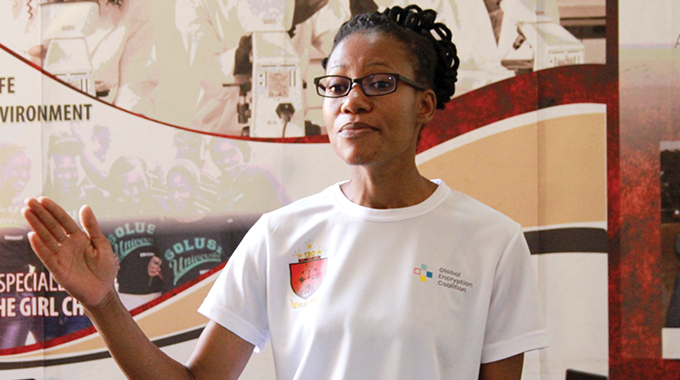
Amos Mpofu, [email protected]
IN a fast-paced digitally connected world, public and private entities have been urged to fully embrace encryption as an essential tool to enhancing the safety of their data while guiding against unauthorised access and malicious exploitation.
On Monday, the Seventh-day Adventist-run Solusi University hosted a workshop to commemorate the World Encryption Day where the Internet Society and the World Encryption Coalition engaged participants from various tertiary institutions on essential knowledge to safeguard their data against unauthorised access.

Lecturers from the National University of Science and Technology (Nust), Gwanda State University, Blended Education College of Southern Africa (Becsa) and Solusi University attended the event.
The Global Encryption Day is celebrated worldwide on October 21 since 2020. Encryption is a vital technology ensuring privacy and security for individuals, information and communications.
Internet Society Zimbabwe’s head of policy and governance, Mrs Charity Ncube, said driving encryption advocacy in the country was critical as it promotes integration of encryption principles across the spectrum.

“We celebrate the vital role encryption plays in keeping us safe and secure every day. We emphasise the importance of strong encryption for everyone and advocate for its advancement and protection,” she said.
“Our goal is to inspire and empower people globally to advocate for a safer and more secure internet — the internet we desire. “We stand united in promoting and protecting strong encryption while opposing any proposals that seek to undermine it.”
Mrs Ncube warned that weakening encryption endangers everyone by creating vulnerabilities that criminals can exploit, thereby compromising the security of our personal data.
“Without strong encryption, our digital lives are vulnerable to hacking, unauthorised sharing with law enforcement, malicious actors, or even invasive company employees,” she said.
“Weakening encryption not only jeopardises individual security but also undermines economic confidence in data protection and stifles innovation.”
Mrs Ncube said encryption makes it more difficult for hackers to interfere with financial lives, steal identities, or access photos meant only for loved ones.
“The beauty of encryption is that it protects us and keeps us safe,” she said.
Mrs Ncube said encryption has a long history of being used to protect sensitive information by militaries and governments and today it is used to protect data both at rest and in motion.
Data in this case refers to information stored on computers and devices, while in-motion data pertains to information being transmitted between devices and over networks.

Mr Ntokozo Ncube, a tutor at the Internet Society specialising in designing and deploying computer networks, took the podium to train attendees in practical skills for ensuring strong encryption. He applied his expertise to help participants understand encryption concepts through hands-on exercises, explaining why strong encryption matters and highlighting its key goals.
“Confidentiality ensures that data is encoded, making it unintelligible if intercepted. Authentication verifies the origin of the encrypted data, confirming that it comes from a trusted source,” he said.

“Integrity validates that the data has not been altered since it was encrypted, ensuring its reliability. Together, these goals underscore the critical role encryption plays in protecting sensitive information.”
Mr Mduduzi Mkandla, the deputy registrar at Solusi University, discussed the significance of encryption in legislation and how organisations can protect their digital assets, personal data and organisational secrets through the use of encryption.
Professor Lwazi Sibanda, the Dean of the Faculty of Science and Technology at the National University of Science and Technology (Nust), applauded the organisers of the workshop, saying she learnt valuable insights to share with her colleagues and apply in her teaching journey.
By hosting the event, Solusi University is reinforcing its commitment to advancing digital security and privacy in Africa’s academic landscape.



 Online Reporter