Online Reporter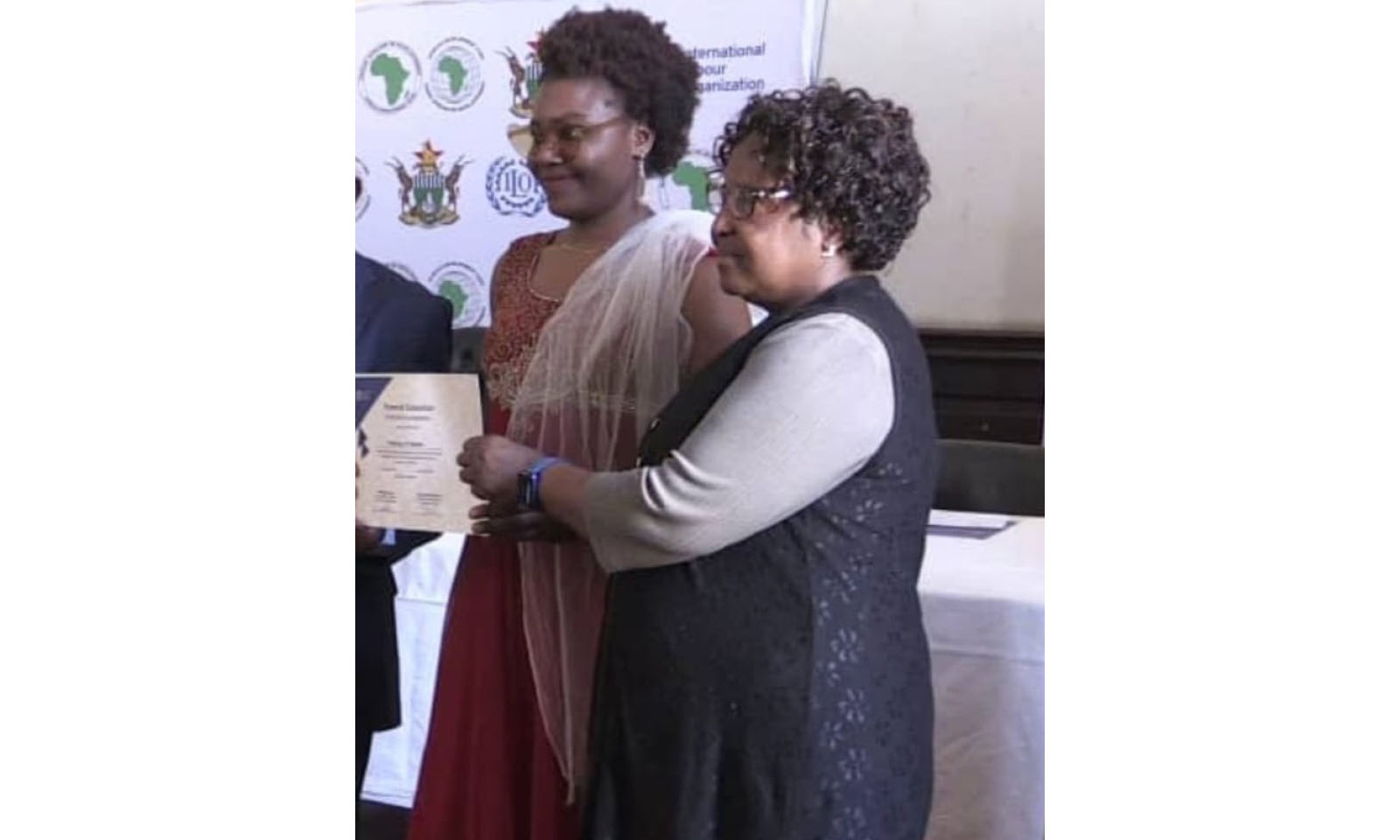
Gibson Mhaka
Zimpapers Politics Hub
One of the major priorities for the Government, essential for achieving Vision 2030’s goal of an empowered and industrialised upper middle-income economy, is the empowerment of female and young entrepreneurs.
This focus is particularly directed towards those with home-based businesses who often lack essential financial skills such as budgeting and profit management.
This skills gap limits their access to financial systems and support schemes. These initiatives provide essential resources and training, bridging the gap between young people, policymakers, and key economic stakeholders to contribute to the 2030 goal.
Responding positively to the Government’s call, the International Labour Organisation (ILO), in collaboration with the Government and various stakeholders, launched the Financial Education Training programme.
This initiative marks a significant milestone in collective efforts to empower women and youth through sustainable enterprise development across key areas, including Mutasa (Hauna), Mutare, Mutoko, Hurungwe (Karoi), Umguza, Masvingo, and Bulawayo.
The Business Growth for Young Entrepreneurs project — a blueprint of partnership and collaboration — was made possible through the combined efforts and resources of the African Development Bank (AfDB), the Government of Zimbabwe, the ILO, Business Development Service providers, and the private sector.
The initiative had set an ambitious goal of equipping 1 000 women and youth entrepreneurs aged 18 to 35 years with essential financial skills.
The programme ultimately exceeded this target, successfully training a total of 1 017 entrepreneurs — 768 female and 249 male participants — demonstrating a significant focus on empowering women in the business sector.
The positive results extended far beyond training numbers, showing a substantial impact on employment and business growth, leading to the creation of 2 246 jobs.
Minister of State for Provincial Affairs and Devolution for Bulawayo Province, Judith Ncube, hailed the partnership, saying it helps to equip women with the essential skills needed to navigate the complexities of financial management in our ever-evolving economic landscape.
In her speech, read on her behalf by the director of Coordination in her office, Mrs Boetsoarelo Noko, at the Financial Education National Certification Ceremony in Bulawayo, she stressed the necessity of the programme.
“Empowerment through financial education is not merely a goal; it is a necessity. It is crucial that we recognise the transformative power that financial management holds for women entrepreneurs in our society.”
Minister Ncube highlighted that the programme directly aligns with her Ministry’s mandate to empower women, promote gender equality, and develop SMEs.
“When women are equipped with sound financial management skills, they not only enhance their businesses but also transform their livelihoods and uplift their families and communities.
Financial literacy leads to better budgeting, increased savings, informed investment decisions and growth of business.
It is the key to breaking the cycle of poverty, building resilient households, and promoting development.”
The Minister concluded with a call to action:
“I would also like to invite local organizations and businesses to join us in this endeavour.
“Together, we can create a supportive network that fosters financial education and empowerment for women and youth across Zimbabwe.”
ILO representative Mr Fortune Sithole further elaborated on the training’s focus, stating that it seeks to reduce the vulnerability of young people by equipping them with the knowledge and tools necessary to navigate the complexities of money management.
“Financial Education equips women and youths with the knowledge and tools necessary to navigate the complexities of money management, the financial sector, employing a wide range of financial competencies including financial planning and budgeting.”
He confirmed that a solid grounding in financial literacy — including setting financial goals, building a savings plan, and managing debt — is the cornerstone upon which individuals can build a secure financial future.
Mr Sithole also noted the project’s success in developing the capacity of Government Officials and 22 Business Development Service (BDS) providers with ILO tools, ensuring the programme’s sustainability and potential for replication beyond the current AfDB support.
Mrs Thubelihle Ndlovu, Director of Purse on Point Africa and implementing partner for the ILO Financial Education program in Bulawayo, affirmed this need by pointing out the significant gap in financial knowledge among start-ups.
“Our partnership with the ILO has brought about a huge impact in the lives of our entrepreneurs.
“Financial education plays a huge enabling and catalytic role in the success of entrepreneurs; it shapes the ecosystem and the economy at large. In partnership with the ILO, we have seen over 1 000 entrepreneurs capacitated.
“They are then able to build, grow, and drive business success, leveraging the strong and informed financial literacy foundation given by the ILO Financial Education programme.
“As Purse on Point seeks to create African women change makers through multipurpose entrepreneurship and Financial Literacy, we have trained over 8 000 women in Africa to date,” she said.
Ms Patience Nkala, a 28-year-old entrepreneur in the painting and landscaping business, highlighted how the financial education program helped her overcome challenges, particularly in managing business finances and understanding the different types of business goals.
“I learnt a lot about managing my business finances. I didn’t know there were short-term, medium-term, and long-term goals, I thought all goals were the same.
“I had been struggling to run my business, but after the training, I was well-informed, and my challenges in managing my business finances are now solved. The programme assisted me greatly,” she said.
Another beneficiary, Mr Kevin Maseko (30) of Jumatech Services Pvt Limited, an engineering company, hailed the programme, saying:
“It has been an eye-opener and game-changer for how he will run his business.”
He further emphasised the programme’s broad relevance:
“I benefited a lot as the ILO’s Financial Education Programme addresses the pervasive issues of limited financial literacy, recognising it as a critical constraint in various development contexts and a limiting factor contributing to the reduced incomes of vulnerable groups,” he said.
The strong testimonials confirm that the programme is delivering tangible, transformative skills, directly contributing to the growth of resilient enterprises and the attainment of national economic goals.
It also shows that by addressing the fundamental barrier of limited financial literacy, especially among women and youth running home-based enterprises, the private sector can rapidly expand and contribute meaningfully to national development targets.
The strong multi-stakeholder partnership involving the AfDB, Government, and ILO is crucial for ensuring the program’s longevity and replication, providing a clear blueprint for how collaborative efforts can deliver transformative results and foster an environment where every entrepreneur has the tools and knowledge necessary to thrive financially.
Ultimately, the impact of this training extends far beyond individual businesses; it directly advances Zimbabwe’s Vision 2030 by promoting financial resilience and stability at the household and community level.
The commitment by the Government to continue collaboration underscores the recognition that financial management is more than just numbers. It is about shaping the nation’s future.
By cultivating a financially savvy generation of entrepreneurs, Zimbabwe is building a robust foundation for an upper middle-income economy, where informed financial decisions, increased savings, and strategic business growth collectively break the cycle of poverty and drive inclusive, sustainable national progress.