Chronicle Editor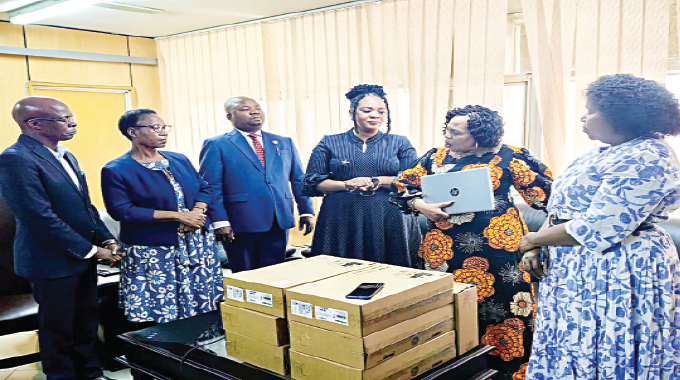
Mthabisi Tshuma in Harare
THERE is a need for enhanced capacity building whereby skills, processes and resources are developed and strengthened among women, under-served communities and small to medium enterprises to foster sustainable livelihoods in a fast-changing world.
Information Communication Technologies (ICTs), Postal and Courier Services Minister, Dr Tatenda Mavetera, made the remarks here on Tuesday during a handover ceremony of 20 computers to the Ministry of Women Affairs, Community, Small and Medium Enterprises Development.
The computers were sourced by the Postal and Telecommunications Regulatory Authority of Zimbabwe (Potraz) and the ceremony was attended by Women Affairs Minister Senator Monica Mutsvangwa, ICT Deputy Minister Cde Dingumuzi Phuti, permanent secretaries Dr Beulah Chirume and Dr Mavis Gumbo, Potraz directors and senior Government officials.
“Empowering the Ministry of Women’s Affairs is an essential starting point for capacity-building initiatives. Equipping this ministry with the necessary resources and knowledge in utilising ICT tools effectively, will have ripple effects on other sectors that cater for women’s needs,” said Dr Mavetera.
She said the empowerment will enable the Ministry of Women’s Affairs to provide targeted support services such as training programmes or workshops specifically designed for women entrepreneurs in various fields.
“It will also facilitate access to information and resources through online platforms dedicated to addressing issues pertinent to gender equality and women’s rights,” said Minister Mavetera.
She said empowering women through access to ICTs does not only bridge the digital divide but also contributes to social inclusion and gender equality.
“Capacity-building programmes that provide training on digital literacy skills equip women with the essential knowledge required for participation in today’s digital world. The programmes also enhance economic opportunities by opening up avenues for entrepreneurship and self-employment,” said Dr Mavetera.
She said in addition to women, under-served communities also benefit from access to ICTs.
“These communities often lack essential services and opportunities due to geographical barriers or other forms of marginalisation,” said Minister Mavetera.
She said with access to technology, they can overcome the obstacles and gain access to vital services such as education or healthcare.
Dr Mavetera said applications such as e-learning platforms have the potential to revolutionise education in remote areas by providing access to quality educational resources. Similarly, telemedicine services leverage ICT tools to deliver healthcare remotely thereby bridging the gap between medical professionals and patients in under-served communities.
She said e-Government initiatives also enhance citizen engagement and enables convenient delivery of public services.
Minister Mavetera said access to ICT tools is not only beneficial to marginalised groups but also for small enterprises.
“By integrating technology into their operations, these enterprises can enhance productivity and competitiveness. For instance, digital marketing strategies enable small enterprises to reach a wider customer base without significant financial investments in traditional advertising channels,” she said.
Dr Mavetera said online marketplaces provide a platform for small enterprises to showcase their products globally and expand their business networks beyond local boundaries.
She said ICTs facilitate efficient supply chain management systems that improve inventory control and reduce costs associated with manual processes.
“Cloud-based solutions offer scalability and flexibility that are particularly advantageous for small enterprises as they do not require substantial upfront investments in IT infrastructure,” said Minister Mavetera. — @mthabisi_mthire.



 Online Reporter