Online Reporter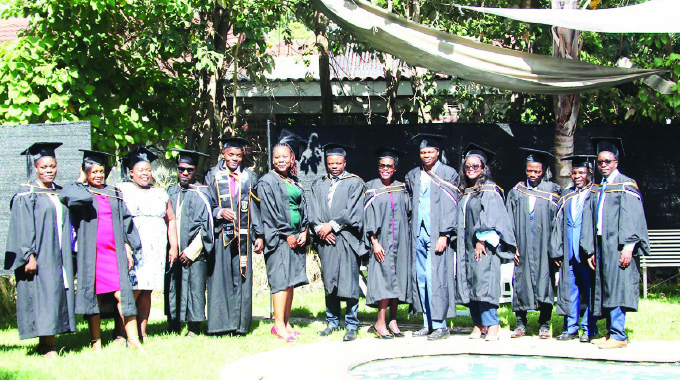
The National Youth Day was proclaimed and instituted by the Government in 2017 for the nation to recognise and celebrate young people.
The day was also set aside to increase awareness and accelerate youth empowerment and development.
It was from the realisation that there is need to include youths in all affairs to do with them. I always say anything for the youths without their involvement is not for them. The 2025 celebrations, which are expected to take place at the Barbourfields Stadium in Bulawayo, will spotlight the promotion of Government programmes and projects that foster youth empowerment and develop young people.
The objectives of the celebrations are to mark National Youth Day 2025; promote the Youth Service in Zimbabwe; launch the Youth Digital Skills Programme; promote youth empowerment and development; and lobby for increased investment in youth empowerment.
Theme
This year’s celebrations will be held under the theme “Empower Youth, Secure the Future”.
As you know, Zimbabwe is a relatively youthful country. It is currently on an ambitious and exciting economic recovery trajectory. The Ministry of Youth Empowerment, Development and Vocational Training is thus seeking to identify and unlock socio-economic opportunities for youths, who happen to be the majority of our population. Empowering youths is empowering the majority. The country’s future is likewise determined by the majority.
Presently, the ministry is drafting a youth empowerment strategy for that very reason.
Events like the National Youth Day increase awareness, commitment and investment in youth development initiatives, programmes and projects.
This year’s celebrations will begin on February 20. This will be a day for showcasing Government programmes that promote youth empowerment and development; youth talent; raising awareness on the Youth Service in Zimbabwe and promoting digital skills among young people.
It will also provide opportunities for youth networking, capacity building, market linkages and awareness raising on prevalent emerging issues, including drug and substance abuse.
The expected activities include a clean-up campaign and community outreach on drug and substance abuse led by the Youth Service in Zimbabwe; youth dialogue sessions to promote the Youth Service in Zimbabwe and digital skills and coding; and youth exhibitions; as well as music, dance and sporting activities. The National Youth Day main celebrations will be held on February 21 and the President, His Excellency, Dr ED Mnangagwa, will be the guest of honour.
More than 20 000 youths from all the provinces in the country are expected to attend this grand event.
Nationwide celebrations
The event is being coordinated from the district level going upwards.
This is a national event and we are embracing the whole-of-Government approach. Those from provinces who fail to make it to Bulawayo will join the celebrations through an online platform set up at selected venues. Each province will gather and engage with the President in real time.
This will support the launch of the Youth Digital Skills Programme as an exhibition of proof of concept.
Key highlights of the main celebrations are expected to be the President’s remarks, showcasing of the Youth Service in Zimbabwe programme following a Cabinet resolution of April 13, 2021 that approved the re-establishment of the initiative and set clear conditions for its implementation and expected outcomes, as well as the launch of the Zimbabwe Digital Skills Development Programme, which will target 1,5 million youths.
Invited foreign delegates will share solidarity messages at the main celebrations.
Youths from all walks of life, including youth associations, schools, vocational training centres, colleges and universities, have been invited to attend the event.
Other participants will include Government and embassy officials, private sector players, development partners and civil society members.
Towards youth empowerment
The Ministry of Youth Empowerment, Development and Vocational Training has embarked on a massive transformation of all vocational training centres (VCTs) in the country.
Vocational training refers to instructional programmes or courses that focus on imparting skills required for a particular job function or trade.
Our VCTs are now venturing into productive partnerships with the private sector.
The partners include British American Tobacco Zimbabwe, Plan International, Silveira House, Mimosa and Boltrec.
Since the relaunch of the Youth Service in Zimbabwe, more than 1 000 youths have graduated at Dadaya and Vumba Youth Service in Zimbabwe training centres.
The Youth Service in Zimbabwe programme is crucial in nurturing young people into responsible and resilient citizens with a clear sense of national identity and respect for national values.
It seeks to provide career guidance and impart life and entrepreneurial skills for resilience and employment creation.
Expected outcomes of the Youth Service in Zimbabwe include youth employment and employability; reduction in juvenile delinquency; fiscal savings and social services; improved community infrastructure; and national identity, unity and social cohesion The Ministry of Youth Empowerment, Development and Vocational Training hosted youth empowerment forums in various provinces across the country.
The key objective of the forums was to identify and unlock socio-economic opportunities for the youth by engaging policymakers in key sectors of the economy.
Promoting high-value projects
The ministry has prioritised high-value projects in youth empowerment, particularly in livestock and horticultural production, to enhance income generation for young farmers. This initiative targets youth clubs officially registered with the Zimbabwe Youth Council, ensuring structured participation and accountability.
A key success story under this initiative is the Mbire district goat project, which has demonstrated how targeted interventions can transform livelihoods.
In 2022, through collaborations with development partners, including the Zimbabwe Resilience Building Fund, young farmers received pure Boer and Kalahari red bucks. These were strategically crossbred with local breeds, resulting in F1 hybrids, which are significantly more valuable in the market due to their improved carcass weight and faster growth rates. The district has emerged as a hub for improved goat breeds.
By April 2024, different off-takers had thronged the district to purchase F1 goats at prices ranging from US$70 to US$90 per animal. In total, 1 500 F1 goat breeds were bought this month from the young farmers.
This marked a significant increase in their income compared to the traditional prices of between US$15 and US$25 per indigenous goat, demonstrating the economic potential of improved breeds.
Building on this success, the ministry recently procured additional pure Boer bucks to be distributed in Mbire district.
This strategic move will enable youth farmers to progress from F1 to F3 breeds. This will further enhance the genetic quality of their breeds. The move is going to improve market competitiveness of their livestock, enhance participation in formal markets and result in higher earnings per goat.
Export readiness training
for youths
The ministry has also prioritised export readiness training as a key strategy to empower youths engaged in various economic activities. This initiative is designed to close the knowledge gap on export markets and equip young entrepreneurs with the necessary skills to access regional and international markets.
Many youths who participated in these trainings have leveraged the knowledge gained to pitch their business ideas in front of potential investors and secure markets.
Through this programme, the ministry has facilitated youth participation in high-level regional and continental summits, such as the YouthConnekt Africa Summit.
The ministry, through the Zimbabwe Youth Council, has embraced a club system as a fundamental strategy for organising and empowering youths.
This system structures youths into sector-specific clubs, aligning with comparative advantage of each ward, district and province. Youths are grouped into clubs based on viable economic activities in their areas.
By leveraging local economic strengths, the club system ensures inclusive participation of all youths regardless of their backgrounds, geographical location or socio-economic status.
An inclusive National
Youth Policy
The ministry has implemented targeted interventions to address the specific needs of vulnerable youth groups, such as those with disabilities, young women and youths from poor socio-economic backgrounds.
This has been done through the development of an inclusive National Youth Policy, which promotes equal access to the development of opportunities for all youths, regardless of their background or socio-economic status.
Access to financial resources
The establishment of EmpowerBank branches in Gweru, Masvingo, Mutare, Bulawayo and Harare has facilitated easy access to financial resources by youths from all corners of Zimbabwe.
EmpowerBank was created mainly to financially support youths.
Ranson Madzamba is the acting director for communication and advocacy in the Ministry of Youth Empowerment, Development and Vocational Training. He was responding to questions from The Sunday Mail’s Nokuthula Dube.