Online Reporter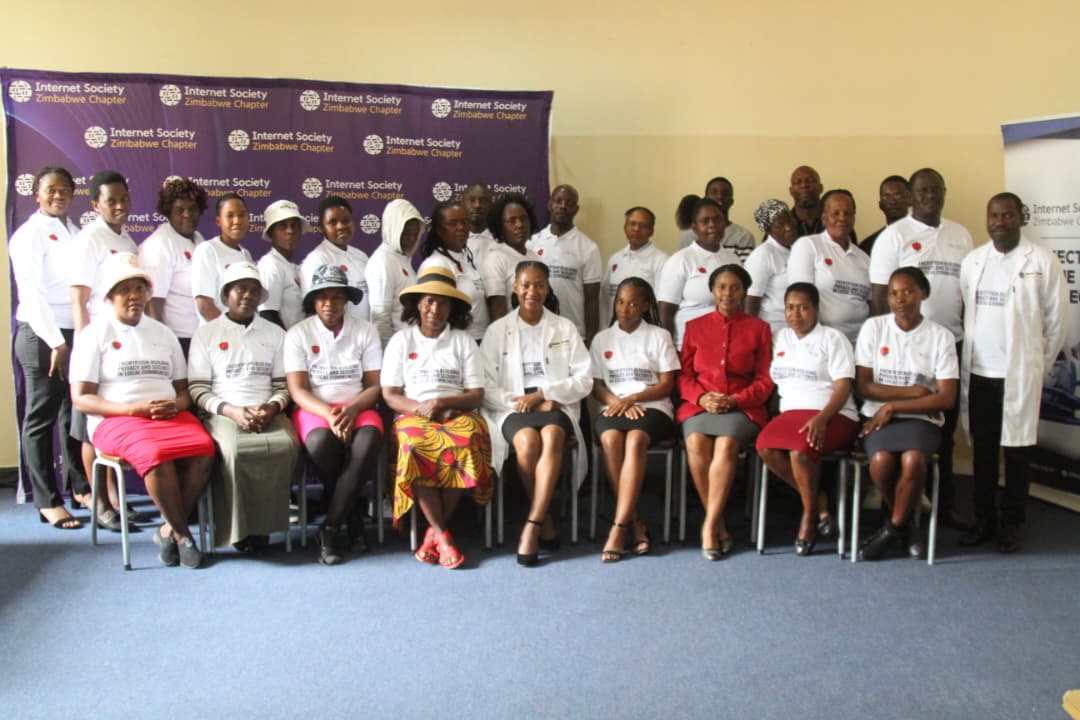
Amos Mpofu
WITHOUT proper education on how to safely navigate the online world, members of the public remain vulnerable to online scams.
Many people continue to fall prey to fraudsters who deceive them with promises such as, “We will share the money together. For now, share with me your account details,” only to gain access to their financial information.
These scams expose the tangible dangers faced by people in marginalised communities who lack digital literacy, as cybercriminals constantly target every dollar meant to bring them joy, happiness and livelihood.
With Zimbabwe still heavily reliant on physical cash, the so-called ‘green paper bag’ economy, the country has become an attractive target for digital criminals.
This was one of the key warnings shared by the Internet Society and the Global Encryption Coalition during a Global Encryption Symposium held at Solusi University on Tuesday.
Running under the theme “Encryption: Building Privacy and Security in Local Communities,” the event aimed to raise awareness and equip marginalized, minority, and women’s groups with practical knowledge of encryption and the latest trends in cybersecurity.
The symposium brought together participants from the most vulnerable groups navigating the digital space—including women in marginalised communities, persons with disabilities, and senior citizens from Solusi’s surrounding communities of Derude, Norwood, and Penge.
Solusi ICT staff, working with partners from the Global Encryption Coalition and the Internet Society Foundation, led participants through hands-on sessions on algorithm formulation, mobile encryption, and securing social media accounts.
It was a hive of activity that left attendees enlightened about how encryption works and how to stay safe online.
The Symposium Coordinator and ICT Manager at Solusi University, Mr Ntokozo Ncube, said the event successfully achieved its objective of reaching populations most vulnerable to online threats.
“Women in these communities need to understand digital privacy tools to protect themselves and their families online. Persons with disabilities require accessible training to ensure digital security for all abilities. Senior citizens also need guidance to navigate digital security with confidence. With the attendance of the event’s target population, I am convinced that we are strides ahead in our mission to conscientise everyone about the dangers of online insecurity,” said Mr Ncube.
He added that including marginalized communities was a strategic move to strengthen local capacity for ongoing digital security support.
Held towards the end of Cybersecurity Month, the symposium fostered inclusivity, safety, and confidence in the digital space among communities that need it most.

The keynote speaker, Mrs Charity Ncube, Head of Policy and Governance for the Internet Society Zimbabwe Chapter, described the day as a reminder that encryption saves lives, preserves privacy, and protects people’s money on Fintec financial platforms such as EcoCash, OneMoney, and Omari.
“At Solusi University, guided by our mission to provide quality, holistic, transformative, and innovative education, we believe that digital safety and privacy are part of our moral and educational duty. Today, as we join hands with the Global Encryption Coalition and the Internet Society Foundation, we renew our commitment to ensuring that no one is left behind in the digital age—not the marginalised, not our senior citizens, and not persons with disabilities,” said Mrs Ncube.
She described encryption as the “silent defender” of privacy and dignity, explaining that it converts personal data—including messages, financial transactions, and health records—into secure code that only the intended recipient can read.
“This protection is essential in a world where online threats are growing daily. For women from local communities, encryption enables safe access to information, communication, and empowerment opportunities without fear of exposure or exploitation. For senior citizens, it safeguards financial integrity and personal correspondence,” she said.
Mrs Ncube emphasised that weakening encryption does not strengthen security but instead destroys trust and creates vulnerability.
“That is why the Global Encryption Coalition, the Internet Society Foundation, and Solusi University unite today to champion strong, inclusive, and accessible encryption for all,” she said.
Among the participants was Mrs Mavis Sibanda from Derude community who once narrowly escaped an online scam. She recounted how a fraudster had asked for her bank details, promising to share money with her, but vanished after she refused to disclose her information.
Mrs Sibanda applauded the symposium, saying it provided practical and empowering lessons.
“The programme went beyond theory. We explored encryption through practical experiments, applied encryption solutions to our real communication channels, and engaged in simple algorithm demonstrations suited to our level—helping us appreciate how encryption actually works,” she said.
Mrs Ncube commended Mrs Sibanda’s remarks, highlighting the importance of the practical approach.
“This hands-on approach is what transforms knowledge into empowerment. It ensures that every participant—whether from Derude, Norwood, Penge, or Solusi University—leaves here not just aware of encryption, but equipped to apply it,” she said.
As the event coincided with Global Encryption Day, Mrs Ncube left participants with a powerful reminder that encryption is more than a technical concept—it is a shield for the vulnerable, a tool for empowerment, and a symbol of freedom.
“Encryption is indeed a shield in uncertain times. When we defend encryption, we defend privacy, dignity, and life itself. Together, we build a digital future that is safe, inclusive, and secure for everyone,” she concluded.



 Bongani Ndlovu