


 Online Reporter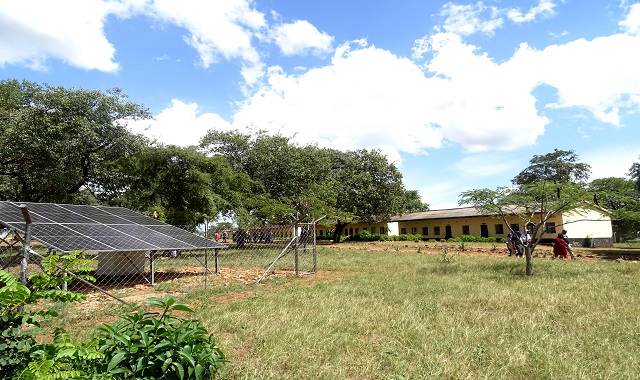
Rutendo Nyeve, [email protected]
STRATEGIC investments in renewable energy are not only illuminating Zimbabwe’s rural and peri-urban homes but fundamentally transforming them into thriving hubs of productivity and enterprise, signalling commitment to leaving no one and no place behind.
Rural Electrification Fund (REF) acting chief executive officer, Mrs Felistus Makumbinde revealed this on the sidelines of the SADC Sustainable Energy Indaba, which ended in Victoria Falls on Friday.

Addressing delegates and energy stakeholders, Mrs Makumbinde outlined a series of impactful initiatives that are driving the country towards universal energy access while simultaneously catalysing rural industrialisation and improving livelihoods.
“Here in Zimbabwe we are actually moving towards universal access through the renewable energy where we are constructing the community solar mini-grids, institutional solar micro-grids and also extending grids,” she said.
“I am sure we all agree that productive use of energy is about sustainability of these electrification programmes.”
Mrs Makumbinde said the most effective and productive solutions are those that create a virtuous cycle of energy use, income-generation and sustainability.
Chief among these has been the adoption of solar-powered irrigation systems, which are revolutionising agriculture.
“This has become one of the most effective and productive use of energy here in Zimbabwe where the small scale farmers are empowered or are enabled to grow crops all year round without depending or relying on rain-fed seasons,” she said.
The REF boss further cited successful community schemes such as Hakwata, Mashawa and Bemba as prime examples where solar irrigation is providing food security and commercial viability.
She said grid-electrified schemes like the Romsley irrigation project in Makoni District, Manicaland Province, which now puts over 50 hectares under irrigation, are empowering farmers to cultivate commercial crops continuously.
“When they get inflows, it means they have the capacity now to pay for the electricity that is being used, hence the sustainability of the solar plants,” said Mrs Makumbinde.
“It also impacts on the livelihoods because disposable incomes improve of all those involved in those irrigated farming schemes.”
However, the vision extends beyond agriculture. Mrs Makumbinde highlighted that the drive towards an upper-middle-income society by 2030 is being fuelled by rural industrialisation, powered by electricity.
This is being achieved through innovative models like Village Business Units and School Business Units.
“Once we electrify an area, villagers will then get to pool resources and identify a business venture that they can run with to generate income for themselves, to develop themselves and their areas,” she said.
The impact at local business centres has been immediate and visible. Electrification has enabled the introduction of butcheries, refrigeration for cold beverages and a host of other services.
At the village level, empowered cooperatives are now venturing into welding, carpentry, tailoring and beauty salons.
“The most common businesses that are being undertaken for productive use starts with welding door frames, doors, steel doors, burglar bars. And for their local markets, we all know that these are items that everyone would want to buy,” she said.
Mrs Makumbinde added that tailoring cooperatives are now manufacturing school uniforms for local districts, a boost for both local economies and parents.
She emphasised that for this industrialisation to take root, capacitation is key. Beneficiaries need a mental shift from a mindset of consumption to one of business, followed by vocational skills training and access to capital through revolving funds.
Other highly effective productive uses highlighted include solar-powered cold storage, which empowers farmers with bargaining power by allowing them to store perishable goods like fruits, vegetables and milk until market prices are favourable.
Electric agro-processing mills are also adding significant value at the local level, turning raw groundnuts into packaged peanut butter and cooking oil sold in national supermarkets.
“You will find peanut butter that was made at Nembudziya Growth Point in Midlands Province being sold in Pick n Pay supermarkets. That’s empowerment and that’s coming through productive use of energy,” she said.
The upcoming commissioning of a solar dryer for mopane worms in Gwanda, Matabeleland South, which will add value to local produce, she added.
The tangible results of this energy revolution are visible in the communities themselves.
“You actually see it when you visit a communities, especially the Hakwata that has been mentioned. That life here has changed,” she said.
“Where longer distances are involved for traveling, you see people migrating from bicycles to motorcycles, which is a sign of improved income levels in a community.”
Zimbabwe’s model, as presented by the REF, stands as an example of how targeted energy access, coupled with a focus on productive use, can empower lives, build sustainable infrastructure and drive inclusive economic growth from the grassroots up.



 Bongani Ndlovu