

 dyton mupawaenda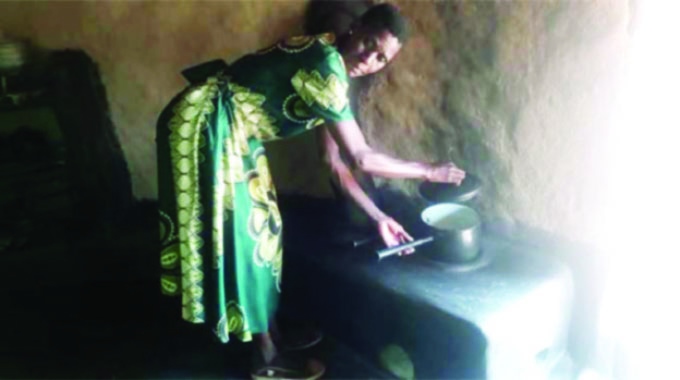
Patrick Chitumba-Correspondent
FOR Ms Monica Mukuli (45), a mother of three from Siansundu Village under Chief Saba in Binga, finding firewood for cooking had become a nightmare as the forests had started dwindling.
She was forced to travel at least 5 kilometres to the nearest forest looking for firewood but the trees were running out at an astronomic pace.
“After travelling that long distance, the forest no longer has big or medium trees, we now just have small bushes but we obviously have no choice because of the need to get firewood,” Ms Mukuli explained.
She said to get more firewood, she had been forced to tag along her children aged 13 and 9, to the forests so that they could carry some as well.
“Imagine taking the children to look for firewood, that actually affects them as they have no time to relax, play with other children and attend to their books. So it’s not just about adults but deforestation is affecting everyone,” said Ms Mukuli.
In Binga District, smallholder cropland expansion has been identified as the main driver of deforestation that is resulting in the unavailability of trees in forests which villagers such as Ms Mukuli need for firewood.
According to Global Forest Watch, from 2001 to 2022, Binga lost about 30 hectares of tree cover at a time when the country has been experiencing widespread land degradation, soil erosion, increasing aridity and temperatures that, coupled with population growth, pose a menace to agricultural production and prospective food security.
There are also villagers such Mr Oliver Manzini who rely on stripping trees of their bark to manufacture makeshift fishing nets for sale to fishermen and women that illegally ply the shores of Lake Kariba in the Mlibizi area.
Stripping trees of their bark also has devastating effects on the forests because the young trees being targeted for their bark are dying before reaching maturity.
As a result of this and many other rampant practices such as cutting down trees for firewood and household furniture, as well as clearing land for agriculture, the country’s last pristine forests are in grave danger.
However, thanks to the Zimbabwe Red Cross Society (ZRCS), villagers are now using stoves that use less firewood.
The objective of the project spearheaded by ZRCS is to restore damaged ecosystems, curb and revert environmental depletion and guarantee food security for the villagers.
Ms Mukuli is one of the villagers that have embraced the stove — a positive development for her as she no longer makes everyday trips to look for firewood. A bundle now lasts her about two weeks as the stove is energy efficient as it uses a few sticks.
“The stove uses very little firewood (tsotso/kindlings) which is enough to warm the stove and keep the house with adequate warmth during winter. I no longer struggle for firewood because of this positive intervention spearheaded by the Red Cross,” she said.
Ms Mukuli explained that making the stove was very easy and time saving.
“Materials used are cow dung or goat manure for retaining warmth, mud, husk, grass for creating an air pipe taking smoke outside the house and demarcation of the two plates of the stoves (these are removed after three days before the mud gets dry) and the stove matures for one month before being used,” she said.
Ms Mukuli said a lot of villagers were embracing the stove which she said is also going to assist in preserving the forests.
“When we were growing, we had rich forests and firewood was readily available but that has changed now with the growth of villages in response to the increase in population. With deforestation comes the negatives such as climate change that is now affecting food security. So there is a need for such initiatives that are aimed at saving the forests and increasing food security,” she noted.
Mr Dube Munkombwe from the same village who constructed a similar stove said he could also easily operate it while saving trees.
“Gone are the days when I would wait for my wife to start a fire and prepare food. Heat from this stove can last a long time and I can easily prepare my own food. Also, gone are the days when people sitting in the kitchen would develop teary eyes because of the smoke as well as having their clothes smelling of smoke as the stove has a chimney. This initiative will help us fight climate change through promoting afforestation,” he said.
ZRCS with the support of the Finnish Red Cross (FRC) and Danish Red Cross (DRC) is implementing a Climate Smart Resilience (CSR) project in Binga from 2022 to 2025.
The project’s goal is to contribute to enhanced individual, family, community and institutional resilience through strengthened capacities to cope, resist, endure risks and sustainably meet basic needs.
ZRCS secretary-general, Mr Elias Hwenga said the cook stoves use less firewood which reduces the cutting down of trees, one of the causes of climate change.
“Another advantage is that it reduces the burden on women as some are walking long distances to source firewood for their households. This then gives women ample time for productive activities like weaving as they now spend less time on firewood,” he said.
Mr Hwenga said the stove is designed in such a way that smoke goes out of the house, so the roof, plates and water storage containers are always clean.
He said the pot handles mostly break when used on direct fire but the use of cook stoves has made women happy as their pots last longer and cooking using the stove is less laborious in terms of washing the pots.
“The stoves keep food warm for the whole day meaning families eat hot meals which are recommended by health officials. School children can also put their bath water on the stove at night and in the morning they just bath with warm water. For some families who can afford to buy flour, the stove is the best for baking,” said Mr Hwenga.
Mr Peter Makwanya, a climate change expert, said it is common cause that demand for firewood especially by people in rural areas destroys forests.
He said the country has not been spared from deforestation in the past decade due to the deforestation caused by rural and urban expansion as well.
“Loss of trees leads to environmental degradation and increased erosion. Without plant cover, erosion can occur and sweep the land into rivers. The agricultural plants that often replace the trees cannot hold onto the soil and many of these plants, such as cotton, soya beans and wheat, can actually worsen soil erosion. And as land loses its fertile soil, agricultural producers move on, clear more forest and continue the cycle of soil loss,” said Mr Makwanya.



 Peter Tanyanyiwa
 Online Reporter