Chronicle Editor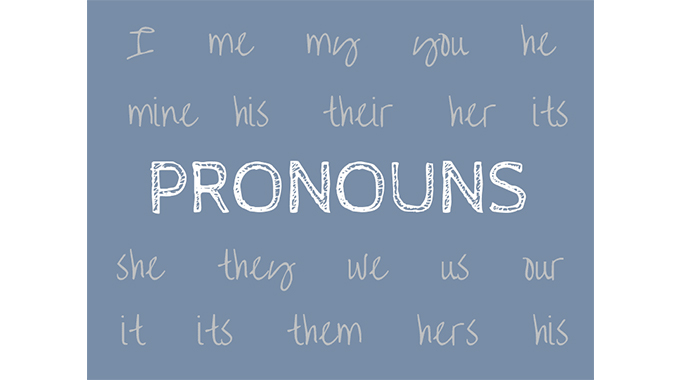
Last week I presented a number of language exercises to be tried out by learners as they strive to cope with the indefinite lockdown.
I chose not to offer answers this week in the belief that as learners you are enterprising and show initiative in that where you have challenges you seek help from people around you. I will this week give more exercises and follow up with answers next week.
Case of personal pronouns – Personal pronouns refer to persons or things. Personal pronouns have three cases or forms. The three cases are called nominative, objective and possessive.
The case of a personal pronoun depends on the pronoun’s function in a sentence – that is whether it is a subject, a complement, an object of a preposition, or a replacement for a possessive noun. Here are examples of what I am talking about:
Case – Nominative –Singular pronouns – I, you, she, he, and it. Plural pronouns – we, you, and they. Function in a sentence: subject or predicate nominative. Objective – me, you, her, him and it. Plural nouns – us, you, and them. Function in sentence – direct object, indirect object, or object of preposition, Possessive – singular pronouns – my, mine, your, yours, her, hers, his and its. Plural pronouns – our, ours, your, yours, their, theirs. Function in sentence – replacement for possessive nouns.
Use these rules to avoid errors with the case of personal pronouns: 1. Use the nominative case for a personal pronoun in a compound subject. Example: Peter and I walked together to town. She and John planted the seeds. He and I made this toy. 2.
Use the objective case for a personal pronoun in a compound object. Example: Joana brought Princess and them some fruits. For Lionel and me, there was fried chicken.
Clue: When you are choosing a pronoun for a sentence that has a compound subject or a compound object, try saying the sentence to yourself without the conjunction and the other subject or object. The flying objects hit Lazarus and me. Note: It is considered courteous to place the pronoun I or me last in a series. Example: George, Simba and I transplanted this plant. (Nominative case). The shop was rented by Melusi and me.
3. Use the nominative case for personal pronouns after a linking verb. The best garden designer was he. The most careful writers are we. 4. Never spell possessive personal pronouns with apostrophes. Example: This book is hers. The pencils are theirs. This yours. It’s is a contraction for it is or it has. Di not confuse it with the possessive pronoun its. Example: It’s time to thin the carrots. Please bring me the kneeler and its cushion.
5. Use possessive pronoun before gerunds (-ing forms used as nouns). Examples: Your mowing of the lawn was a big help. His eating all the ripe berries was to be expected. We are glad of their lending us the shovel.
Here is some practice work: Try it out and remember answers for corrections will be provided next week: 1. It was Noel and (I, ne) who sent the flowers. 2. The dog loves to chase (it’s, its) tail.3. She and (I, me) will take care of the arrangements 4. The person who called was (she, her). 5. I always enjoy (you, your) singing.
6. This application was sent to both you and (I, me). 7. (Theirs, Their’s) is one with a white top). 8. (We, Us) and (they, them) decided on the campsite. 9. This old television loses (its, it’s) picture from time to time. 10. Winter gives James and (they, them) a chance to take a break from work at the port.
Pronouns Than and As. Rewrite each sentence, choosing the correct pronoun from the choice in brackets. You can add the necessary words to complete the incomplete comparison like in the given example. The alarm’s buzzer startled Job as much as (I, me). Answer: The alarm buzzer startled Job as much as it startled me.
Benny is a better worker than (I, me). He should do better in the test than (I, me). Our employer does not pay John as much as (I, me). Jack goes to movies more often than (I, me). The weightlifter is no stronger than (I, me). The family next door has not planted as many trees as (we, us).
My sister has saved more money than (I, me). I cannot swim as well as (she, her). I was not as late as (she, her). Mr Jacobs told me more than (she, her).
Who and whom in questions and subordinate clauses. In questions use the nominative pronoun who for subjects and the objective pronoun whom for direct and indirect objects and for objects of a preposition. Example: Who needs a ride home? (Who is the subject of the verb needs). Example: Whom did you call? (Whom is the direct object of the verb did call).
Whom did they send this telegram? (Whom is the indirect object of the verb did send). Example: For whom is this bouquet of roses? (Whom is the object of the preposition for).
For views link with [email protected] or sms to 0772113207.



 Online Reporter