Chronicle Editor
WE continue our interview with veteran freedom fighter Cde Moffat Hadebe pseudo name Cde Morris Dhlomo who was one of the four combatants who escaped from Grey Street Prison (Bulawayo Prison) in January 1965. Cde Hadebe made the daring escape in the company of three other freedom fighters, Cdes Elliot Ngwabi, Clark Ngiyo Mpofu who passed on last year.
The fourth combatant, Cde Keyi Nkala unfortunately also passed on last week on Tuesday night at his homestead at Matshetsheni under Chief Mzimuni Masuku in Gwanda District. Today Cde Hadebe who the Second Republic under President Mnangagwa has since honoured him with the prestigious Grand Officer of the Zimbabwe Order of Merit (GZM) for his exploits during the armed struggle gives our Assistant Editor Mkhululi Sibanda (MS) a blow by blow account of their prison break. Below are excerpts of the interview. Read on….
MS: You spoke about being transferred from Gwanda Prison to Grey Prison in Bulawayo. How did you find the situation there?
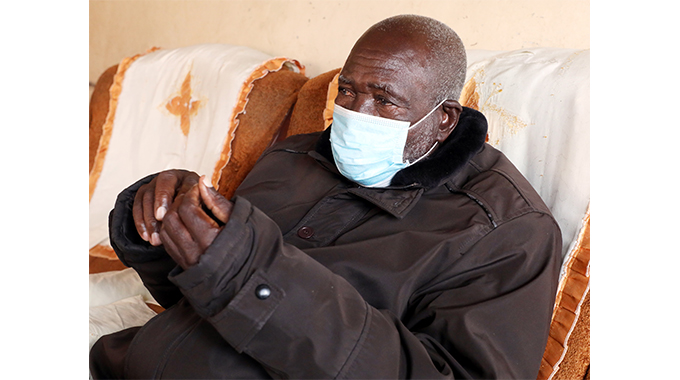
Cde Hadebe: We were moved from Gwanda to Bulawayo on a Friday, a development that killed our plans to escape as we had put those plans into motion. I was so hurt. From Gwanda it was myself, Keyi Nkala and Elliot Ngwabi.
However, that turned out to be a blessing in disguise as when we got to Bulawayo it was during the time of the shooting of other political activities such as Cdes Sanders Mlilo and Abel Siwela who was to become the first Executive Mayor of Bulawayo.
They were shot at while under detention at Khami Maximum Prison. The detainees had engaged into some fracas with the prison authorities and to bring the situation under control, gunshots had to be fired. So, ring leaders like Cde Siwela were moved to Grey Prison, that is where we met them.
However, they were in separate cells, the only person who was put into our cell was Cde Clark Mpofu whom we had met in Zambia. We met Clark in Zambia while coming from China where he had received his military training. We were to be joined in our cell by a Zapu youth by the name, Wilson Tshuma who was from Makokoba. Clark had been captured in connection with an explosive attack on Wilkie’s Circus, Tredgold Building and the Post Office.
Although we were not in the same cell with oSiwela we could link up. There was another politician Misheck Makhena Ncube, who was who was staying in the passage next to our cell. We used to see him everyday. Then there was the father of Ezekiel Hleza, a renowned author and current headmaster of Tshelanyemba High School in Kezi, Solomon Hleza who was a prison guard.
When we got to know him, we said manje sekuright because like myself and Keyi Nkala he came from Gwanda District. Thina amaJahunda silezibindi. We asked him whether it was possible to send a message and he said where, sathi ebadaleni. We told him that there were things that we needed from outside and he agreed, wavumela phezulu uHleza. You know the toilet paper is very useful, we wrote all our needs on it. But the vital cog on all this was businessman, Taffi Zibuya Moyo.
MS: What was your message to the politicians on the outside?
Cde Hadebe: It was simple, we told them wanted to get out of the prison at all costs. Sathi sifuna ukuphuma lapha. We told them that we wanted to escape, their reply through Hleza, the prison warden was that they would hear from us. They said we should tell them what we wanted. They said they could arrange anything for us. We then told Siwela who was the leader of the politicians in prison that thina siyahamba.
We had arrived at Grey Prison towards the festive season, we then started working hard as our aim was for us to have escaped by Christmas Day. Sasifuna ukuyidlela phandle. However, we failed to achieve that. Later we started getting the tools that we needed for our operation to escape, things like the hacksaws, pairs of pliers and scissors. All these things were organised through Hleza.
MS: Where did you hide them?
Cde Hadebe: All these things were hidden in the toilet cistern. The guards would come and search leaving the cistern. We even we had money, a lot of it. We were being spoiled by abadala from outside.
MS: But how was Hleza smuggling all these things?
Cde Hadebe: Whenever he had something for us he will enter his work premises through the residence of the superintendent instead of using the usual gate meant for the staff. After getting all these tools it became clear to us that we would accomplish our mission.
MS: You said there was a fifth man in the cell, Wilson Tshuma, so was he part of the plan to escape?
Cde Hadebe: Wilson Tshuma made it clear to us that he would not dare escape, he was not a military man. Wathi hayi mina madoda angihambi, the risk was too much for him. We had made it clear to each other that in the event something bad happens we would not blame each other. So, on the night of 6 January 1965 we made our move.
Since I was the tallest among us, I was used as a ladder by the other comrades to reach the ceiling. During those days I was still young and very fit. During the operation I assisted all the three to move into the ceiling and when it was my turn, I was assisted by Wilson Tshuma who was a very strong man. The other three assisted by pulling me to their side.
So, we managed to destroy the ceiling board, managed to get inside the roof. We had made a hole in the ceiling, crawled along the ceiling of other cell blocks until we reached the edge of the building which led to the residence of the superintendent’s house. Then after that saba lomnyama.
MS: Where was the misfortune coming from then?
Cde Hadebe: We had arranged with activists like Joshua Mahlathini Mpofu who died recently in South Africa and Philip Mabhena who lives in Nguboyenja to pick us from Milton Junior Boys School. From there they were to drive us to Victoria Falls, our aim being to return to Zambia straight away. Konke lokho kwaba nzima, all that was futile. We failed to meet our appointment because of time. When we emerged from the ceiling above the house of the superintendent we found him with his friends partying the night away. They were drinking the night away.
MS: So, do you mean to say that you were lying on top of the roof watching those people drinking?
Cde Hadebe: Yes, sabathola benatha. We were watching them from very close range as the party was just outside the house below us. That is what delayed us, it resulted in us failing to meet the time when those comrades of ours, Mpofu and Mabhena were supposed to pick us. In the meantime we could hear the Large City Hall clock making its hourly sound. We heard the clock sound marking 12mid-night. Then the cars started driving away, voom voom, they drove off. That marked the end of the party and drinking session.
MS: Let me take you back a bit, so you guys when did you start your jail break.
Cde Hadebe: We started destroying the ceiling at around 9pm, it was between 9 and 10pm. We had not expected any delays. After the cars drove off we scanned the environment again and a guard on night duty appeared and past to check on the other side of the prison facility. Then the lights from the superintendent’s house went off. We waited a bit, knowing that it won’t take time for someone who had been drinking heavily to fall asleep. We then checked on the guard, he came and passed by. When we thought it was safe, we all jumped from the roof at the same time and made good our escape. A few metres from the prison we met a man who was pushing his bicycle and was with a woman. He was shocked to come face to face with people dressed in the prison garb in the dead of night.
MS: What did you do to him?
Cde Hadebe: That man was shocked and he just said to us ‘ngeke khulume lutho madoda, ngeke khulume lutho madoda’. We said to him ‘vele akukhulunywa lokhu’. He thought we were going to kill him. We ran into a sanitary lane as we moved towards Milton Junior School. When we got to Milton, there was no car in sight.
It became obvious that Mpofu and Mabhena had given up, they had thought our operation to stage the prison break had failed. Elliot Ngwabi then said he knew of a place where we could get a car. He was very familiar with Bulawayo as he had been employed as a delivery driver by some company.
That place was a betting spot in Suburbs although it was frequented by the whites, we took our chance and went there. When we got there we met a drunk white man who just said ‘ yes boys, yes boys, hello boys, hello boys.’ He did not realise that we were in prison garb. We went straight to the servants’ quarters and Ngwabi asked about the whereabouts of our man, he was told that he had gone to Makokoba. Ngwabi then thought of another man along Selborne Street also in Suburbs.
Now we were moving cautiously in case we come across the police. When we got there the man was also not around. Then we heard the City Hall clock marking 1am. We were running out of time. I then said to the comrades, now we have no time to look for the car, let’s use our feet, barefooted as we were since we did not have shoes. Now we were heading to Mhlahlandlela in Tshabalala to the house of the now late Cde Daniel Ngwenya who after Independence became the Minister of Transport and later on the Provincial Governor of Matabeleland North. Clark Mpofu who had operated in Bulawayo had worked closely with Ngwenya and knew his house very well.
MS: That was tricky and risky.
Cde Hadebe: We had no choice, we were also racing against time. From Suburbs we ran through BAC, that cricket facility, moved past Mater Dei Hospital. Sagijima phambi kwama robots eBradfield towards Matopos Road. Then we heard the sound of the Austin Cambridge, which were mainly used by the police. Luckily for us there was a ditch which we quickly threw ourselves in and indeed we had guessed right, they were the police on patrol. They drove past.
We then proceeded to Belmont Industrial site, we were still running with me leading the other three. Lapho kwakungani sengihlanya. We were all sweating. We managed to arrive at Cde Ngwenya’s house and it was towards 4am. We knocked heavily and Ngwenya who seemed not to have slept that night quickly opened the door and he was shocked to see us. He quickly realised that he had a serious case on his hands, four wanted ‘terrorists’ on his hands. Ngwenya just said ‘ngenani’ and told us to change our clothes quickly. Ngwenya told us to grab anything. He then slammed the door and drove off to look for Mabhena and Mahlathini Mpofu. The two then arrived in Tshabalala and drove us in Mabhena’s Zephyr Zodiac towards Plumtree Border Post.
MS: How was the mood when all this drama was unfolding?
Cde Hadebe: It was very tense, Mabhena drove at lightning speed and even said if the car was to overturn it would be better for all of us to die in that accident. We drove until we got to a lay-bye, 10km from Plumtree Town. I asked the two, Mpofu and Mabhena to leave us there. They were no longer themselves, I said from there we would be able to find our way to Botswana.
To be continued next week with Cde Hadebe narrating how they were sold out by an Indian businessman in Botswana resulting in the capture of his colleagues, Cdes Nkala, Ngwabi and Mpofu. In that skirmish Cde Hadebe described by Cde Clarke Mpofu during an interview with Sunday News as having been very athletic and stronger physically among the four managed to outpace the enemy despite guns being fired at him.
From there Cde Hadebe managed to reach Zambia and was then sent for further training in Algeria before being given the command of the Sipolilo (Guruve) Detachment in 1968 made up of ZPRA and Umkhonto WeSizwe guerillas.


 Online Reporter