Online Reporter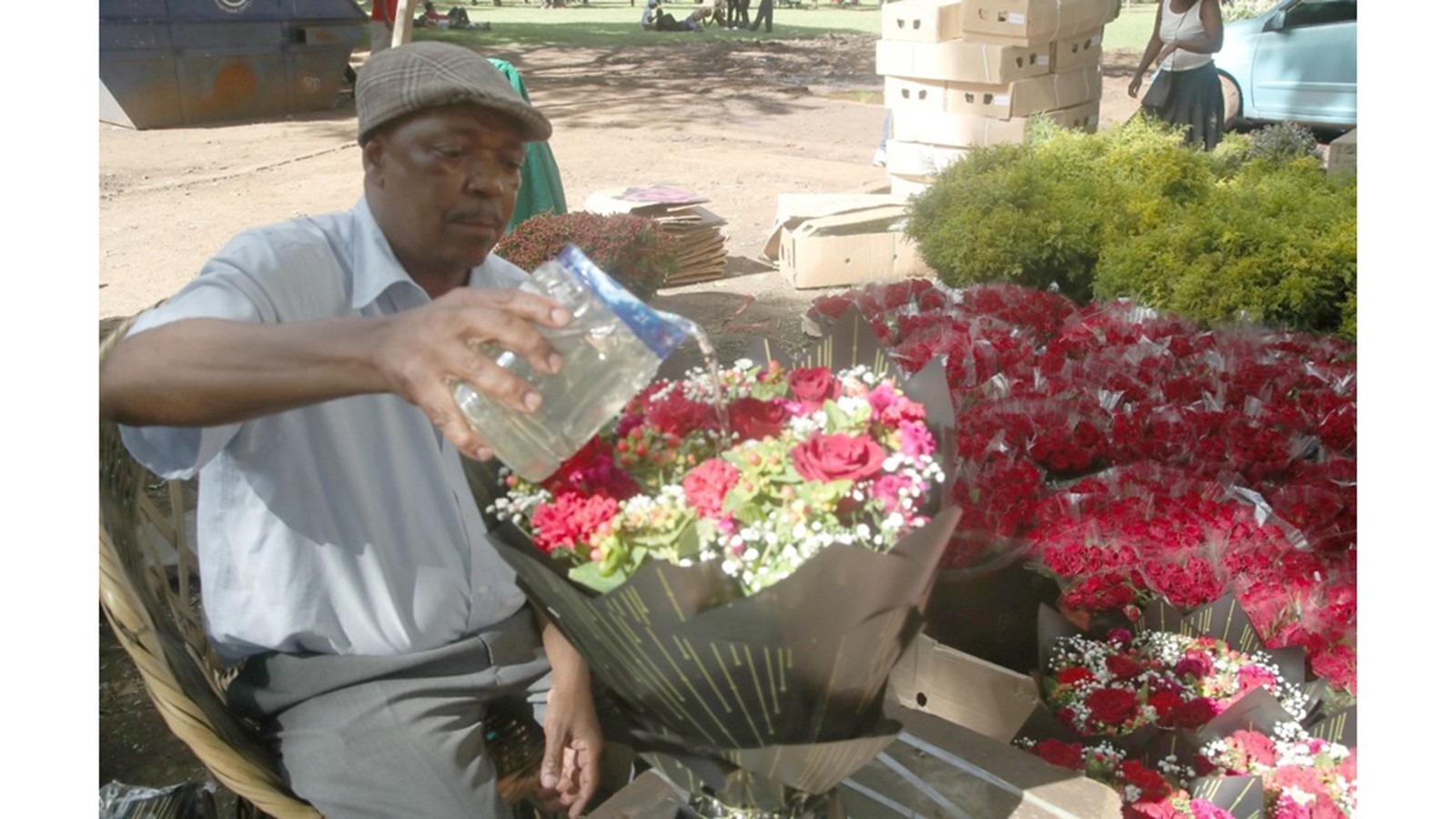
Edgar Vhera
Specialist Writer – Agribusiness
ALL is set for tomorrow’s St Valentine’s Day celebrations as florists across the country have prepared enough flower bouquets for their anticipated clients.
Valentine’s Day is an annual festival celebrated on February 14 to rejoice romantic love, friendship and admiration. The day has always been about flowers, but the way bouquets are wrapped is quietly changing.
A local flower trader from Harare, Mrs Yolanda Moyo, said they had stocked enough flower bouquets sourced from both local and foreign producers.
“We have enough flowers on our Valentine’s catalogue from Kenya and locally.
“The red rose is the most common flower, accounting for 90 percent of all sales, with the remaining 10 percent coming from a mixture of red and white or pink and white,” she said.
Mrs Moyo said flowers were sold either as single stems or bunches.
Prices per bunch depend on type and length.
The duration of the flower depends on care, though generally it can stay for four days when coming directly from the cold room and over a week if from the field.
Another florist who has been in business since 1999, Mr Ranganai Edwin Pfupa, said he procures flowers in bulk from producers and sells to traders.
Mr Pfupa said these days he gets most of his supplies from Manicaland, unlike in the past, when they used to get from areas closer to Harare, like Goromonzi.
“We are importing the preparation material, such as floral oasis and wrapping paper from China and South Africa.
“Traders are also importing roses from Kenya to augment local supply,” he said.
Kenya roses have bigger heads and longer stems compared to those locally due to climatic differences.
Mr Thomas Fakero watering the flower bouquet, he had just finished preparation for Valentine’s in Harare on Friday.
Meanwhile, the recently released statistics from Zimbabwe National Statistics Agency (ZimStats) show that the country’s fresh rose exports declined 48 percent in volume terms to 157 890 kilogrammes last year from 304 752 kg 2022.
In value terms, it dropped 49 percent to US$119 836 from US$234 213.
The volume of fresh roses imports increased 178 percent to 3 254 kilogrammes from 1 833 kg in 2023, while in value terms it surged 242 percent to the current US$12 250 from US$5 068 in 2023.
The Horticultural Development Council (HDC) said Zimbabwe’s floriculture sector output is projected to rise from the current 2 300 to 40 000 tonnes by 2030 as a result of 615 percent area expansion from 130 to 930 hectares.
The earnings are also expected to rise to US$277 million.
The HDC said current summer flowers on 100 hectares are set to rise to 600, while roses currently on 30 hectares will shoot to 330.
An investment of US$45,6 million is required for this expansion.
“Such a production growth will create 4 650 new jobs and transform rural livelihoods across the nation,” said HDC.
An analysis of the floriculture sector in the past gives credence that this is not a pipe dream as in the year ending June 2000, the country exported 19 488 tonnes of flowers worth US$89,65 million.
Zimbabwe exports the following cut flowers; Delphinium, Euphorbia, Liatris, Roses, Asters, Chrysanthemums, Carnations, Ammi majus, Statice, Protea, Chelone and Lysimachia.
The HDC disclosed that flowers were key to Zimbabwe’s horticulture industry.
According to the Horticultural Promotion Council (HPC) flowers contributed about 60 percent of the total horticulture export value and 70 percent of the total flower exports were mainly roses.
In the past production of roses centred around Banket, Bindura, Concession, Goromonzi, Mazowe and Trelawney.