

 admin
admin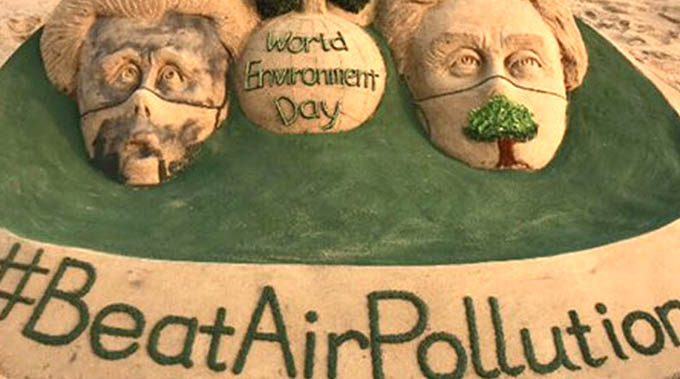
Tinashe Farawo Correspondent
PRESIDENT Mnangagwa yesterday officially opened the World Environment Day, which coincided with the Environment Forum running under the theme “Dialogue for Environmental Sustainability”.
Since his rise to power in November 2017, President Mnangagwa has shown interest in dealing with challenges facing the country’s environment, from initiating the game-changing National Clean Up campaign every first Friday of the month, to ensuring that the country benefits from its wildlife.
In recent months, the President has participated in the Kasane Elephant Summit, hosted the Kavango Zambezi ministerial meeting in Victoria Falls and is set to host the United Nations-Africa Union Wildlife Summit to be held from June 23-25 this year.
There is no doubt that the environmental challenges facing humankind today — veld fires, ozone layer depletion, desertification, global warming, climate change -induced droughts and destruction of habitats for wild animals among others — are a result of man’s preoccupation with self at the expense of his environment.
Climate change-induced drought resulted in Zimparks and partners drilling boreholes for the provision of water for wild animals for the benefit of the globe, hence the country’s call to ensure that wild animals must pay for their upkeep.
Despite social competing needs, the country has remained steadfast in ensuring that its pristine wildlife has remained intact.
In 1972 the United Nations (UN) General Assembly held a conference in Stockholm, Sweden, which led to the formation of the United Nations Environmental Programme (UNEP).
This conference gave birth to the World Environment Day, which is commemorated on June 5 every year, and has become the most important United Nations’ day for encouraging worldwide awareness and action for the protection of the environment.
Since it began in 1974, it has grown to become a global platform for public outreach that is widely celebrated in over 100 countries.
Above all, World Environment Day is the “people’s day” for doing something to take care of the Earth or become an agent of change.
That “something” can be focused locally, nationally or globally; it can be a solo action or involve a crowd — everyone is free to choose.
Zimbabweans commemorate all the environmental observance days in a bid to raise awareness on the need to protect the environment as responsible citizens.
This year’s commemorations will be held in all the 10 provinces of the country and everyone is invited to participate.
Just like last year’s theme, “Beat Plastic Pollution”, the World Environment Day is organised around a topic that focuses attention on a particular pressing environmental concern.
This year’s theme, “Air pollution”, is a call for action to combat one of the greatest environmental challenges of this generation.
Chosen by this year’s global host, China, the theme of World Environment Day 2019 invites everyone to consider how they can make changes in their everyday lives to reduce the amount of air pollution they produce, and thwart its contribution to global warming and its effects on humanity’s health.
China is one of the biggest air polluters and its being at the forefront of combating this environmental scourge is encouraging.
Approximately, seven million people worldwide die prematurely each year from air pollution, with about four million of these deaths occurring in Asia-Pacific.
Nine out of 10 people worldwide are exposed to levels of air pollutants that exceed those considered as safe by the World Health Organisation. Air pollution does not just impact human health and economic growth. Many of the pollutants also cause global warming. For instance, black carbon, which is produced by diesel engines, burning trash and dirty cook stoves.
Black carbon is deadly, but it is also a short-lived climate pollutant. If humanity could reduce the emissions of such pollutants, global warming could be slowed down by up to 0,5 degrees Celsius over the next few decades.
Methane, a large percentage of which comes from agriculture, is another culprit.
Methane emissions contribute to ground-level ozone, which causes asthma and other respiratory illnesses.
It is also a more potent global warming gas than carbon dioxide — its impact is 34 times greater over a 100-year period, according to the International Panel on Climate Change.
This year’s World Environment Day provides an opportunity for everyone to combat air pollution around the world, and one does not have to wait until June 5 to act.
People cannot stop breathing, so they can surely do something about the quality of air that they breathe. There are so many things that they can do: from cycling or walking to work and back, to recycling one’s non-organic trash, to pressuring local authorities to improve green spaces in cities.
Other ideas include turning off lights and electronics not in use, checking efficiency ratings for home heating systems and stoves, and to use models that save money and protect health. To never burn trash/waste, as this contributes directly to air pollution.
According to a new UN report on air pollution in Asia and the Pacific, implementing 25 technology policies could see up to a 20 percent reduction in carbon dioxide and a 45 percent reduction in methane emissions globally, leading to a third of a degree Celsius saving of global warming.
This year, the thrust hinges on activities being implemented by industry that works to reduce air pollution.
The commemoration events can be conducting awareness workshops, loo-and-learn tours in industries that are doing well in as far as adopting cleaner technologies is concerned and talk shows in educational institutions.
Communities can celebrate this day through carrying out clean-up campaigns, especially in public places and residential areas.
Various stakeholders that include schools can also undertake their own commemoration events in line with the Ministry of Tourism and Hospitality Industry’s thrust on stakeholder participation in environmental programmes. Man’s anthropocentric nature and recklessness with his environment has seen him conveniently ignore his duties to environmental protection — which is why the ministry is calling for stakeholder participation.
That lack of care and abdication of humankind’s responsibilities to nature has led to the current environmental crisis on the planet.
It is a fact that 92 percent of people worldwide do not breathe clean air, that air pollution costs the global economy US$5 trillion every year in welfare costs and that ground-level ozone pollution is expected to reduce staple crop yields by 26 percent by the year 2030.
But more visibly and easier to quantify is ozone layer depletion, acid rain, water pollution and ocean acidification, among many other evils bedevilling mother earth.
This requires urgent introspection as far as environmental management is concerned. So, while a string of perilous environmental episodes helped birth the modern environmental movement, it is time to take it a step further in order to safeguard this world for future generations.
Tinashe Farawo is the public relations manager for Zimbabwe Parks and Wildlife Management Authority.


 Online Reporter