admin
admin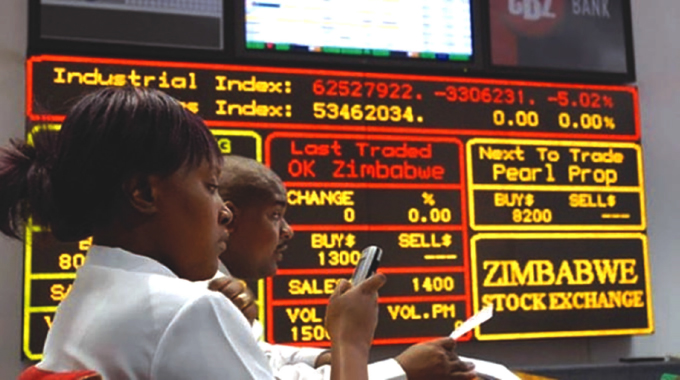
Business Reporter
Listed equities securities remain one of the most preferred investment options in Zimbabwe as business people seek stable opportunities that generate wealth over time and hedge against potential inflationary pressures.
In Zimbabwe, share trading primarily happens on three stock exchanges namely the Zimbabwe Stock Exchange (ZSE), the Victoria Falls Stock Exchange (VFEX), and the Financial Securities Exchange (FINSEC).
C-Trade product manager, Mr Albert Nangara, responding to questions during a training programme on how to buy shares in Zimbabwe’s capital markets last Thursday, said Zimbabweans looking to grow their wealth were increasingly exploring the world of investments, particularly as the capital markets and opportunities for online trading evolve.
“Investing locally through Zimbabwe’s capital markets contributes to the national economy by supporting businesses, job creation, and infrastructure development.
“For Zimbabweans, this is an opportunity to grow personal wealth while building a stronger, more resilient economy,” he narrated.
Mr Nangara said while capital markets primarily focussed on helping businesses raise funds through public ownership, other investment options, such as forex trading, are often speculative, targeting short-term currency value fluctuations.
“While both markets are essential, each has unique risks and rewards, as capital market investments are generally more stable and ideal for those willing to grow wealth over time.
“Forex, while potentially profitable, demands a strong understanding of global currency movements and is best suited for experienced, risk-tolerant investors.” he added.
In Zimbabwe, the VFEX continues to explore initiatives that deepen the Zimbabwean capital markets through innovation and diversification of its product and service offerings.
Earlier in the year, the ZSE launched a new product, the Contract for Differences (CFDs), which will allow for forex trading on VFEX.
A CFD is a financial contract that pays the differences in the settlement price between the open and closing trades.
CFDs essentially allow investors to trade the direction of securities over the very short term and are especially popular in forex and commodities products. According to the ZSE, forex trading in Zimbabwe has been like an unpredictable “jungle”, with traders losing money to unscrupulous foreign brokers.
Capital markets allow investors to buy and sell securities like stocks and bonds, helping companies raise money and offering investors the chance to earn returns.
Mr Nangara said investing in capital markets typically suits those looking for long-term growth by holding stocks, which are parts of companies.
“This is different from forex trading, which involves buying and selling currencies to profit from fluctuating exchange rates. While forex trading can offer quick gains, it’s riskier and highly volatile.
“Capital markets, by contrast, offer more stable investment options, providing dividends and capital gains from securities tied to companies and local industry,” he revealed.
Market access in Zimbabwe capital markets has been largely made easy through C-Trade, an online trading platform by Finsec that was launched in 2018 with an automated interface between investors and securities dealers.



 Online Reporter