admin
admin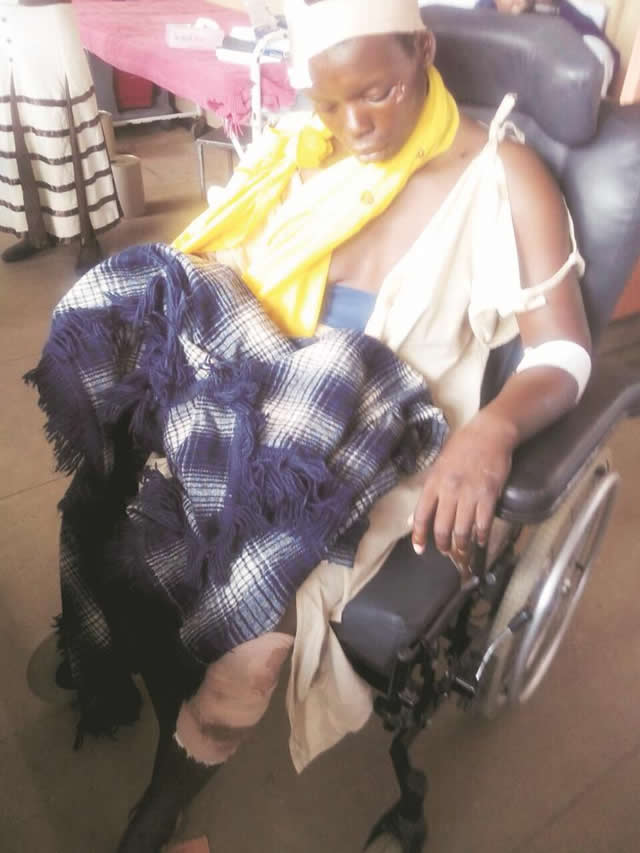
Walter Nyamukondiwa Kariba Bureau
Alexander Chimedza kneels before a sewage pond on the outskirts of Nyamhunga Township in Kariba, sifting through mud for fishing worms.
A sudden plunge into the weeds-infested sewage pond and a sharp wail draws the attention of 16-year-old Edwin Mupande’s and soon he realises Chimedza had been grabbed by a crocodile.
The next 40 minutes sees Edwin being joined by many to fight the crocodile while Chimedza fights for dear life.
Chimedza fought with every ounce of strength he had, ignoring the pain, refusing to stay down and allow the crocodile to employ its famous the death roll — a spinning manoeuvre it uses to break its prey.
Meanwhile Mupande and another colleague who had joined in the fight threw stones in a bid to distract the reptiles.
Probably hamstrung by the pervading weeds and Chimedza’s resilience, the crocodiles struggled to subdue him.
Chimedza’s wife Primrose, a member of an apostolic sect, said her husband had defied a prophecy that had warned him against going near places where churches met.
The prophecy came true on his second time after ignoring the warning when he went fishing.
It is better that Chimedza survived and is living to tell the story, albeit with serious wounds.
He has since been taken to Zambia for treatment.
Mupande narrated the event.
“As I arrived the crocodile turned and the man was submerged in water and the weeds. I could see the crocodile, but not the man and it got me worried.
“It is at this point that I think it broke his (Chimedza) arm. The man looked strong and he managed to raise his arm and I could see his face.
“He then placed the nearly 2,5-metre long stick into his hand and he instinctively grabbed it.
“We started pulling the stick but it was a mammoth task as every inch we gained, the crocodile would pull us back. It was like a tug of war,” said Mupande.
At some point Chimedza said that he was ready to die, probably out of fatigue and fading hope that he could still hold on and be rescued.
After what seemed like a whole day, they managed to pull him out of the weeds.
Most people who have watched a crocodile attacking its prey say Chimedza could have been helped by the weeds that restricted its mobility.
However, Mupande said on coming out of the water, a blood drenched Chimedza, who had sustained deep cuts on the right hand, front of thighs and ankles, thrust his hand into the crocodile’s mouth.
“When he came out and we laid him on the ridge with blood all over he said he had been caught by three crocodiles,” explained Mupande.
“We could not tell if there were many crocodiles involved in the attack because there were weeds, but we could interchangeably see the man and crocodile.”
However, others contend that if they were more than two crocodiles Chimedza’s body could have been dismembered in feeding frenzy as they employ the death roll to get chunks of his body.
Every community knows its heroes as it was easy for this reporter to track the man who had carried out the rescue mission.
Assistance came from young boys, probably five years and older who roam the verges of Nyamhunga 1 suburb chasing away baboons and playing football .
Initially skeptical that I could kidnap them, they were put at ease when I showed them my Zimbabwe Media Commission press card.
Even then, they instructed me to drive slowly while they ran to where Mupande lives with his sister — about 300m from where we met.
“Apa mudhara”, shouted the young boys escorting the car.
At just 16 years, Mupande performed one of the most daring rescue missions when most people could easily have been scared and left the victim to his fate.
But where was he going when he encountered the scary situation which needed him to be brave and assist someone who was starring death in the face?
Mupande said he had just woken up and decided to take a stroll towards Lake Kariba.
According to his sister Taurai, Mupande is relatively new in Kariba as he came in August last year from Binga’s Sinamusanga area.
“We were shocked to see him (Edwin) coming back home with blood all over his body and he said he had helped rescue a man who was attacked by a crocodile,” said Taurai.
The sewage ponds are covered by the invasive water hyacinth weed which has formed a carpet in the waste water that undergoes natural treatment before being discharged into the Zambezi River.
Crocodiles and hippos have made the ponds their home because they promote the breeding of fish and growth of the hyacinth weed which they respectively feed on.
Like several occasions before the crocodile attack, Chimedza had been sifting through the mud for fishing worms and algae that he intended to use for fishing later that morning.
Despite the lurking danger posed by crocodiles and hippo, some Kariba residents have frequented the Kariba Municipality ponds to fetch worms and algae for use during their fishing expeditions.
As Chimedza, a security guard, who supplemented his earnings with fishing, recovers in Zambia, his wife of three years remains in Kariba pondering how she will survive and how the hospital bills will be settled.


 Online Reporter