Vusumuzi Dube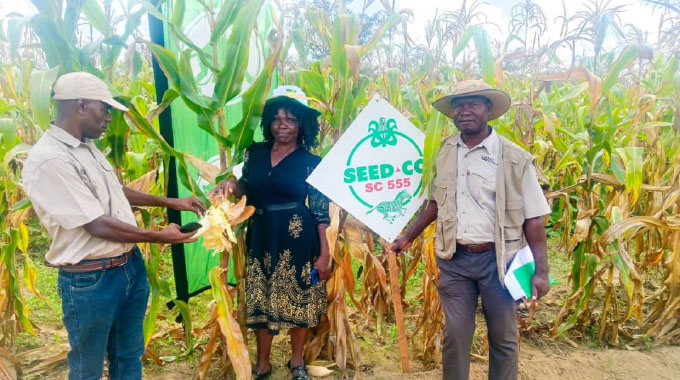
Nothando Zondo, [email protected]
Esidakeni Nutrition Garden in Ward 4, Umzingwane District, has quietly blossomed into a shining example of how rural communities can convert small plots of land into catalysts for nutritional security and revenue generation.
Initially a 0,5-hectare community nutrition project, Esidakeni has expanded to 1,5 hectares, demonstrating the enthusiasm of its members and the expert guidance provided by extension officers.
The initiative is funded by World Vision and implemented in collaboration with Agritex.
Speaking during a recent field visit to Esidakeni, garden committee member Ms Kerina Gutusa highlighted the project’s impact on her household economy.
“Since the garden was established in 2020, I’ve been able to consistently pay my children’s school fees without financial stress. Using profits from various harvests, I’ve bought goats to build my asset portfolio and invested in a field fence to boost my farming operations,” said Ms Gutusa.
With 26 members working just 0,5 hectares of green mealies, the returns show that small plots of land can generate significant income with proper management.
For Esidakeni members, the garden is now a thriving business that supports livelihoods and builds resilience, not just a source of vegetables for home use.
SeedCo agronomist Mr Wallace Banda praised farmers for opting for the SeedCo 555 maize variety, saying varietal selection gives farmers a head-start in the production cycle. He compared weeded and unweeded plots, showing how weeds aggressively compete for nutrients and moisture, stunting cob development and reducing yields.
“Choosing the right seed determines much of your potential yield, while the rest depends on solid agronomic practices. In well-managed plots, cobs showed desirable traits like longer lengths, aligned kernel rows, and good grain filling,” he said.
SeedCo 555’s advantages include tip closure that prevents rot and a stay-green effect that lets farmers use crop residues for silage.
Mr Banda emphasised the importance of conservation agriculture practices like minimal tillage and timely weeding for better yields and sustainability.
Mrs Sanele Ngwenya, another farmer at Esidakeni Nutrition Garden said the garden has been incredibly helpful to her family.
“Since joining Esidakeni, I’ve stopped worrying about getting veggies to add to our meals. Before, it was tough finding fresh produce at the nearest shopping centre, Esibomvu Growth Point. They were pricey and often past their best. Now, I grow various veggies there for us and to sell,” she said.
District Agriculture Business Advisory Officer for Umzingwane, Mr Bhekilizwe Ncube, applauded Esidakeni farmers for working closely with Agriculture Business Advisory Officers and embracing technical guidance. He reminded villagers that the fundamental objective of a nutrition garden is to ensure that no household suffers from malnutrition when land and knowledge are available.
“The government policy calls for gardens to be treated as viable business units. In that spirit, I encourage a shift in mindset and propose that the project be viewed as Esidakeni Village Business Unit, reflecting its growing commercial orientation.
“I urge you to approach your fields not as subsistence plots but as structured enterprises, waking each morning with the understanding that you are going to manage your businesses,” said Mr Ncube.
Turning to the Government’s Artificial Insemination programme which aims to improve livestock genetics, enhance herd value and raise the overall status of communal cattle production, Mr Ncube said by strengthening both crop and livestock productivity, the district stands to build more competitive and resilient farming systems.
Agriculture Business Advisory officers Mrs Sakhile Mhlanga and Ms Moreblessing Tamayi, who cover Ward 4, urged more locals to join village business units to enhance food security.
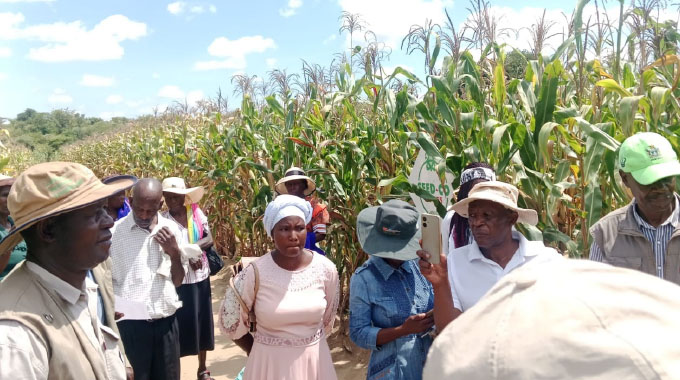
“These units and gardens can greatly benefit the community’s nutrition and finances if managed properly. We’re here to support farmers – the more, the merrier. We invite those who haven’t joined yet to come on board and make the most of the resources and help available,” said Mrs Mhlanga.
The Esidakeni field day showed how smallholder farming can uplift rural communities when backed by clever seed choices, solid farming practices, and a business approach. Ward 4’s transformation proves that nutritious food and profit can go hand-in-hand. With driven farmers, coordinated support, and production geared towards markets, the garden has become a beacon of hope for Umzingwane District.



 Online Reporter