Chronicle Editor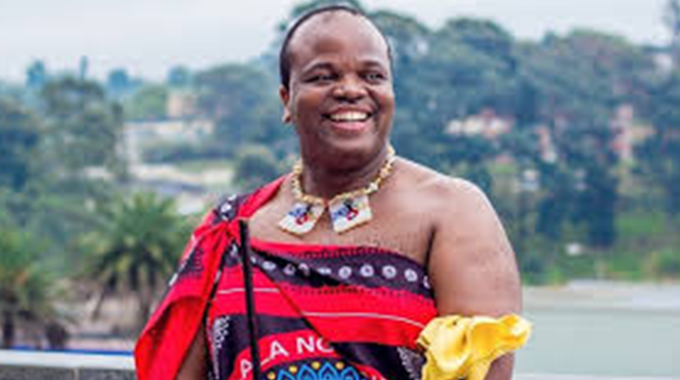
THE Kingdom of Eswatini is a founding member of the Southern African Development Community (SADC), having been part of the regional bloc’s formation as the Southern African Development Co-ordination Conference (SADCC) in Lusaka, Zambia, in April 1980.
Eswatini is the only absolute monarch in Southern Africa. It is a small, landlocked country located in Southern Africa bordered by the Republic of Mozambique to the east and the rest by the Republic of South Africa. The cultural heritage is deeply rooted in the Kingdom with traditions carefully protected and sustained and colourful ceremonies regularly take place to mark special occasions
It extends about 175 km from north to south and about 130 km from west to east at its largest dimensions. In the colonial era, as a protectorate, and later as an independent country, Eswatini was long known as Swaziland. The name Swazi is the Anglicised name of an early king and nation builder, Mswati II, who ruled from 1840 to 1868. The country’s administrative centre is Mbabane, former capital of the British colonial administration.
The national capital is the seat of King Mswati III and his mother, a short distance from Mbabane, at Phondvo in the vicinity of Lobamba, where the houses of parliament and other national institutions are situated. In April 2018, the King announced that he was changing the official name of the country from the Kingdom of Swaziland to the Kingdom of Eswatini.
Capital City: Lobamba (royal and legislative) Mbabane (administrative)
Area of Country: 17364 km²
Currency: Lilangeni (SZL) E1 = 100 cents
Head of Government: Prime Minister, Cleopas Sipho Dlamini
Head of State: His Majesty, King Mswati III?
Independence Day: 6 September 1968
Official Languages: siSwati, English
Natural Resources: Sugar, Food Products, Wood Pulp and
Population: 1,2 million
Climate
The climate is in general subtropical, but it is strongly influenced by the country’s position on the eastern side of southern Africa, which exposes it to moist maritime tropical air coming off the Indian Ocean for much of the year. The cessation of maritime airflow in winter months because of intensified continental winds produces a high degree of climatic variability. The climate is also subject to steep temperature and precipitation gradients from west to east because of the fall in altitude.
Average maximum and minimum monthly temperatures are 22 degrees Celsius and 11 degrees Celsius in the Highveld and 29 degrees Celsius and 15 degrees Celsius in the Lowveld. The Middleveld occupies an intermediate position in these gradations. Eswatini falls within the summer rainfall region of the sub-continent, where about 80 percent of the precipitation falls during the summer months of October to March, usually in the form of thunderstorms and frontal rains.
People
The Swazi nation is an amalgamation of more than 70 clans. Their chiefs form the traditional hierarchy under the ngwenyama and ndlovukazi, who are of the largest clan, the Dlamini. The amalgamation brought together clans already living in the area that is now Eswatini, many of whom were of Sotho origin, and clans of Nguni origin who entered the country with the Dlamini in the early 19th century.
Traditional administration and culture are regulated by an uncodified Swazi Law and Custom, which is recognised both constitutionally and judicially. The language is siSwati, which is akin to Zulu, although it shares official status with English, which is in fact used generally for official written communication.
The Swazis constitute more than four-fifths of the population, the remainder being immigrants from Mozambique, South Africa, and the rest of the world. Included among these are a few thousand Europeans and Asians and their families engaged in business activities.
The majority of Swazis belong to Christian churches, both Roman Catholic and Protestant, whose missions were responsible before independence for much of the education and health services, particularly in the rural areas. However, many adherents also retain the traditional beliefs and practices of the rest of the population.
Economy
Mining has declined in relative importance since the 1960s, asbestos and coal in particular. Iron ore, tin, and gold have been exploited sporadically in the past, but no mines are now active. Since 1984, diamonds have been growing in importance and are now the second largest mineral export after asbestos.
The processing of agricultural, forest, and livestock products forms the backbone of the industrial sector. Other manufactures include textiles and clothing, which expanded enormously in the 1980s, beverages, office equipment, furniture, and various other light industries.
Tourism, particularly from South Africa, has become a major sector of the economy. Centred on the hotel and casino complex in the central Ezulwini valley (a few kilometres from Mbabane), the sector boasts smaller complexes at Piggs Peak in the north and at Nhlangano in the south. High-quality handmade textiles and tapestries and a range of stone and wooden handicrafts complement this sector.
Eswatini, Botswana, Lesotho, Namibia, and South Africa constitute the Southern African Customs Union, which provides generally for the free movement of goods and services throughout the area. Eswatini has its own currency, the Lilangeni, but is also a member of the southern African monetary union (with Lesotho and South Africa), which seeks to ensure that currencies are on par and funds move freely between the member countries.
Apart from one bank that is wholly owned by the government, the commercial banks are subsidiaries of international (including South African) banks. As a consequence of these associations, most international trade is with South Africa as part of its regional trading network. Exports are largely raw materials or lightly processed products, essentially from the agro-forestry sector, while imports consist of machinery and transport equipment, fuels and lubricants, and foodstuffs.
Good all-weather roads link the main population centres and extend to neighbouring South Africa and Mozambique. The railway, originally constructed from the western to the eastern border for the export of iron ore through Maputo in Mozambique, has been extended to provide links to the South African network in both the north and the south of the country. Eswatini has one international airport, named after King Mswati III.
Politics-Government
Executive authority is vested in the King and is exercised through a dual system of government. The King appoints a Prime Minister and a Cabinet of ministers to advise him on government matters. In addition, there is the Swazi National Council, which advises the King on all matters regulated by Swazi Law and Custom and connected with Swazi traditions and culture. Eswatini’s legislature is bicameral. The House of Assembly comprises 65 members, of whom 55 are elected by popular vote and 10 are appointed by the king.
The House of Assembly may sometimes have an additional member if the Speaker of the House is chosen from outside that body. The Senate has 30 members, of whom 10 are elected by the House of Assembly and 20 are appointed by the King. The general electorate consists of all citizens over the age of 18 grouped into 55 constituencies (tinkhundla).
Each tinkhundla elects one member to the House of Assembly; elections are held at intervals of no more than five years. Political parties are banned, but, nonetheless, several are active in the country.Local government is administered on a regional level. An administrator appointed by the King heads each of the country’s four regions (Hhohho, Lubombo, Manzini, and Shiselweni).
Land ownership is one of the most sensitive issues in national life. Traditionally, all land is vested in the King in trust for the nation and allocated as communal land by the chiefs. In the late 19th century, however, much of the territory was alienated as land concessions to foreigners — as owners according to them but as lessees according to the Swazi.
One of the first tasks of the British crown when it assumed direct control of Eswatini (then known as Swaziland) in 1906 was to try to reconcile the rights of the Swazi with those of the concession holders. In 1907 it decided to reserve one-third of the country for Swazi use and to allow the concessionaires to retain two-thirds, but by World War II little progress had been achieved. The real impetus came at independence then all the crown lands became national land. – Britannica.com/ https://www.sadc.int



 Online Reporter