Online Reporter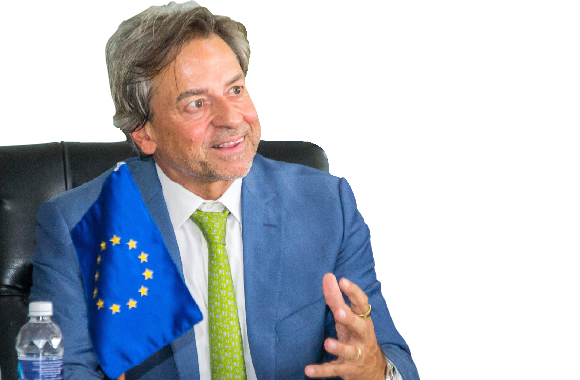
As the European Union (EU) top diplomat AMBASSADOR JOBST VON KIRCHMANN’S tenure in Zimbabwe draws to a close next month, our reporter EMMANUEL KAFE sat down with him to reflect on his time in the country and discuss the evolution of social, economic and political relations between Zimbabwe and the EU.
**********************
Q: Looking back at your term since October 2022, how would you describe the evolution of social, economic and political relations between Zimbabwe and the European Union?
A: Overall, the EU-Zimbabwe relationship has evolved positively over the past few years. It is a longstanding partnership, rooted in mutual respect; and during my tenure, we have worked to strengthen it further through open and constructive dialogue. We may not always agree, but I hope there is now a stronger basis of trust and cooperation.
Economically, progress has been significant. Trade between the EU and Zimbabwe has grown by more than 30 percent since 2021, with the EU now Zimbabwe’s fourth-largest trading partner and the largest buyer of its horticultural exports. The first-ever EU-Zimbabwe Business Forum was another milestone, bringing together over 250 companies, highlighting the strong interest in partnerships and investment opportunities.
The EU has also been a steadfast supporter of the Arrears Clearance and Debt Resolution Process, recognising its importance in restoring economic stability, unlocking international financing and creating the right conditions for sustainable growth. Through the Team Europe approach, the EU and EU member states continue to support Zimbabwe’s development priorities with an ongoing project portfolio of over US$600 million, with a focus on greener and climate-smart agriculture, gender equality and women’s empowerment, as well as renewable energy and private sector development — all fully aligned with Zimbabwe’s National Development Strategy 1 and Vision 2030.
Q: What have you personally learned during your time as EU ambassador to Zimbabwe? Are there any experiences or interactions that have significantly shaped your view of Zimbabwe and its people?
A: My time in Zimbabwe has been rich in experience, both professionally and personally. I will say this time and time again, but I find the people of Zimbabwe to be really fantastic. In several interactions I have had across the country, I have always been met with warm, friendly people. This, coupled by a truly beautiful country rich in natural resources and cultural heritage, has left quite an impression on me and my family. Professionally, one thing that really struck me was also how polarised the people are, and this was something challenging to navigate.
Q: How would you characterise the spirit of Zimbabweans, and what elements of Zimbabwean society and culture stood out most during your stay?
A: Zimbabwe is a beautiful and complex country, full of talent, resilience and potential. I have been struck by the warmth and hospitality of Zimbabweans, as well as their entrepreneurial spirit. What stood out to me most? The level of innovation and optimism among young people. Despite economic challenges, Zimbabweans are very resourceful, always “making a plan!”
Q: Latest trade data shows that in 2024, Zimbabwe exported goods worth €255 million to the EU and imported goods worth €538 million from the bloc. What are the main sectors driving these exports and imports, and how have these trade flows evolved during your tenure?
A: You are right to point out the positive trend. Trade between the EU and Zimbabwe has grown significantly in recent years. In fact, in 2023, the total trade volume reached US$881 million, an increase of over 30 percent since 2021, positioning the EU as Zimbabwe’s fourth-largest trading partner. Notably, Zimbabwe also enjoys a positive trade balance with the EU, exporting more goods than it imports — a clear sign of the strength and potential of our partnership. Zimbabwe has benefitted from duty-free and quota-free access to all 27 EU member states under the Economic Partnership Agreement (EPA) since 2012.
This has opened significant opportunities, particularly for agriculture, which continues to be the main driver of exports. In 2023, agricultural products accounted for 47,3 percent of Zimbabwe’s EU-bound exports, with the EU purchasing over 40 percent of Zimbabwe’s horticultural products, including blueberries, mangetout peas, sugar snap peas and citrus fruits.
Other major exports include tobacco, semi-manufactured products like iron and steel, and mining products such as diamonds and gold. Belgium is the primary entry point into the EU single market, handling more than half of these exports. On the import side, the EU provides goods essential for Zimbabwe’s industrial and economic growth. In 2023, the main imports were machinery and equipment, chemical and pharmaceutical products, precision instruments, cereals and vehicles.
In fact, Germany was Zimbabwe’s largest EU supplier, accounting for 17,3 percent of imports in 2023. What is encouraging is that these trade flows are not just about numbers — they are enabling real economic impact. European machinery, technology and expertise are supporting value addition and productivity in Zimbabwe’s agriculture, transport, tea and leather processing sectors. The progress we have seen shows the potential for even deeper economic ties and the EU is committed to helping Zimbabwean businesses take full advantage of the EPA by meeting EU standards and expanding into new market segments.
Q: Which recent initiatives or business forums have been most impactful in promoting EU-Zimbabwe investment and trade collaboration? How do you see the role of EU private sector investment progressing in the coming years?
A: The past few years have shown very encouraging progress in EU-Zimbabwe trade and investment relations.
Trade has grown by over 30 percent in the last three years, reaching US$881 million in 2023, while foreign direct investment rose by 90 percent, from US$460 million in 2021 to almost US$870 million in 2023. Much of this is driven by the Economic Partnership Agreement, which allows Zimbabwean exports duty- and quota-free access to all 27 EU markets. One of the real highlights was the EU-Zimbabwe Business Forum held in May 2025. It attracted over 250 companies, including 64 EU entities, and generated more than 1 700 direct business contacts.
We saw concrete discussions on multi-million-dollar deals in renewable energy, mining value chains and agro-processing. The speed networking sessions were particularly successful, helping Zimbabwean entrepreneurs connect with European investors who can bring in not just capital but also technology and skills. On the financing side, we have worked to strengthen the private sector through credit lines to local banks.
Since 2021, the European Investment Bank (EIB) and PROPARCO, with EU guarantees, have provided over US$100 million to commercial banks such as CABS, FCB, NMB and Stanbic.
These funds are on-lent to SMEs (small and medium enterprises) with longer loan tenures, lower interest rates and grace periods, helping businesses — especially in horticulture and renewable energy — expand, create jobs and build resilience. These facilities are performing very well (zero default so far) and show that there is real appetite for investment. Looking ahead, I expect private sector investment to grow further. We have just launched the Zimbabwe country window of the Global Energy Transformation Programme (GET.pro) to help unlock more renewable energy investments.
We also have six new EU guarantees under negotiation, which could bring additional capital for SMEs and green energy projects. Of course, unlocking Zimbabwe’s full potential will also depend on improving the business environment and regulatory framework, as many investors stressed at the EU-Zimbabwe Business Forum. Progress in the Arrears Clearance and Debt Resolution Process will be key, as it could eventually open the door to sovereign lending and further boost investor confidence.
The EU is committed to reaching the milestone of US$1 billion in both trade and investment with Zimbabwe in the near future. The direction is positive. We are moving away from traditional aid and towards a true economic partnership, where Zimbabwean and European businesses grow together.
Q: The EU has gradually eased its restrictive measures on Zimbabwe, with the latest sanctions framework only targeting an arms embargo and previously a single entity, which has now been delisted. How have these developments been received by the authorities and the public in Zimbabwe, and what further steps might help normalise relations?
A: I think the easing of restrictive measures has generally been received positively, which indicates a normalisation of the relations. In reality, there is no impact on the economy as you can see in the growing cooperation between the EU and Zimbabwe, especially in trade and investment. In fact, Zimbabwe now enjoys a positive trade balance with the EU, thanks in part to duty-free and quota-free access under our Economic Partnership Agreement. These are strong signs of confidence and real opportunities for Zimbabwean businesses.
That said, there are still misconceptions. Some people still believe the EU has sanctions affecting Zimbabwe’s economy; in particular, the capital market. This is simply not the case. The only remaining measure is an arms embargo, which restricts European companies from selling arms to Zimbabwe.
This does not affect trade, investment or the daily lives of Zimbabweans in any way. We have a free trade agreement with Zimbabwe, which is well used and the issues linked to the capital market stem from the fact that Zimbabwe has debt and arrears of over US$20 billion, making it currently difficult for many European banks to operate in Zimbabwe.
Q: With regional dialogues such as the SADC-EU Ministerial Partnership Dialogue taking place in Harare in March 2025, what role do these high-level engagements play in shaping future cooperation and addressing challenges like climate change and regional security?
A: High-level engagements like the SADC-EU Ministerial Partnership Dialogue are essential because they allow us to look beyond bilateral relations and address issues that are inherently regional or even global. I am very happy that this dialogue took place under the Zimbabwean leadership. For us it was also a historic moment with the visit by the Polish Foreign minister in Zimbabwe, who chaired the meeting on our side. These dialogues provide a platform for frank, constructive discussions with multiple partners at once, aligning our priorities and identifying where we can work together more effectively. For example, on climate change, they help us coordinate efforts on renewable energy investments, climate-smart agriculture and sustainable natural resource management across the region.
Challenges such as climate change, energy transition and regional security don’t stop at national borders, so they require collective responses. On regional security, they strengthen cooperation on peacekeeping, conflict prevention and cross-border challenges. In addition, for the EU, I think the dialogue also demonstrated our commitment to being a reliable, long-term partner for Southern Africa, working with regional institutions like SADC (Southern African Development Community) to find solutions that drive stability, growth and resilience across the continent.
Q: The EU remains a key partner in supporting technical and vocational education, renewable energy and infrastructure. Which bilateral projects or collaborations have you found most promising in delivering tangible impact on the ground?
A: Today, the EU is Zimbabwe’s largest provider of official development assistance, with Team Europe’s current bilateral development portfolio amounting to almost US$600 million. That’s a strong sign of how much we believe in Zimbabwe’s potential, and it’s reflected in the projects we have supported — whether in education, renewable energy or empowering women and the youth across the country. Having said this, I believe the future is in support of the private sector, whether that be Zimbabwean or European. The private sector is also at the heart of our Global Gateway initiative.
I have talked about some of the promising programmes like GET.pro, which is unlocking renewable energy investments, and big collaborations like the Kariba Dam rehabilitation, which benefits millions in both Zimbabwe and Zambia, and the European Investment Bank credit facilities through local banks, which are helping small businesses grow, create jobs and build resilience.
I have seen those impacts first-hand. In many of our programmes, we have put emphasis on women. For example, we have supported women farmers in climate-smart agriculture, trained women and the youth in technical and vocational skills, and provided access to finance to help them become active players in local economies.
The impact is real. According to the latest Zimbabwe Demographic and Health Survey (202-2024), women’s participation in decision-making has jumped to 75 percent. This is only possible because Zimbabwe is equally committed to empowering women. It is a good example of how we can build bridges. For us, our engagement in Zimbabwe is a long-term commitment to build a lasting partnership.
Q: How do you view the current balance between trade, aid and direct investment as instruments of the EU’s engagement with Zimbabwe?
A: Our engagement with Zimbabwe is evolving. The focus is shifting — from aid dependency to a partnership rooted in shared growth, innovation and mutual opportunity. We are working towards a future where African and European businesses, governments and communities thrive together. If I had to rank the EU’s engagement tools for Zimbabwe’s long-term growth, trade comes first, investment second and aid third. Trade is the real engine of sustainable growth.
The EU is already one of Zimbabwe’s top trading partners, with total trade reaching nearly US$900 million in 2023, and Zimbabwe enjoying a positive trade balance — thanks largely to strong horticultural exports. This is exactly the kind of success we want to expand because it creates jobs and economic opportunities. Second is investment. Private sector investment is what transforms economies, and we have seen encouraging signs here too.
Read more on www.sundaymail.co.zw
Since 2021, institutions like the European Investment Bank and PROPARCO have channelled over US$100 million in credit lines to Zimbabwean banks, supporting SMEs in key sectors like horticulture and renewable energy.
The EU–Zimbabwe Business Forum also showed real appetite for partnerships, with potential deals in agro-processing, mining value chains and clean energy. Aid still plays a role, particularly in supporting resilience, gender equality, health and climate-smart agriculture.
Team Europe’s development portfolio of nearly US$600 million is designed to support Zimbabwe’s own national priorities. But looking ahead, our ambition is to help unlock more trade, attract more sustainable investment and support Zimbabwe’s growth on its own terms.
Q: Lastly, if you had one message to share with Zimbabweans and Europeans about the future of this relationship, what would it be?
A: If there is one thing I would like people to remember, it would be this: Silani, Tinemi — the EU is with you. We want Zimbabwe to succeed. Europe and Africa are the closest continents — not just geographically, but historically and socially, too. We know each other well. Our partnership is rooted in that closeness, and over the years, the EU and Zimbabwe have built a strong, respectful and forward-looking relationship. Since 1981, the EU has stood with the people of Zimbabwe, through good times and difficult ones. We have treated Zimbabwe as a sovereign and equal partner, and that respect has allowed our relationship to grow. Today, our relationship is grounded in shared values, mutual respect and a common vision for a more inclusive and prosperous future. Looking ahead, I believe the future of EU–Zimbabwe relations holds real promise — for deeper cooperation, greater economic opportunity and lasting mutual benefit. My hope is that the people of Zimbabwe continue to see the EU as a steadfast, reliable partner — because we are.