Online Reporter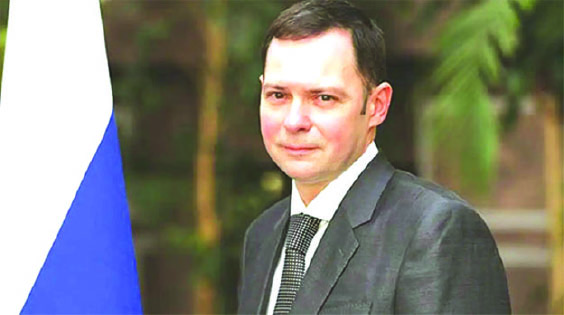
AS Russia commemorates the 80th anniversary of its victory over Nazi Germany in the Great Patriotic War on 9 May, it now faces what it describes as a renewed threat of neo-Nazism from Ukraine — an adversary receiving political and military backing from the European Union (EU) and other Western nations.
Zimpapers Politics Hub’s Gibson Nyikadzino (GN) spoke with Russia’s Ambassador to Zimbabwe, Mr Nikolai Krasilnikov (NK), on how the failure to fully eradicate Nazism after World War II has created conditions for its resurgence. Ambassador Krasilnikov discussed the enduring significance of Russia’s wartime victory, the current Russia-Ukraine conflict, negotiations with the United States, and what he views as the EU’s reluctance to support peace efforts. Below are excerpts from the interview:
GN: What is the significance and relevance of this victory to the Russian people?
NK: The 80th anniversary of the victory in the Great Patriotic War is a sacred day for the entire Russian nation. It plays a vital role in shaping our national identity, mentality, and character. The Great Patriotic War was part of the Second World War, beginning on 22 June 1941, when German troops crossed the USSR border and launched their aggression against the Soviet Union.
Russia was the principal force uniting the former Soviet republics into the USSR and leading the charge to repel the German Nazi forces. We drove them out of Soviet territory and ultimately crushed them in Berlin. The Germans surrendered to the Allied forces and signed the act of capitulation on May 9, 1945.
The truth is, Russia bore the brunt of the Nazi onslaught — facing one of the most powerful, organised, and brutal war machines of the time. Their goal was to either exterminate the Soviet people or enslave them. That never happened. We defeated the Nazis. We made them surrender.
GN: After defeating the Germans, what was your next plan or target?
NK: Three months after our victory in the Great Patriotic War, we declared war on the militarist regime in Japan. This was in line with agreements reached between the USSR, the United Kingdom, and the United States. Alongside the People’s Liberation Army of China, we crushed Japanese resistance. Together with the Americans, we forced their surrender. So, our victory in the Great Patriotic War significantly accelerated the end of the Second World War.
GN: Back then, Russia and the US collaborated to defeat Nazi ideology, a common enemy. What has changed now, considering the emergence of neo-Nazi elements in Ukraine?
NK: During the Second World War, we stood united. The victory achieved by my people was strongly supported by the Allied forces, particularly the US and the UK. We received ammunition, technical support, food, and intelligence. Despite ideological and political differences, we were united against a common enemy.
However, after the war, the Cold War began. Following the disintegration of the Soviet Union, a new geopolitical reality emerged.
The universal challenge is that Nazism was never fully eradicated. Many believed it had been, but the breeding grounds for Nazism, neo-Nazism, and fascism still exist. Issues like racial discrimination, hatred, and xenophobia are unfortunately part of human nature. While we may not like or acknowledge them, they persist.
What’s more concerning is that these sentiments are being nurtured and allowed to grow — with the consent of certain governments. In Ukraine, neo-Nazi sentiments have been cultivated for years, supported by European bureaucracies, particularly the EU.
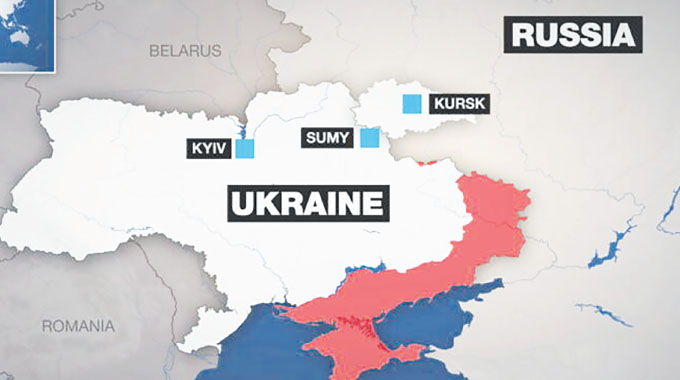
They are attempting to turn Ukraine into a launchpad for aggression against Russia. The goal is regime change in our country. We cannot allow that, which is why the Special Military Operation (SMO) was launched in 2022.
GN: Speaking of the SMO, the September 2022 referendum resulted in Russia acquiring territories from Ukraine. Are there going to be any changes regarding that? Was this strategic in deterring NATO’s eastward expansion?
NK: These territories are strategic in protecting Russian people from discrimination, aggression, and other forms of oppression they experienced under Ukraine’s current neo-Nazi regime. The people in those regions made their choice — they want to be part of Russia, and we accepted them.
We share the same language, the same Russian Orthodox Church, and a common identity. These regions are now integral parts of Russia. There is no question of reversing that development.
GN: And these are the same people who, in 2014, overwhelmingly voted for independence from Ukraine?
NK: Yes, they wanted to separate from Ukraine because Ukrainian neo-Nazis attempted to suppress their national identity. It was a deeply national issue. They sought to distance themselves from Ukraine in order to preserve their cultural and national identity. But more importantly, they wanted nothing to do with the neo-Nazi policies of the regime in Kyiv. One of the objectives of the Special Military Operation (SMO) is to eliminate the conditions that allow neo-Nazism to resurface in Ukraine and to ensure that the country cannot be used as a launchpad for aggression — under the guise of neo-Nazi ideology — against Russia or any other territories.
GN: Since President Trump’s return to the White House, there have been direct talks between Russia and the US to end the confrontation. How important is this to Russia and Ukraine?
NK: We acknowledge a shift in approach from the American side in how they are handling the Ukrainian conflict. We are pleased to observe that the current US administration is demonstrating common sense and a willingness to co-operate in pursuit of a long-term resolution to this conflict — one that was fuelled by the reckless policies of the previous administration and the aggressive ambitions of the so-called civilised European bureaucracy. We shall see how far this new approach takes us. Russia is ready to begin direct talks and negotiations with the Ukrainians.
GN: What is stopping negotiations with Ukraine?
NK: The issue is that the other side is unwilling to engage. In 2022, Ukraine passed a law prohibiting its officials from holding talks with Russian representatives. According to their legislation, negotiations are not permitted.
GN: EU President Ursula von der Leyen has said that any negotiations should strengthen Ukraine’s position. Do you see the EU as committed to peace?
NK: Frankly, we do not see the EU as committed to achieving peace in this context. They continue to supply Ukraine with arms and ammunition.
GN: Lastly, President Mnangagwa is attending the Victory Day parade. What does that signify for the historical relations between Zimbabwe and Russia, especially at a time of major geopolitical shifts?
NK: The presence of His Excellency, the President of the Republic of Zimbabwe, Comrade Dr ED Mnangagwa, on Red Square alongside President Putin on such a significant day for Russia underscores the close and special relationship between our two nations. It reflects the shared aspirations of Russia and Zimbabwe to move forward — together with like-minded countries from Africa and the Global South — towards the establishment of a more just, democratic, and multi-polar world order for the benefit of all.