

 admin
admin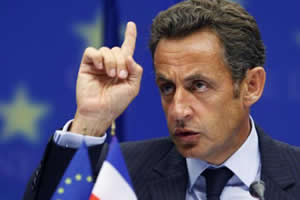
on Zimbabwe in retaliation for the government’s decision to acquire land from white for- mer commercial farmers without compensation.
However, the head of Europe’s 440 billion Euro bailout fund played down hopes of a quick deal from China amid reports that Beijing had proposed tough conditions.
Klaus Regling, chief executive of the European Financial Stability Facility, was in Beijing for talks with Chinese officials a day after Euro zone leaders struck a last-minute accord on the two-year-old debt crisis.
French President Nicolas Sarkozy, who is also current EU president, said he had spoken to Chinese President Hu Jintao by telephone on Thursday and that President Hu was relieved Europe had announced a deal to tackle a debt crisis that otherwise could have taken down the entire world economy.
He also defended the idea of Chinese investment in Europe’s anti-contagion fund, donning the hat of Euro salesman.
ALSO READ
In an interview with Chinese state television, Mr Hu said: “China has a major role to play. China must deploy more resources to stimulate the world economy: If they decide to invest in the Euro rather than the dollar, why reject that?”
“Why not accept that the Chinese place their trust in the Euro zone?”
European leaders are now under pressure to finalise the details of their plan to slash Greece’s debt burden and strengthen their rescue fund.
After their summit in Brussels, governments announced an agreement under which private banks and insurers would accept 50 percent losses on their Greek debt holdings in the latest bid to cut Athens’ debt load to sustainable levels.
DISCUSS THIS STORY ON FACEBOOK
Regling said the bailout deal with Greece was an exceptional case that he did not believe would have to be repeated for other nations.
Many in financial markets are concerned that the fund is not big enough to cope if major economies, Italy and Spain, are drawn deeper into the crisis.
Italy’s borrowing costs hit new Euro-era highs at a bond auction yesterday.
“We all know China has a particular need to invest surpluses,” Regling told a Beijing news conference on Thursday, referring to the country’s US$3,2 trillion of foreign exchange reserves, the world’s biggest.
France said investment by China would inspire confidence.
“The reality is that China is the third largest shareholder in the International Monetary Fund, and if China via the IMF wants to participate, not by saving Greece or the Euro, but by participating in investment, that is a gesture of confidence,” French Finance Minister Francois Baroin said.
“What is happening in Europe and creating instability is that public and private investors are pulling out,” he told RMC radio.
The deal, reached after over eight hours of hard-nosed negotiations between bankers, heads of state also foresees a recapitalisation of hard-hit European banks and a leveraging of the EFSF, to give it firepower of one trillion euros. – www.dailymail.co.uk


 Online Reporter