

 admin
admin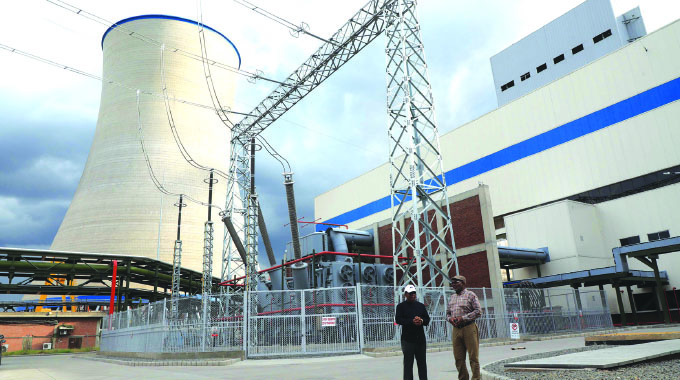
Correspondent
Dreams and ambitions of people living in rural areas are changing and being reshaped, especially after the advent of the Second Republic in 2017 under the leadership of President Mnangagwa.
Locally, leaving no-one behind is a statement that has been accompanied by actions which have led to a paradigm shift among rural folks.
In these very spaces, despair has been replaced by a new belief and massive confidence that in no time our rural areas will be the places to be.
As has been stated ‘leaving no-one behind’ is the central, transformative promise of the 2030 Agenda for Sustainable Development and its Sustainable Development Goals (SDGs).
According to UN women: “Leaving no-one behind represents the unequivocal commitment of all UN member-states to eradicate poverty in all its forms, end discrimination and exclusion, and reduce the inequalities and vulnerabilities that leave people behind and undermine the potential of individuals and of humanity as a whole.
“Leaving no-one behind not only entails reaching the poorest of the poor, but requires combating discrimination and rising inequalities within and among countries, and their root causes.
“A major cause of people being left behind is persistent forms of discrimination, including gender discrimination, which leaves individuals, families and whole communities marginalised and excluded. Leaving no-one behind compels us to focus on discrimination and inequalities (often multiple and intersecting) that undermine the agency of people as holders of rights.
“Many of the barriers people face in accessing services, resources and equal opportunities are not simply accidents of fate or a lack of availability of resources, but rather the result of discriminatory laws, policies and social practices that leave particular groups of people further and further behind.”
People that are living in the rural areas are happy that the Second Republic has committed to ensuring that no one in the country is left behind as far as socio-economic development is concerned.
By committing to leaving no-one behind, President Mnangagwa has prioritised the interests of the most vulnerable and disadvantaged groups in our society.
Through programmes such as devolution, rural industrialisation, road construction and power projects, the leadership is ensuring that we are developing a country where no-one is denied opportunities because of who they are or where they come from.
Naysayers may disagree, prophets of doom may utter their prophecies of gloom but, in reality, we are all witnessing policies and programmes that are creating a Zimbabwe where we will all lead dignified lives, free from fear of want and where citizens realise their full potential.
Leaving no-one behind means hearing all the voices and true to his word, President Mnangagwa has been a listening leader.
Every programme and project that is being implemented and completed is a step towards the Zimbabwe we all want and, truly leaving no-one behind, is a response to the people’s needs.
Leaving no-one behind means prioritising human dignity, and placing their needs at the top of the development agenda by addressing the structural causes of inequality and marginalisation.
The New Dispensation has not dilly dallied in this regard; the country is being built and steadily taking shape after years of battering by the illegal sanctions imposed by Britain, the US and the EU.
Projects currently running include road construction and rehabilitation, dam construction as well as creation of irrigation facilities to be supported by completed and now functional water bodies as well as power generation projects across the country.
Ongoing power projects being implemented include the Hwange Power Project which is being implemented by the Second Republic and is running parallel to the US$1,4 billion Hwange Unit 7 and 8 expansion project all of which seeks to augment power supply to the national grid through Hwange Power Station which will add 600MW to the national grid and ease power shortages.
ZPC reported that last year (2022) the quarterly target which was set at 1 885,30GWh was surpassed by 18,55 percent.
This mainly attributed to improved reliability and plant optimisation at Hwange, as well as increased generation at Kariba hydro electric power station to cater for high system demand, the company reports.
With adequate power supply, the sky is the limit for any development.
The Second Republic has reversed, and continues to reverse, the decay of the country’s road infrastructure with ongoing road construction projects delivering trafficable world-class roads for public convenience and a boost to economic activity.
Earlier this year, the Zimbabwe National Water Authority (ZINWA) started equipping 504 boreholes drilled countrywide under the ongoing Presidential Rural Development Programme through installation of solar systems and bush pumps to improve people’s access to clean and potable water.
The Presidential Rural Development Programme, which was launched in 2021 by President Mnangagwa in Matabeleland South Province, is anticipated to help unlock opportunities for rural communities in terms of access to clean and safe water, food security, poverty alleviation and employment creation.
Government aims to drill at least one borehole in 35 000 villages across all provinces.
The devolution programme has resulted in construction and upgrading of facilities in the rural areas in a bid to take them to the level of those in urban areas.
After instituting these various projects, which include construction of dams, roads, clinics, hospitals and schools, the promotion of rural vitalisation is now on a pedestal.
This goal can be realised through the establishment of rural industries and provision of agricultural technologies.
Those following developments on the development arena can testify that there has been a lot of movement in these areas meant to shift the mentality of those dwelling in the rural areas and to discourage the rural-urban migration, since the two will soon be at par.
No-one is being left behind.
President Mnangagwa made this point clear while commissioning the Marula/Mapfura Processing and Value-Addition Factory built by the National Biotechnology Authority of Zimbabwe at Rutenga Growth Point last year.
“Our national vision of a prosperous and empowered upper middle income economy by 2030 entails uplifting the people in every part of our great country, in particular those in rural areas and growth points,” he said.
This shows that vitalisation of rural areas and making rural people prosperous is a goal that the Second Republic has set, and this goal is being achieved.
The onus is on every citizen to be part of everything happening and to be supportive.
Nyika inovakwa nevene vayo/Ilizwe Ilizwe lakhiwa ngabanikazi balo.



 Online Reporter