admin
admin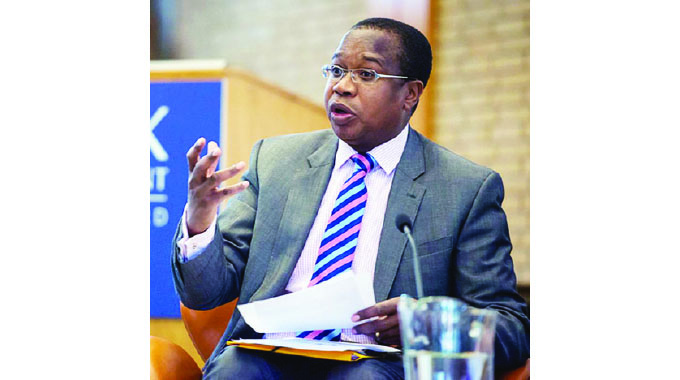
Oliver Kazunga Senior Business Reporter
THE acceptance by some individual white former commercial farmers to be compensated using Treasury Bills (TBs) for only improvements made on land acquired by the Government to resettle landless majority, accords the country an opportunity to resolve part of its heavy debt burden, analysts have said.
Speaking to journalists through a webinar press conference from Morocco last week, Finance, Economic Development and Investment Promotion Minister Professor Mthuli Ncube, said some individual white former commercial farmers who occupied farms acquired by the State during the land reform programme in 2000, had agreed to the TBs compensation model for improvements made on the farmland.
“Individual farmers have agreed to the payment plan and they are happy to sign with the Government,” Minister Ncube said.
The latest development comes after a faction of white former farmers in a referendum on the TBs alternative compensation framework for the developments on land reportedly turned down the payment modality.
In an interview, the Zimbabwe Commercial Farmers Union president, Dr Shadreck Makombe, said while the compensation for the improvements on the farms had been received with mixed feelings, the latest development was a positive step in the right direction.
“I for one, think what is happening is a step in the right direction because you would find we were losing markets many a time when it was being said your produce, which you are selling, is from contested land.
“Given the situation right now, you would find that’s a move in the right direction especially to those white former commercial farmers who have accepted these Treasury Bills. In a way, they are saying whatever happened, we accept this compensation for improving the facilities on the farms. So, by their acceptance of Treasury Bills, they are saying let’s go forward and that’s a good move as opposed to others who are intransigent.
“I am commending those farmers for saying let’s resolve these issues on hand,” he said.
“As it is Zimbabwe is constrained in terms of finances and other attendant problems thereto, so if you find people who are flexible, we should commend them.”
The Government of Zimbabwe signed the Global Compensation Deed in April 2021 with two unions representing white former farmers who occupied land repossessed by the Government to resettle the landless black majority. These included the Commercial Farmers Union (CFU) and the Southern African Commercial Farmers Alliance.
According to the CFU, the Global Compensation Deed had the support of 2 759 farmers out of the 2 896 who voted before it was signed while 137 were against the deal.
The Government has been under immense pressure to compensate the white former farmers for the improvements on the land acquired during the land reform programme.
And after defaulting twice on the agreement to meet its end of the bargain on the US$3,5 billion liability for developments made on the acquired farms, the Government came up with a revised plan that had a longer tenure of payment.
Under the Global Compensation Deed, the farmers would have received half of the money within the first year followed by four tranches of US$437,5 million annual instalment.
Economic commentator, Dr Langton Mabhanga, echoed similar sentiments as Dr Makombe, saying that the TBs framework was in sync with best practices.
“And I think, the model is the best model possible to resolve the long-standing impasse and this impasse is not necessarily between the Zimbabwean Government and the farmers, but it’s an exception impasse; it’s a brand issue where the Government is trying to correct the impasse.”
“This just demonstrates that the Second Republic is all about writing a new legacy story, a story of settling all the issues that might have previously been a stand-off — settling every matter that can bar or retard investment in the country, we are trying to clear all hurdles on the way readying the nation for a greater investment attraction, attraction to build an economic growth trajectory.”
“Mind you farmers are not being compensated for the actual land, land remains an asset of the Government of Zimbabwe, they (white former commercial farmers) are being compensated fairly for the improvements that they made whilst there were running the farms as business and the Treasury Bills methodology is best practice.”
The acceptance of TBs as compensation for the land improvements on the repossessed farms could go a long way in reducing the Government’s indebtedness relating to the acquired land for resettling the once marginalised indigenous majority.
Asked about his thoughts on assertions from certain quarters that the TBs could create inflationary pressures as the Government might be required to print more money, Dr Mabhanga said: “These Treasury Bills allow the Government of Zimbabwe ample time to plan for the redemption of Treasury Bills.
“The issue of them (TBs) fuelling inflation is a myopic view, there is a greater view to it. You cannot only talk about the amortisation of the investments done by the white commercial farmers in terms of how you unleash potential growth and maximum utilisation of farms, but it also enhances Zimbabwe’s attractiveness to investors.”
Another economic commentator, Mr Farai Mutambanengwe, said the only challenge that could arise when compensating the white farmers, using TBs, for improvements made on the land acquired by the Government, is when the debt instruments become due.
He said the Government would need to be proactive and make sure it has adequate resources to fund the payments on the maturity of the TBs to avoid the temptation to print money to meet the obligations.
However, Minister Ncube has been on record countless times that the Government is able to ring-fence its US dollar incomes to meet external obligations as they arise, for instance in the event that it raises funds through a bond instrument.
“This debt is not external debt but is part of the total (sovereign) debt, maybe the only other issue becomes which currency (the TBs are issued in).


 Online Reporter