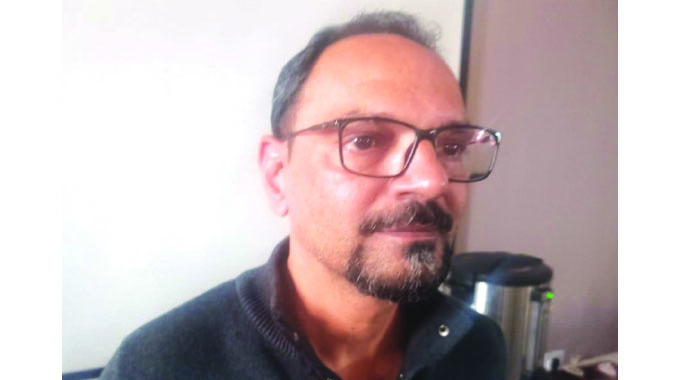
The Centre for Science and Environment (CSE), the India-based think tank, in association with Media for Environment, Science, Health and Agriculture (MESHA-Kenya) released the first edition of the State of Africa’s Environment 2023 report recently in Nairobi, Kenya — a valuable tool that provides insights into the disproportionate impact the continent is suffering due global warming. In this report, Sifelani Tsiko (ST), The Herald Agric, Environment & Innovations Editor speaks to Richard Mahapatra (RM), managing editor, CSE Down To Earth and head of the editorial board about this inaugural report.
****
ST: What motivated CSE and MESHA to document the inaugural State of Africa’s Environment 2023 Report?
RM: CSE has been working in Africa as a leading think tank focusing on the global south. Down To Earth is a fortnightly magazine that has been reporting the global south with a special focus on Africa.
We see this as a first effort to make people aware of many environmental crises the continent is facing and also the solutions the continent is evolving to face those. Africa’s developmental challenges are critical to the world meeting all its challenges. So, the solutions the continent offers are also critical globally.
The State of Africa Environment 2023 report aims to document this and thus working as a pan Africa annual report card that policy makers and others can use to design the development charter. It is also to equip us in general with an instrument that will help us change the ways the continent moves.
ST: Coming up with such a report is not an easy and cheap. Can you share your experiences on how you collaborated with researchers and journalists in Africa to come up with this comprehensive report?
RM: The inaugural edition has been in the making for the last three years. What makes this report unique and thus impactful is that it synthesised reportage and research of over 100 journalists, scientists, economists representing media houses, academic institutions, scientists and global bodies like the UN agencies. Local stories from over 23 countries were processed while experts’ analysis were used to bring out the key messages. One way, this is a report that brings in citizens’ involvement. It is an inclusive statement on the continent’s state of affairs in environment and development.
ST: What do you think makes this report unique? What elements make it stand out?
RM: As pointed out, it had a unique effort encompassing inputs and research from a wide section of the society and the first to be on the continent while incorporating country-wise situations to make the broad statements.
ST:. Can you tell us briefly about the main highlights or key findings of the State of Africa’s Environment Report 2023?
RM: The most critical message: State of Environment in the continent decides it’s overall well-being. But environmental degradation is widespread thus the poverty and resultant conflicts. Over 80 percent of Africa’s population depend on natural resources. So any degradation in the natural environment will have a direct impact on their livelihood and income. The African Development Bank estimates that the natural capital of the continent is 6.2 trillion US dollars which is three times of the continent’s economy. So why is there so much poverty? The report explores this conundrum.
ST: Coming up with such a report takes a lot of determination and focus. How do you feel about the success?
RM: If the report generates debate and discussions, it has achieved its first objective. If it leads to impacts in terms of policy change, it has served its purpose.
ST: Can you tell us briefly about the history of your partnerships with African researchers and institutions? How do you see this collaboration moving into the future?
RM: We have been working in partnership with several governments and NGOs for over a decade. We have been working with the media in the continent for decades. The report is an outcome of that. In future the collaboration will further strengthen and mature.
ST: Tackling environmental issues is very complex and demanding. Looking at the latest report, what do you think needs to be improved in future?
RM: Yes, it is a complex issue. But given that the environment is critical to overall development in the continent, it is also the issue that needs to be focused on. Briefly, the continent has to focus on cleaning its environment, preserving land and forests and bringing its own local knowledge and models of development to cater to its unique development challenge.
ST: What were some of the challenges you encountered in the development of the report?
RM: Making a continental statement. But we have managed well to transmit the messages.
ST: This report has stimulated dialogue and debate about the state of Africa’s environment. How do you see this report shaping and influencing Africa’s position at CoP28 in Dubai next month?
RM: The report has made clear that Africa is at the centre of global development. Though it contributes the least to climate change it is the worst victim. For the CoP, this report provides the challenges and solutions of and from the continent that can feed into the CoP discussions. Two things to be specific: how the world will compensate for the loss and damage caused to the continent due to climate change and secondly, how to make the carbon trade beneficial to the community which does not happen now.