admin
admin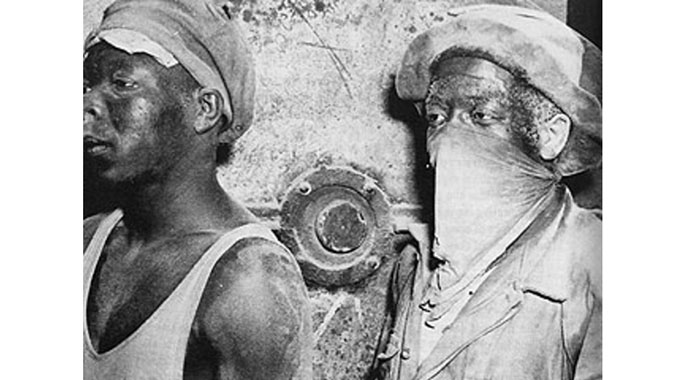
Dumisani Nsingo, Senior Business Reporter
EX-WENELA Miners Association of Zimbabwe has expressed hope that its members who used to work in South African mines over four decades ago and dependants of those who passed away will soon receive their compensation with the neighbouring country’s courts expected to approve their payment next month.
Ex-Wenela Miners Association of Zimbabwe president Mr Lungelwe Mkwananzi said the South African High Court was expected to approve a conditional settlement reached between the neighbouring country’s mines and its former expatriate workers’ representative bodies on 27 July. On 29 May, Johannesburg High Court Judge Phineas Mojapelo reserved the proposed settlement approval for another sitting on 27 July.
“Deputy Judge President Mojapelo reserved judgment and the way he put it, judgment will be made not later than the 27th of July. This is the current position in terms of benefits coming out of the settlement.
“We had thought we are now getting to the finalisation of the matter on the 29th to 31st of May but in as much as we are disappointed we still believe on the 27th of July it’s coming through. The unfortunate thing is that we are losing quite a number of our members, that’s one other challenge,” said Mr Mkwananzi.
Six companies, African Rainbow Minerals, Anglo-American SA, Anglo-Gold Ashanti, Gold Fields, Harmony, Sibanye-Stillwater and some of the affiliate mining entities have reached a conditional settlement to pay compensation to eligible former Wenela mine workers and dependants of those who have passed away. The pay-outs would be processed via a trust called Tshiamiso Trust that shall be established and would exist for a minimum of 13 years.
Wenela is an acronym for Witwatersrand Native Labour Association, comprising former South African mine workers drawn from Zimbabwe, Malawi, Botswana and Mozambique.
Mr Mkwananzi said if the courts fail to reach a conclusive judgment there would be a need for governments of the former miners to interfere.
“We feel a little bit let down, I think we aren’t getting enough assistance . . . looking at the period it has taken, governments should also come in to support us in pursuance of our benefits especially looking at people from Zimbabwe and Malawi because we now have less of our citizens working in South African mines but other countries like Botswana, Mozambique, Swaziland and Lesotho still have a number of their nationals working there,” he said.
He said about 8 000 former miners are registered with the association although the registration process is ongoing.
“We are still waiting for quite a number of names that are coming from areas such as Rusape and Lupane but if I have to give it as an estimate, I think we are going to be around 10 000 or just slightly more,” said Mr Mkwananzi.
Most of the affected stopped working without knowing that they had accrued benefits that they were supposed to be paid, with a significant number believed to have been infected with dust related illness and succumbed to lung infections.
Mr Mkwananzi, however, said the association’s members had started receiving medical treatment through the Southern Africa TB in the Mining Sector Initiative.
“We have people who are going for benefit medical examination at the Kadoma Occupational Service Centre. These medical centres were created through the Southern Africa Tuberculosis (TB) in the Mining Sector Initiative. It’s happening in all the Sadc countries who once supplied labour to South Africa. The very recent one was built in Zambia about two months ago. It caters for everything including the transportation of people, accommodation and food,” he said.
The Southern Africa TB in the Mining Sector Initiative is one of the key initiatives led by the South Africa Knowledge Hub.
It is an innovative multi-stakeholder effort involving Government, civil society, development and private sector partners aimed at combating TB in the mining sector in the Southern Africa region.
Mr Mkwananzi said mine workers were mostly vulnerable to TB. The high incidence of TB in the mining sector has been an invisible crisis that has eroded economic development in the Southern African region. Collaboration between the World Bank and Southern African Governments culminated in the signing of the Southern Africa Development Community Declaration on Tuberculosis in the Mining Sector by 15 Heads of State, a landmark solution to a crisis that plagued the region for a century.
@DNsingo


 Online Reporter