


 Chronicle Editor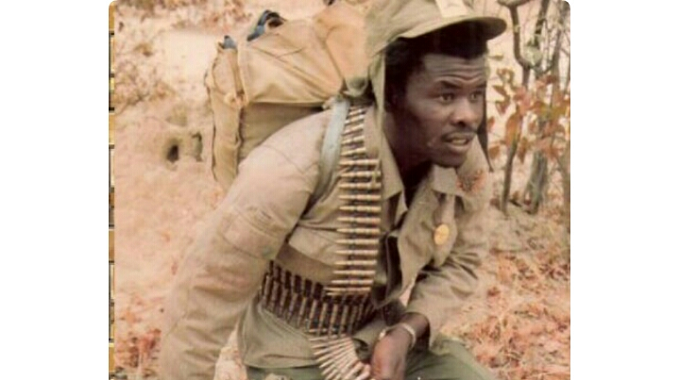
WE continue our interview with former Zipra regional zone commander in the Northern Front 2 (NF2) Cde Andrew Ndlovu whose pseudonym was Cde Cleopas Ndanga who also operated under the name Volunteer Commando Mkhwananzi. Cde Ndlovu who trained at Morogoro in the famous group of 800 and the then Soviet Union first operated in a reconnaissance unit in areas around Kariba between June to December 1977.
In January 1978 he was deployed to NF2 which covered Binga, Lupane and Nkayi districts in Matabeleland North Province. Last week the interview with our Assistant Editor Mkhululi Sibanda (MS) ended with Cde Ndlovu talking about his arrival in NF2 leading a unit of 140 guerillas. Today he takes over from there. Below are excerpts of the interview:
MS: You were still talking about your arrival in Binga at Tinde to be specific. Maybe let us go back and tell us about how difficult it was to cross the Zambezi River.
Cde Ndlovu: You know for Zipra forces when coming from the rear in Zambia, there were many enemies to contend with, the first was the Zambezi River itself. When guerillas arrived at the river, it was not easy to go down to the water because the terrain was so steep and slippery. Guerillas had to sit first and slide down. Sasitsheda ngezibunu.
If you didn’t do that you would just fall. Then after sliding down, there was the river to contend with, Zambezi is big by the way although those who identified the crossing points such as Dumiso Dabengwa did a good job by choosing where it is narrow, but still it was not easy. Some comrades would literally cry or wet their pants at the sight of the Zambezi.
Then after getting on the dinghies there was the water now to deal with, in that water there were hungry crocodiles and aggressive hippos. Some guerillas lost their lives after being attacked by the hippos. When crossing there were high chances of coming into contact with the enemy as the Rhodesian forces used to carry out patrols.
So the guerillas devised a way of crossing at night from 7pm, our unit started crossing at about 7pm and because of the big number the last group crossed at 4am. After crossing to the Rhodesian side, the guerillas had to deal with the enemy forces who might by lying in ambush. The good thing was that our crossing points were expertly chosen so in most cases the enemy never suspected that guerrillas might use those places. From the Zambezi River there was a mine field stretching for 20km to contend with. We had to go through Kavira Forest, which was heavily mined. Guerillas used to take around 18 hours to navigate through Kavira Forest before reaching an area called Makulubusi in Binga.
MS: In all this, what would the comrades be carrying?
Cde Ndlovu: A guerilla would be carrying ikasha with 1 000 loose rounds of ammunition, bazooka shells, a bandolier with seven to eight loaded magazines plus the weapon, which for the majority was an AK-47 rifle, grenades, anti-personnel and anti-tank mines as well as food stuffs because we were given rations when leaving the rear in Zambia. With that load you were expected to move within the thicket and cross the Zambezi River with all the risks and dangers associated with that river. However, this is what all the guerillas who fought at the front from Zambia went through, they experienced that.
There was no shortcut, we had to shoulder all the difficulties and here we are in a free Zimbabwe. Mind you, we did that when some of us were still very young. When I was deployed to the front in 1977 I was just 20. As one of the field commanders I had to come up with strategies of hurting the enemy, surviving, driving the war forward and also being responsible for the lives of my comrades. At that tender age I had to make critical decisions.
MS: We had diverted Cde Ndlovu, then take us through on what you did after arriving in Tinde.
Cde Ndlovu: After arriving in Tinde at about 2pm, we asked for food from villagers. While the food was being prepared the Rhodesian forces using helicopters descended on us. A serious battle ensued. It was gunfire for gunfire until around 7pm. During that battle we shot a helicopter, which was forced to land and we managed to retreat.
On our side we did not suffer any casualties and we regrouped and proceeded to Lupane. To cut the long story short, it was a bad day for us as it put all our plans in jeopardy. It was also a baptism of fire for many because for the majority it was the first time to taste the enemy fire. After going through such a situation it brought the reality to all of us that we were at the war front, death could come at any time. There was no time to play.
MS: You are saying that contact put into jeopardy your plans. What were those plans?
Cde Ndlovu: When we were deployed our mission was to operate as a semi-conventional unit that is why we came in a large group of 140. We were supposed to attack big targets, go for the garrisons and other such installations. However, that battle at Tinde called for serious re-thinking. We realised that the situation on the ground could not allow for that, so we reverted to the proper guerilla warfare, the hit and run, which the comrades on the ground were already using.
When we arrived in Lupane there were units that were all over the district, some of the comrades I had trained with at Morogoro. Those were the people who were deployed straight away to the front when some of us were sent to the Soviet Union for further training. There was a unit under Sandlana Mafutha (Sydney Saul Dube) in the Dandanda area, another in areas around Nkayi with comrades like Fidel Castro and the other across the Shangani River under Phebion Mutero (Retired Colonel Ernest Sibanda), which also had the late former Bulawayo war veterans’ chairman, Stanley Donga.
MS: So go on, tell us more about the operations.
Cde Ndlovu: We split the 140 guerillas into smaller units. Some joined those who were already on the ground. However, what we did not change were the orders given, those orders were that we should hold the ground in the Dongamuzi and Mzola areas and turn them into a killing zone. That was meant to create a corridor for the comrades coming from the rear going to different operational areas such as Matabeleland South and Midlands as well as other districts in Matabeleland North like Tsholotsho, Nkayi, Bubi to pass through. They had to pass through Lupane and from Binga, Dongamuzi was the first port of call. All the comrades coming from the rear used to pass through our area of operation and we are the ones who would initiate them into how to deal with the enemy.
MS: Give us a run down of the battles you were involved in.
Cde Ndlovu: Between January 1978 when I arrived in Lupane up to the ceasefire period in December 1979 I was involved in about 40 serious contacts with the enemy. Two of those I almost lost my life, the worst being when I was shot through the cheek, resulting in me losing 14 teeth. However, giving a run down of the battles, it did take us long to come face to face with the enemy after the Tinde contact on our first day of arrival from Zambia.
Immediately after arriving in Dongamuzi, I laid a landmine along the boundary fence near Makeleza Village and a military Jeep was blown up. In that Jeep there were regime commanders who we were told later were on a mission to assess the deployment of their forces. My unit also engaged a mechanised Rhodesian unit supported by helicopters at Empisini near KoGuga and we fought fiercely there and when we withdrew from the sector, we were already scattered with some comrades wounded. A comrade by the name Lenny was captured as he failed to get help, we had thought everything was okay. That comrade was not killed but was kept in custody.
My unit also laid an ambush near Songo Stores and in that battle we were seven, two armed with two MMGs, a bazooka and four AK-47 rifles. We managed to destroy a mine detector truck, which was at the front using a bazooka. We killed most enemy forces on board although one escaped. That guy was seriously wounded and he left his hand in the truck. We tried to locate him as the villagers gave us the direction he had taken. He managed to disappear in the thickets of Lupane on his way to Esiwale Garrison.
MS: So the situation was becoming tense.
Cde Ndlovu: Yes, it was. We took the war to another level. What made the situation worse was that a month after our arrival in Lupane in February, the Rhodesian forces launched Operation Tangent, a move to cut off guerilla supplies from the rear in Zambia. They had realised that there was huge volume of guerilla traffic from Zambia to the front. The first group of 2 000 which was trained in Angola was being deployed to the front, so were those from Mwembeshi. Also others were being deployed after undergoing further training in different countries overseas.
In fact Lupane was cordoned off during the Easter period of 1978, it was clear that the Rhodesians wanted to block the movement of the guerillas and if possible capture those on the ground. Fighting during that period became a daily occurrence and some comrades who had been deployed to areas like Filabusi, Gwanda, Beitbridge and Kezi had to delay their movement as there was intense fighting. However, we drove the Rhodesians out of Lupane, which saw them venting their frustrations on the villagers by burning down homesteads. So some of the battles I am relating to you happened during that period.
MS: Then continue giving us accounts of the battles.
Cde Ndlovu: There was a day we carried out a raid at a farm near the Shangani River. The time was around 6pm. I was commanding a unit of 16 heavily armed guerillas. The farm belonged to a white man called Kenias and he had a neighbour whom the villagers called Maworoworo.
As we advanced towards the farm where there was a military base, a military Jeep suddenly drove out of the base in our direction, we quickly took positions and I was armed with a Dectarov also known as iGrunov. As the Jeep came closer, I opened a barrage of fire of tracer bullets and the enemy vehicle caught fire.
Cde Matshelela opened fire with a bazooka directing it to the base. Other comrades also with small arms directed their fire to the base. That happened for around 10 minutes. But during that time there was a lighter side to the tense moments as one of the comrades came out of cover enjoying my machine gun barrage of fire and shouted: “itshaye Mkhwananzi”. However, we could not account for the enemy losses but we left the base in flames, seen as far as Lubimbi, Dongamuzi and Mzola areas. My unit also carried out an ambush in Mzola area where we assaulted an enemy truck full of soldiers and burnt the truck after taking the tent.
Excited by what we had done to the enemy, the local Zapu chairman, Cde Nyathi went to the scene of the contact, took flesh belonging to one of the white soldiers and went around showing other villagers. When the enemy forces learnt about that, they hunted for him as he had fled into the bush. When they eventually caught up with him they shot and killed him.
To be continued next week with Cde Ndlovu narrating the spine chilling incident of how an enemy bullet went through his left cheek and ripped off 14 of his teeth during one of the battles he was involved in.
Don’t miss your next copy of Sunday News.


 Online Reporter