Online Reporter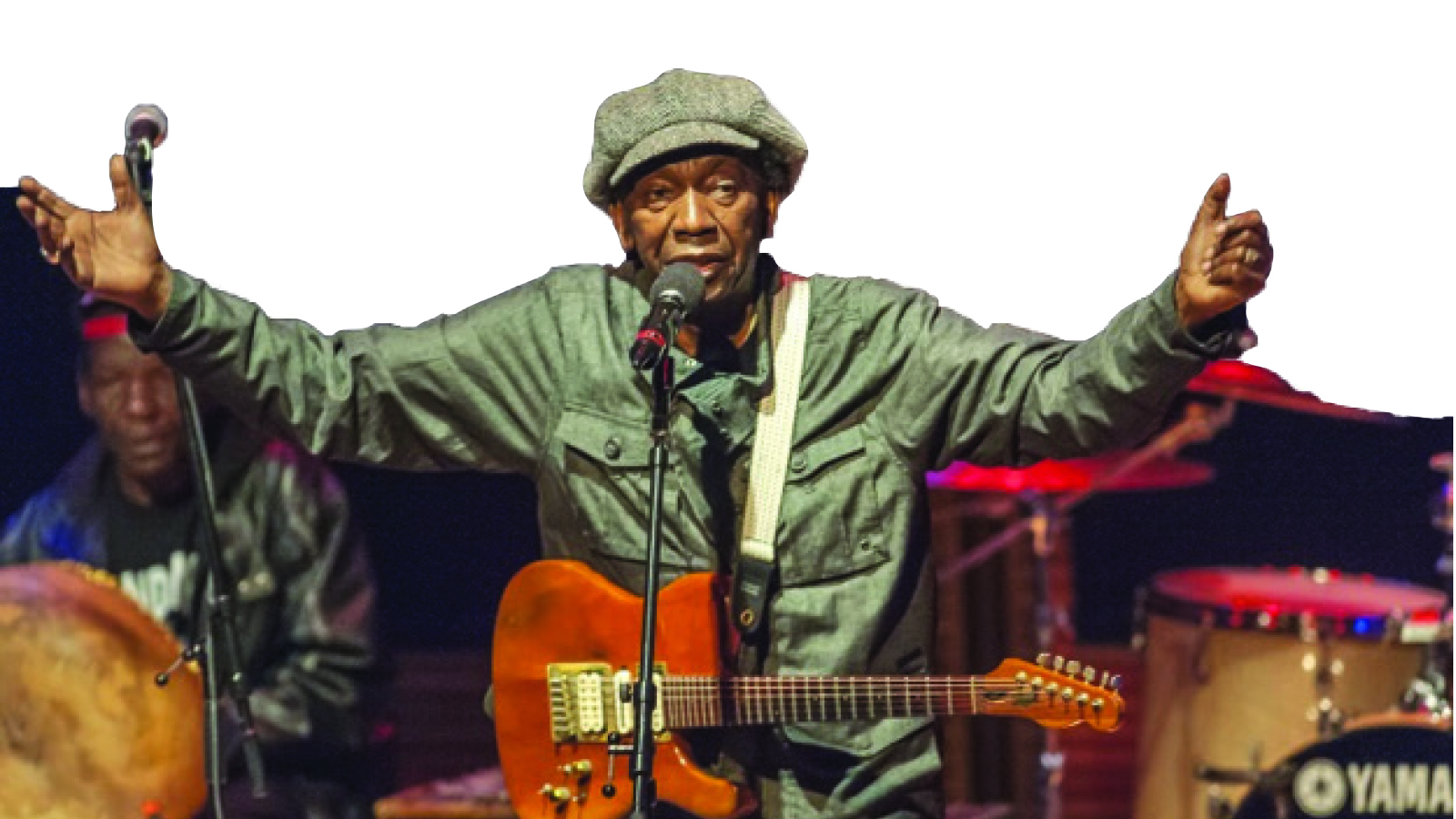
Trust Khosa
Zimpapers Arts and Entertainment
US-BASED Chimurenga legend Thomas “Mukanya” Mapfumo insists he is taking a break from live performances, though he remains committed to recording new material.
The 80-year-old recently staged a farewell concert in the United Kingdom and is now focused on mentoring emerging musicians.
A staunch advocate for authenticity, Mapfumo emphasised his ongoing mission to promote originality and professionalism.
This stance has often put him at odds with many contemporary young creatives in Zimbabwe.
In a comprehensive interview with Zimpapers Arts and Entertainment Hub, Mapfumo expressed his belief that he still has much to contribute to the arts scene, despite stepping back from live shows.
MUKANYA’s CORRECT POSITION
The Blacks Unlimited founder has assured his band members that they won’t struggle.
“I would like to set the record straight concerning my position after retirement,” he pointed out.
“It’s true that I won’t be holding shows after wrapping up the ones planned for South Africa and Zimbabwe, respectively. What I can assure fans is that we are busy in the studio recording my 10-track album, which is due for release soon.
“The new material is more than ready, and I will remain in touch with members of the Blacks Unlimited. Some of them (Blacks Unlimited band members) stay in the US and others in the UK, so we have been operating like that for years, and we are one big family.”
CHIMURENGA MUSIC OWERSHIP
The outspoken music icon has also set the record straight on the new heir.
“I have read stories where my nephew Kurai Makore has been touted as my heir.
Kurai is a talented boy, and I am his father figure, but Chimurenga music does not have an owner; even I don’t own it — it’s for the people. I am determined to support whoever is doing well and ensure the movement and legacy continue even after my retirement or death,” Mapfumo emphasised.
Besides his nephew Kurai, Mapfumo has a list of young talent he admires.
“During my visit to the UK, I saw a lot of talent and potential that Zimbabwe has. One of these talented individuals that I saw and enjoyed includes Tocky Vibes and Selmor Mtukudzi, the daughter of my late friend Oliver Mtukudzi. They need our support, and I have also enjoyed their originality.”
Mapfumo also revealed that he has garnered enemies for promoting authenticity, a stance he will never change.
“To be honest with you, I stand for the truth, and when it comes to art, originality will always take us places. Our traditional instruments like the mbira and marimba define us.
“You will also be shocked to realise that what you call Sungura is not ours, but music that originated in countries like Tanzania. The name Sungura means ‘hare’ (Tsuro) in their local language, but we now call it ours.”
BLACKS UNLIMITED FOUNDERS
As the sun sets on Mapfumo, he revealed that he was still in touch with some of the revered guitarists who served him for years during the colonial era.
“I have worked with many people, but sadly some of them who were my friends have died, including the likes of Jonah Sithole, Charles Makokove, and Leonard ‘Picket’ Chiyangwa.
“There are some long-serving members, including Washington Kavhai, who is now a pastor overseas, Canaan Kamoyo and Zivanai Guvheya. In the US, I have Gilbert (Zvamaida), whom I always take on international tours,” he recalled.
“I will make sure that I do my best for them because at the end of the day, we are all Zimbabweans. I can’t forsake them now because I am going into retirement. I just love what I do, and this is part of the job I am doing to ensure that Blacks Unlimited and Chimurenga music live forever.”
ORIGINALITY
Mapfumo, who started music in the 1960s as a Rock n’ Roll enthusiast, insists he was only whipped into line after being called a “Kaffir” during a dancing contest.
“We used to hold Rock and Roll contests in Harare, but one day, when we were about to enter the stage in the 1960s, we were racially abused for playing foreign music.
“It came as a huge lesson to us, and we decided to play our own music, which empowered me to become hard and resilient. The same white guy was attacked by a certain Zambian lady who had attended that show, and it became clear that we were lost and needed to come back to our roots and do something we could easily identify with,” he shared. After years of playing covers of artists like Elvis Presley and many others, he decided to join the Acid Band, which played foreign music, and convinced them to try doing local music.
“We took a gamble during the height of the liberation struggle, teaming up with others like Charles Makokove, Albert Gweshe, and saxophonists Enock Maanda and Everson Chibhamu, and started doing our music. In no time, we moved to Nyamanhingi near Berzel Bridge, where we got a contract to perform,” he recalled.
“I tasted rural life, and I remember us doing laundry on the riverbanks of Odzi because that was the only water we had. We later left without saying goodbye to the joint proprietor and moved to Zimunya Nite Club, still doing the same,” chuckled Mapfumo.
MARRIOT CONNECTION
In his search for fame and opportunity, Mapfumo had no choice but to move back to Harare, where he revived his career at Mushandirapamwe Hotel, backed by the Pied Pipers under the leadership of Gideon Neganje.
He also maintained his strong links with the Mbare ghetto, where the current Dynamos chairperson once worked for him as a guitarist.
“By the way, Marriot was once my band member, and he played the guitar very well. He enjoyed music, and he is part of my history as we speak right now.
“I also convinced Gideon Neganje to play local music because he sounded foreign. Others, including Oliver Mtukudzi, Tinei Chikupo, and Marshall Munhumumwe, whom I once worked with as my drummers, also shaped my journey. I even gave Tuku one of my songs, and he came up with the Katekwe beat, which made him a star like myself.”
WAR TIMES
For his diligence and hard work, he believes he played his part in the liberation struggle, where he was also tortured.
“Life in the liberation struggle was never a rose garden because we put our lives on the line. I composed songs that denounced exploitation starting in the early 70s when the war was at its peak.
“Gunshots were once fired during a show we had in Chegutu, and I could smell blood during that show.
“I was also taken to where some injured comrades were being kept as a way of scaring me, but I never complained because I loved what I did. In fact, I have always loved my country, and I will always do that. Of course, I didn’t go to war, but I liberated Zimbabwe using my artistic talent.”
He added:“During the war, we were not allowed to drive in convoys because it was risky for us as musicians; we could be mistakenly attacked by soldiers.”
As the curtain comes down, Mapfumo has no regrets but wants to be remembered for his contributions and legacy.