Online Reporter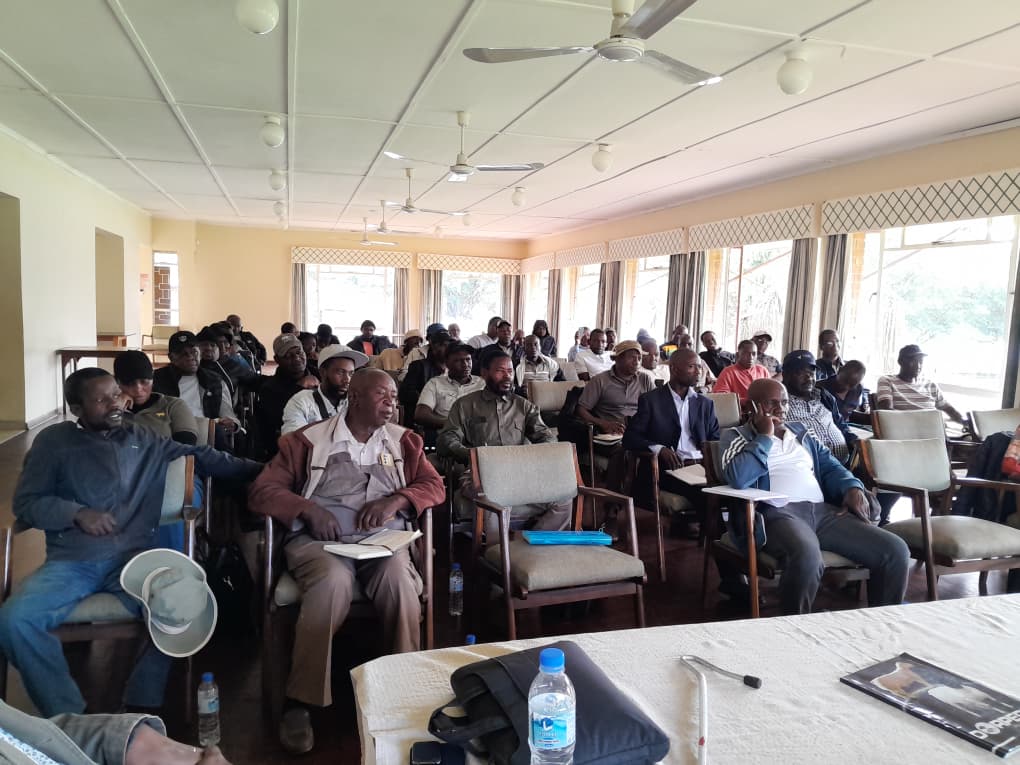
Sikhulekelani Moyo [email protected]
EXPERTS in goat breeding have called on research institutions to facilitate the selection and improvement of local breeds to strengthen genetics and preserve Zimbabwe’s livestock heritage.
The call was made during a Goat Breeders Association of Zimbabwe farmers’ training held at the Zimbabwe International Trade Fair Grounds on Saturday. The event brought together farmers and experts to exchange knowledge on nutrition, disease management and other key aspects of goat production.

In an interview on the sidelines of the event, Goat Breeders Association of Zimbabwe chairperson Mr Ntandoyenkosi Ndlhovu said there is growing interest in commercialising goat farming. While exotic breeds are gaining popularity, he noted that local breeds also have vast potential to transform livelihoods and the livestock sector.
Mr Ndhlovu said the Matabele goat is one breed that can significantly uplift communities.
“We definitely need the assistance of researchers like Matopo Research Center to come forward to help us in terms of getting different genetics out of our Matabele breed, record keeping, assisting in all that stuff, and also we call upon the Government to come through,” said Mr Ndhlovu.

“We know that goats have generally been a livestock that has always been considered as a poor man’s cattle, but of late, goat farming has become a game changer, considering the challenges of land size; goats can survive in a small piece of land.”
He added that climate change continues to affect rainfall patterns, reducing pasture availability and making it difficult to sustain large livestock numbers. Overgrazing, population pressures and the sale of rural land are also affecting the sector.
“So, we are considering like the Government is pushing the issue of rural industrialisation, we expect local goad breeding to also play a part on that initiative,” he said.
Mr Ndhlovu said goat farming presents an opportunity for both communal and commercial farmers to collaborate and drive economic growth, with strong potential for job creation.
He added that the sector can contribute to the attainment of Sustainable Development Goals (SDGs), including employment creation, improved rural livelihoods and women’s empowerment, noting that women make up a significant proportion of rural populations.
“If we are to do our goat farming, we are looking for that, we will be empowering not only farmers but more people,” said Mr Ndhlovu.
A retired scientist, Dr Joseph Sikhosana, said improving genetics for local goats and sheep will also help preserve heritage, noting that indigenous breeds are relatively cheaper to maintain.
He urged farmers to support research institutions by providing land and other resources, adding that Government cannot shoulder the responsibility alone.
“Our traditional breeds can help in preserving and promoting our heritage. Look at what South Africa is doing; we are going there and importing their local breeds. We can also do that and let people come and buy,” said Dr Sikhosana.
“I know it’s a long process, but farmers can work with the Government and research institutions and develop some study breeds and invite scientists to check the breeds.”
Boar Goat Society of Zimbabwe chairperson Mr Xolisani Mpofu said the rise in popularity of exotic breeds such as Kalahari, Savanna and Boar goats is driven by their fast growth rate, which allows farmers to access markets earlier and increase profits.
He said such breeds can reach full growth within eight to nine months, making them viable for early slaughter.
“We also urge those who are growing the local Matabele and Mashona type to do selection for improved animals,” said Mr Mpofu.
“We believe that the Boar Goat, the Kalahari and the Savannahs, were also selected from local animals, and if we can control them and select and look after our local breed, they should also join the party.”
Zimbabwe’s goat farming industry is gaining momentum as local organisations partner with Government to provide training and support to farmers.
This has seen men, women and youths investing in the sector, with growing demand for goat meat presenting significant opportunities for those with the passion and resources.