Online Reporter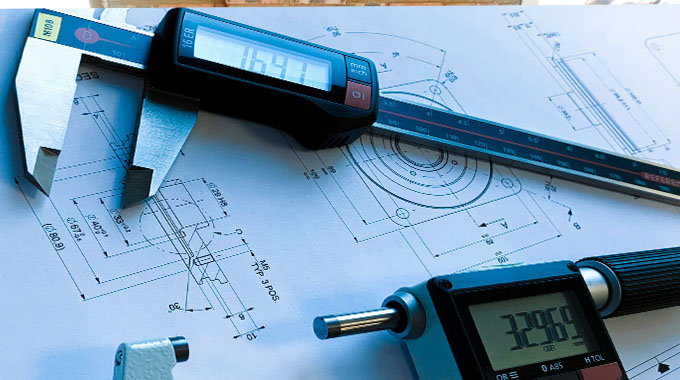
Sikhulekelani Moyo, [email protected]
WEAK metrology systems are exposing consumers to exploitation, distorting fair trade and undermining Zimbabwe’s industrial competitiveness, with Government, industry and consumer bodies calling for increased investment in accurate measurement systems as a cornerstone of economic transformation.
The concerns were raised during World Metrology Day commemorations held in Bulawayo on Friday, where stakeholders described metrology as the invisible backbone of a modern economy and essential for building trust in policymaking, trade and manufacturing.
The event ran under the theme “Metrology: Building Trust in Policy Making” and was officially opened by Industry and Commerce Minister Nqobizitha Mangaliso Ndlovu.
“Metrology is the invisible foundation upon which public confidence, fair commerce, industrial efficiency, and sound policy are built. Without reliable metrology, policy becomes speculation, and economic recovery moves forward without clear direction,” the Minister said.
The event brought together officials from the Ministry of Industry and Commerce, the Standards Association of Zimbabwe (SAZ), Consumer Council of Zimbabwe (CCZ), Consumer Protection Commission (CPC), Confederation of Zimbabwe Industries (CZI) and the Scientific Industrial Research and Development Centre (SIRDC), among other stakeholders, to highlight how accurate measurement systems underpin trade, consumer protection and global competitiveness.
In his remarks, Industry and Commerce Permanent Secretary Ambassador Tadeous Chifamba said metrology must move beyond its traditional perception as merely the domain of the Trade Measures Department or fuel pump inspectors.
“Metrology is not a back-office function but an invisible backbone of a 21st century economy driven by two pillars: scientific metrology and industrial metrology,” said Amb Chifamba.
Scientific metrology, led by SIRDC, ensures measurements are traceable to international standards, while industrial metrology guarantees that components meet the microscopic tolerances required for integration into global supply chains.
“By linking the scientific rigor of SIRDC with the industrial precision of our factories and the regulatory oversight of Trade Measures, we create an ecosystem where Zimbabwe can fearlessly value-add, export and compete on the global stage,” added the Permanent Secretary.
He stressed that the ministry was not a bottleneck but an enabler, citing the Bulawayo event as evidence of decentralisation and openness for business.
Bulawayo Minister of State for Provincial Affairs and Devolution Judith Ncube, represented by deputy director for business development Mrs Gladys Zizhou, said the city’s status as an industrial hub makes metrology critical to achieving Vision 2030.
She said for factories to produce goods capable of competing globally, measurements must be beyond reproach, thereby strengthening confidence in local manufacturing.
“Accurate fuel meters, weighbridges and retail scales protect consumers and ensure Bulawayo remains a reliable regional trade gateway,” said Minister Ncube.
Meanwhile, consumer bodies warned that inaccurate measurements erode public trust and financially prejudice consumers.
CCZ representative Ms Fortunate Sikirwayi said inaccurate measurements force consumers to pay for quantities they do not receive, while also exposing them to unsafe products.
She said accreditation was key to building trust in laboratories, inspection bodies and legal metrologists.
CPC Southern Region manager Ms Pamela Muketiwa said even small discrepancies can result in significant cumulative losses for consumers.
“A fuel dispenser that dispenses by small margins may appear insignificant, but when combined, it becomes a very substantial amount,” she said.
She added that inaccurate measurements distort competition and require collective responsibility from regulators, businesses and consumers to report irregularities.
A representative from SAZ said metrology forms the foundation of standards, testing and certification systems.
“Without accurate measurements, quality assurance systems can’t function effectively. If measurements fail, quality systems also fail,” the SAZ representative said.
Stakeholders noted that inaccurate measurements lead to rework, rejected products, higher production costs and diminished consumer confidence.
CZI Matabeleland Chapter president Mr Stephen Ncube said businesses must embrace scientific, industrial and legal metrology to reduce waste and remain competitive under the African Continental Free Trade Area (AfCFTA).
“You can’t manage what you can’t measure,” he said.
CZI is encouraging its members to adopt ISO standards, including ISO 5001 for energy management, and to participate in the SADC Business Council to address non-tariff barriers.
Stakeholders agreed that as Zimbabwe positions itself for increased regional and global trade, metrology will remain central to building trust, ensuring fair competition and protecting consumers.