Online Reporter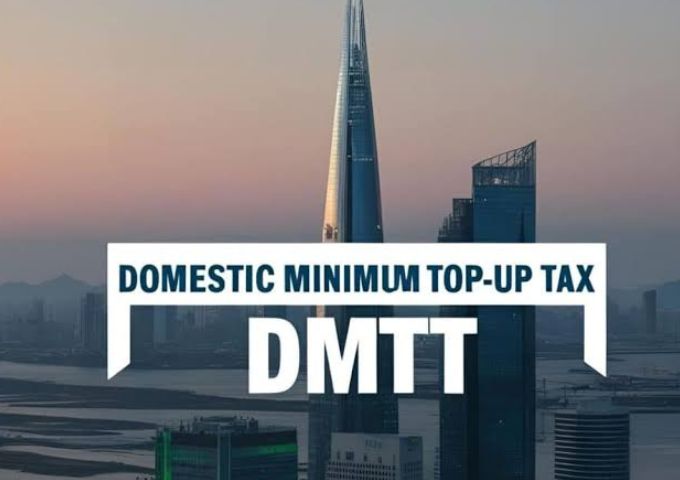
Business Reporter
ZIMBABWE has enacted a Domestic Minimum Top Up Tax (DMTT) through the Finance Act, with effect from 1 January 2026, as part of a global effort to ensure multinational enterprises pay a minimum effective tax rate of 15 percent.
The measure was explained to stakeholders at a Zimra Domestic Minimum Top Up Tax Stakeholders Meeting in Harare by Commissioner Revenue Assurance, Mrs Constance Shumbayawonda, and Mr Shelton Chigumira, Zimra’s Regional Manager for International Taxation.
Why the tax was introduced
The DMTT stems from a 2021 agreement by members of the OECD/G20 Inclusive Framework to address base erosion and profit shifting by multinational enterprises.
Mr Chigumira said multinationals were shifting profits into jurisdictions that charge very little tax or no tax at all.
“In 2021, Inclusive Framework members agreed that there are multinational enterprises who are avoiding tax,” he said. “So to try and bring international fairness, it was agreed at that level that we are going to ensure that everybody is charged at least 15 percent tax.”
Mrs Shumbayawonda said the measure was both a strategic and economic imperative for Zimbabwe.
“The introduction of the GMTT represents both a strategic measure to safeguard Zimbabwe’s taxing rights and an economic imperative to protect the domestic tax base in an increasingly interconnected global economy,” she said.
How it works
Mr Chigumira said jurisdictions agreed to use internationally recognised accounting standards to calculate the tax.
“They agreed that we will use internationally recognised standards of accounting and will calculate the tax from that,” he said. “So if you are preparing your accounts using International Financial Reporting Standards or GAAP or any recognised international accounting standards, you can use those to calculate your DMTT.”
Under the framework, if a multinational enterprise operating in Zimbabwe pays an effective tax rate below 15 percent, another jurisdiction could collect the difference.
Mrs Shumbayawonda illustrated this.
“Before this legislation, if a multinational company operating in Zimbabwe paid an effective tax rate of less than 15 percent, for example, because of tax incentives or concessions that we offer, another country, such as the country where its parent company is based, would potentially collect the additional tax needed to bring the effective rate to 15 percent,” she said.
Mr Chigumira outlined the cascading consequences of inaction.
“If Zimbabwe says we don’t want to charge 15 percent, the parent company in whatever jurisdiction they are in, they will charge that 15 percent,” he said.
“If that parent company also says we are not interested in charging the 15 percent, other members of that group wherever they are situated are entitled to take that right again from that parent company and charge that 15 percent. So you will find that if you don’t do it, someone will.”
A defence mechanism
Mr Chigumira described the DMTT as a protective instrument that ensures Zimbabwe, as the source jurisdiction, has the first right to tax profits generated within its borders.
“Using the instrument of the DMTT, you see it’s actually a defence mechanism. Because the collection process has got priorities and this enables the tax to be first claimed by the place or the source of the income,” he said.
Mrs Shumbayawonda said the legislation prevents revenue flight and preserves fiscal sovereignty.
“By electing the DMTT, we ensure that the primary rights to tax the profits generated right here in Zimbabwe remain with Zimbabwe,” she said.
“This legislation prevents the flight of tax revenues, preserves fiscal sovereignty and ensures a level playing field.”
Zimbabwe’s engagement with global tax frameworks
Mrs Shumbayawonda said Zimbabwe’s engagement with international tax frameworks reinforced efforts to build a transparent, internationally connected and effective tax administration.
Joining the multilateral convention, she said, brought Zimbabwe into a network of more than 160 jurisdictions, equipping it with tools for cross-border cooperation, including automatic exchange of information to clamp down on illicit financial flows.
“Our intention goes beyond aligning with evolving international tax standards. We seek to have a meaningful voice at the table, articulate Zimbabwe’s domestic and developmental priorities, and contribute to ongoing international tax discussions,” she said.
Mr Chigumira noted that Zimbabwe is not a member of the Inclusive Framework, but that the African Tax Administration Forum (ATAF) represented most African jurisdictions.
“You realise that in the Inclusive Framework, it’s not just a European thing — the Inclusive Framework actually has about 27 African jurisdictions. So, it’s actually a global forum for international taxation,” he said.
Scope: Who is affected
Mr Chigumira said the DMTT applies only to large multinational enterprises with consolidated annual revenue of 750 million (Euros) and above.
“Right now, it’s just on the big clients,” he said. “As a new tax, it was felt that you cannot help everybody suffering this because administrative capacity in many jurisdictions is not ready.”
He urged stakeholders to determine whether they are affected.
“What we should really be focusing on is to say: Does this tax affect me? Am I a member of a group which is an international group?” Mr Chigumira said.
Implementation and compliance
Mrs Shumbayawonda said Zimbabwe had taken proactive steps to ensure a smooth transition through capacity building.
“We have aggressively trained a dedicated team of specialists within our organisation who thoroughly understand the Pillar Two mechanisms,” she said, adding that the technical team was being deployed countrywide to assist affected entities.
She said reporting and processing under the DMTT had been made seamless, with only the regulations outstanding.
“What is only left now is the regulations. We are in an advanced stage,” she said.
She said Zimra was finalising technical guidance and general regulations to simplify compliance and stressed that the authority did not view itself merely as a collector of revenue.
“We do not view ourselves merely as collectors, but as partners in compliance. That is revenue assurance,” she said.
Mr Chigumira acknowledged that the rules were complex, but said they could be learned over time, adding that multinational enterprises would understand them because they are already facing similar taxes elsewhere.
“As we speak right now, about 40 jurisdictions have laws that are already complete, with other jurisdictions in various stages,”he said. “And Zimbabwe, we have done quite well in that term. We’ve moved very fast in this.”
What it means for Zimbabwe
For Zimbabwe, the DMTT means that profits generated within its borders by large multinational enterprises will be taxed at a minimum effective rate of 15 percent, with the revenue remaining in Zimbabwe rather than flowing to foreign treasuries.
It protects the domestic tax base, preserves fiscal sovereignty and ensures a level playing field.
For affected multinationals, it introduces new compliance obligations, including registration for the tax type and submission of returns.
However, it also provides certainty and alignment with international tax standards, reinforcing investor confidence.
The Domestic Minimum Top Up Tax was enacted through the Finance Act and takes effect on January 1, 2026.
Regulations to operationalise it are expected before the end of next month.



 leeroy