Online Reporter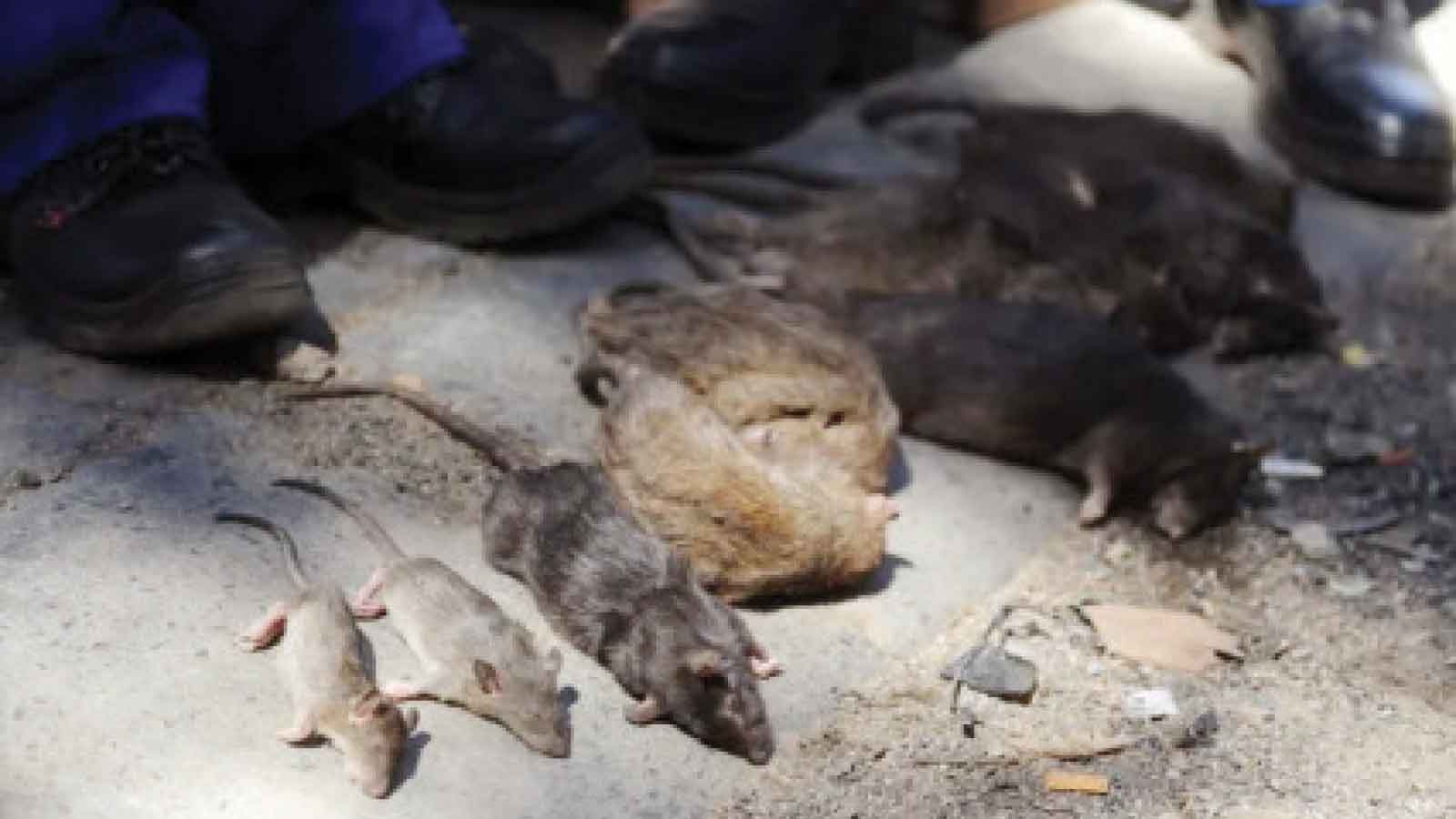
Sifelani Tsiko
Fact Check Editor
A RECENT cruise ship outbreak of the Andes virus, a strain of hantavirus – that health experts say is primarily transmitted to humans through contact with infected wild rodents has unsettled the public and reignited fears of another round Covid-like global health scare.
Little was known about the disease here in Africa and the World Health Organisation quickly took up the challenge to promote global awareness of hantavirus transmitted from person to person through inhaling airborne particles from wild rodent urine, droppings and saliva.
For the WHO and most countries across the world, this outbreak is another litmus test of how equipped they are in terms of responding to infectious disease threats. Global movement is inevitable and here in Zimbabwe, authorities are monitoring three Zimbabwean health workers who were exposed to a case on Ascension Island and repatriated. The people who tested negative and are asymptomatic were placed under 45-day quarantine. So far there is no confirmed case of Hantavirus within Zimbabwe.
Neighbouring South Africa, health authorities were reported to be tracing 97 contacts of two patients confirmed to be infected with Hantavirus, for possible exposure to the virus. Authorities have so far managed to trace 91 of the 97 contacts. These were largely made up of cruise ship and flight passengers, ambulance personnel, flight crew, medical crew, airport and port health officials, healthcare workers, facility security and cleaning staff. So far, one of the two patients, a Dutch woman, died at a hospital in Kempton Park while the second patient, a British man, is still receiving treatment at a Johannesburg hospital, according to media reports.
When disease outbreaks of this nature happen, it causes pandemonium in many countries leaving people worried or scared. This is because there are often many ‘unknowns’ as health experts say and the situation can quickly snowball out of control. In this report, the Herald helps its readers to get some answers to their questions and concerns in the wake of rapid misinformation or disinformation.
What is hantavirus and the Andes strain?
In reports gleaned from a variety of publications, health experts say Hantaviruses are a group of viruses that people usually catch through particles from infected rodents. They say these can cause serious illness, and the symptoms depend on the type of hantavirus involved. “The Andes virus, which is involved in this outbreak, is a hantavirus primarily found in South America that can lead to a severe lung infection called Hantavirus Pulmonary Syndrome, which can worsen quickly and become life-threatening,” the European Centre for Disease Prevention and Control said.
How do people get hantavirus and how does it spread?
Public health experts say Hantavirus is mainly transmitted through inhalation of contaminated particles from the urine, faeces or saliva of infected rodents. They note that only one strain, Andes – the one involved in this outbreak – can spread among people. “However, it only does so in very specific, close contact situations. Hantavirus can be very dangerous for the person who gets sick, but does not pose the same broad outbreak risk as SARS, or COVID 19,” virologists say.
How common is the Andes hantavirus?
Experts say cases of Andes hantavirus are rare in Africa and other parts of the world. They say this type, involved in this outbreak, is found mainly in South America and is the only hantavirus that is known to spread between people. Health experts further say that such transmission is considered rare and typically requires close or prolonged contact with an infected person. According to the WHO, Hantavirus infections are relatively uncommon globally. In 2025, in the Region of the Americas, eight countries reported 229 cases and 59 deaths with a CFR of 25.7%. In the European Region, 1885 hantavirus infections were reported in 2023 (0.4 per 100 000), marking the lowest rate observed between 2019 and 2023. In East Asia, particularly China and South Korea, hantavirus haemorrhagic fever with renal syndrome (HFRS) continues to account for many thousands of cases annually, although incidence has declined in recent decades.
How deadly is the Andes hantavirus?
Humans can catch the virus through prolonged contact with an infected person. The WHO reports that three passengers aboard the MV Hondius have died from the Andes strain of hantavirus, which affects the lungs. Virologists say it is not considered highly contagious and the disease can have a mortality rate of up to 30%.
What is the total known number of people that have been affected by the hantavirus?
As of 8 May, a total of eight cases, including three deaths (case fatality ratio 38%), have been reported. Six cases have been laboratory-confirmed as hantavirus infections, with all identified as Andes virus (ANDV), according to the WHO.
How is the outbreak of the Andes hantavirus being managed?
The WHO says the outbreak is being managed through a coordinated international response, including in-depth epidemiological investigations, case isolation and clinical management, medical evacuations, laboratory testing and international contact tracing and monitoring.
What are the symptoms of the Andes hantavirus?
WHO health experts say symptoms of the Andes hantavirus include fever (38°C or above), myalgia, chills, acute gastrointestinal (e.g. nausea, vomiting, diarrhoea, abdominal pain) or acute respiratory (e.g. cough, shortness of breath, chest pain, difficulty breathing) symptoms.
What did the WHO say about the Andes hantavirus outbreak?
World Health Organization director-general Tedros Adhanom Ghebreyesus said: “There is no sign that we are seeing the start of a larger outbreak. But of course, the situation could change, and given the long incubation period of the virus, it’s possible we might see more cases in the coming weeks.” He said so far no cases have been identified in anyone other than a passenger on the Dutch cruise ship. Hantavirus symptoms can appear up to 42 days after exposure. Tedros cautioned he would expect more cases in the coming days because of the long incubation period.
Where can you catch the Andes hantavirus?
WHO experts say exposure typically occurs during activities such as cleaning buildings with rodent infestations, though it may also occur during routine activities in heavily infested areas. Human cases are most commonly reported in rural settings, such as forests, fields, and farms, where rodents are present, and opportunities for exposure are greater.
Is there a vaccine for treatment of the Andes hantavirus?
No, there is no vaccine currently for hantavirus and experts say treatment focuses on relieving symptoms and supportive care. “As there is no specific antiviral treatment for HPS, suspected cases require prompt transfer to an adequately equipped emergency department or intensive care unit, where available, for close monitoring and supportive management to improve chances of recovery,” the WHO says.
Does the Andes hantavirus pose the same broad outbreak risk as SARS or COVID 19?
Unlike SARS or COVID-19, virologists say Andes hantavirus does not spread easily between people. “Human-to-human transmission is rare and requires prolonged close contact, often in enclosed settings. In addition, the natural rodent reservoir for the virus differs from country to country, making sustained spread in the community unlikely, according to the European Centre for Disease Prevention and Control.
Has the Andes hantavirus virus mutated?
No, experts say. And, recent genetic sequencing of the virus strongly suggests that the confirmed tested passenger samples are linked to the same original source of infection. “Genomic information also shows that the virus involved in the outbreak is similar to Andes viruses already known to circulate in South America and is not a new variant. There is currently no evidence that this variant spreads more easily or causes more severe disease than other Andes viruses,” according to European virologists.
How can countries manage the spread of Andes hantavirus?
Public health experts say countries can adopt different approaches guided by national public health measures and WHO healthcare guidelines. The WHO provides guidelines on how countries can best respond according to their specific needs and circumstances.