Online Reporter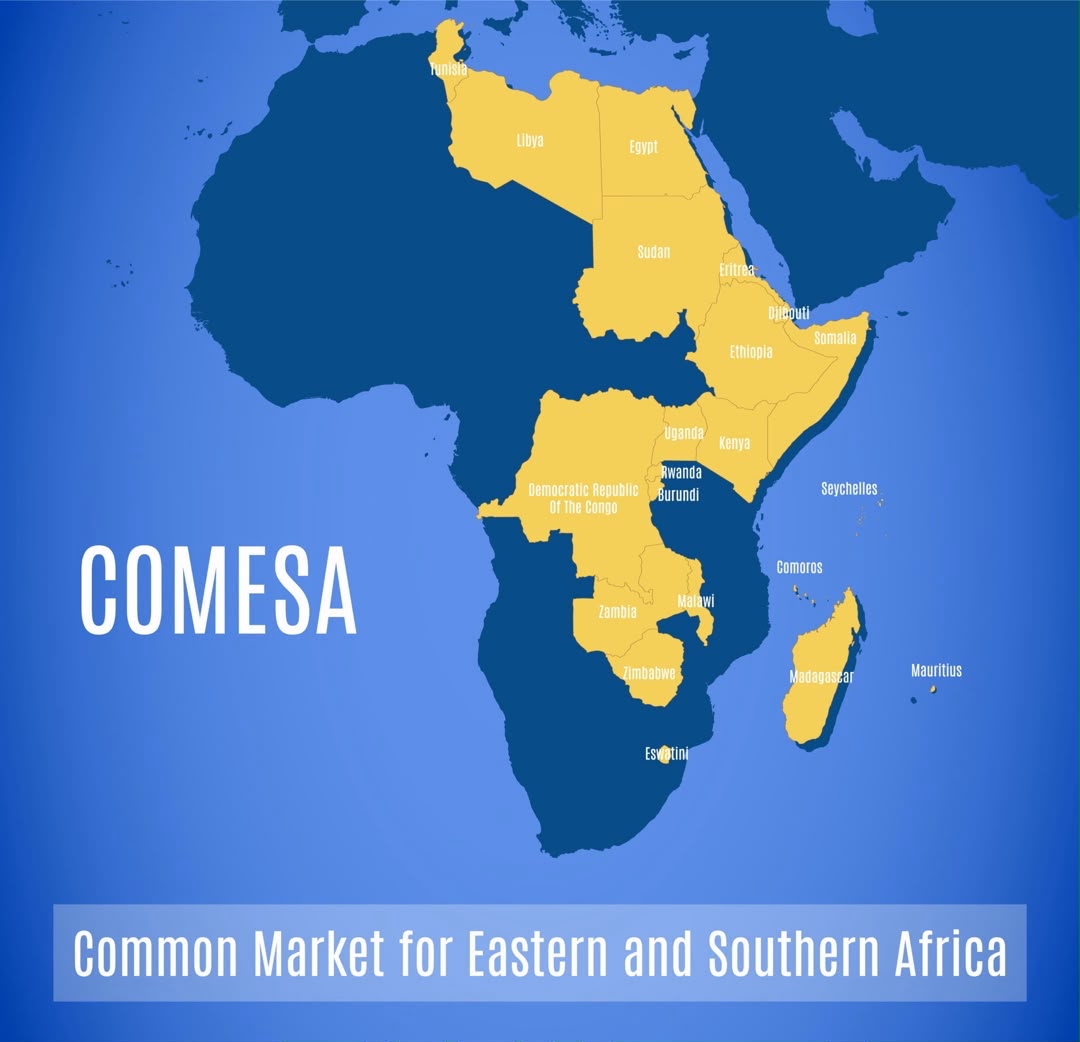
SEVERAL COMESA member states lie outside the traditional geographic definitions of Eastern and Southern Africa.
Non-Eastern/Southern African COMESA members
North Africa: Egypt, Libya and Tunisia.
Central Africa: Democratic Republic of the Congo (DRC).
How is this possible?
The presence of North and Central African nations in COMESA comes down to the core structure and philosophy of trade blocs:
- Economic objectives over geography
COMESA is a Regional Economic Community (REC) rather than a strict geographical zone. Sovereign nations choose trade alliances based on strategic interest, trade routes, market access and regional diplomacy rather than shared physical borders.
- Evolution beyond the original framework
COMESA was established in 1994 to succeed the Preferential Trade Area for Eastern and Southern Africa (PTA), which was created in 1981. Over time, as regional integration deepened, membership expanded to neighbouring economies that shared strong commercial links along major trade corridors (such as the Nile basin and the Red Sea).
- Strategic trade and transport links
Egypt and North Africa serve as critical trade hubs linking Eastern Africa to Mediterranean, European and Middle Eastern markets.
DRC provides essential land-bridge connectivity between Central Africa, East Africa and Southern Africa.
- Overlapping REC memberships in Africa
African economic integration allows countries to belong to multiple regional communities. For example, the DRC is a member of COMESA, SADC (Southern African Development Community) and EAC (East African Community), leveraging these ties to maximise regional trade.