Online Reporter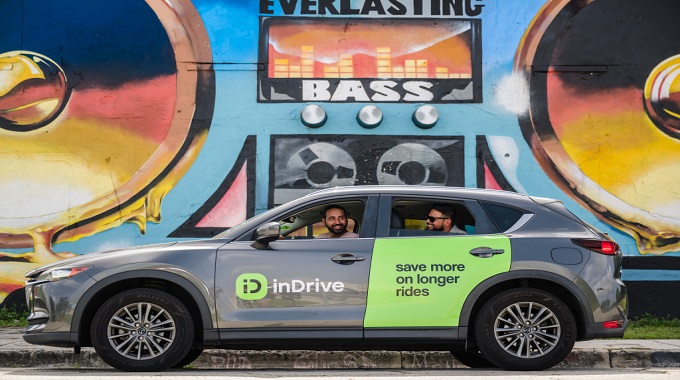
Godfrey Nyoni
ON September 8, 2026, Cabinet approved a five-month moratorium on e-hailing regulation, giving the Government time to review the sector and develop a new framework. The affected platforms — Bolt, inDrive, Tap & Go, GoFaster and KOSE — can continue operating while the review is conducted.
It is a measured first move. The Government has not reached for a ban. It has reached for the pause.
That distinction matters enormously, and what happens during these five months will determine whether Zimbabwe joins the growing list of countries that got digital platform regulation broadly right, or the longer list of those that got it badly wrong.
The August 2026 announcement from the Ministry of Transport and Infrastructural Development had already signalled where this was heading.
Officials acknowledged that the existing Road Motor Transportation Act does not provide for e-hailing, creating a legal grey area that leaves passengers, drivers and platforms without clear rights or obligations.
That gap is real, and the instinct to close it is sound.
What matters now is how it is closed.
The Government itself has already set the right standard.
Its stated objective is a framework that maintains services that are safe, secure, convenient and affordable.
Cabinet also acknowledged explicitly that the sector provides affordable and convenient transport, and generates employment for thousands of Zimbabweans.
These are not concessions wrested from a reluctant Government.
They are the Government’s own words.
The challenge is, however, to ensure that the eventual framework actually honours them, because the stakes are high for ordinary Zimbabweans.
Before e-hailing arrived, late-night transport in Harare or Bulawayo was unreliable, expensive or simply unavailable.
Today, a passenger can book a ride, verify the driver’s details in advance, track the journey in real time and pay digitally.
For women travelling alone, for workers finishing late shifts, for anyone who has ever waited in the dark for a kombi that never came, these platforms are not a convenience. They are a safety net.
Any regulation that meaningfully raises fares, shrinks the pool of available drivers or drives platforms out of the market will be felt by exactly the people the Government says it wants to protect.
Walking the regulatory tightrope
The global experience provides both reassurance and warning.
Kenya offers the most instructive African example.
After years of tension between traditional taxis and app-based operators, the National Transport and Safety Authority settled on a licensing framework that required platform registration, minimum insurance standards and driver vetting without prohibitive fees or operational restrictions that would have made the model unviable.
Services remained affordable. Drivers kept working. The framework held.
Zimbabwe can follow a similar path.
South Africa’s experience offers a contrasting lesson.
The government delayed regulation for too long, a power vacuum developed and the conflict between metered taxis and e-hailing operators turned periodically violent.
The eventual legislative fix separating licensing categories and operating conditions under the amended National Land Transport Act worked, but at a cost that earlier, cleaner regulation might have avoided.
Zimbabwe has five months. It should use them.
Further afield, the European Union’s Platform Work Directive and the United Kingdom’s landmark Uber ruling which held that drivers are workers entitled to minimum wage and holiday pay represent the frontier of platform regulation.
Zimbabwe is not at that frontier and must not pretend to be.
But the underlying question these frameworks answer is entirely relevant: What obligations do platforms owe to the drivers who generate their revenue?
A Zimbabwean framework that says nothing about driver protections, earnings transparency or account suspension processes would be incomplete from day one.
What, then, should Zimbabwe’s framework actually contain? At minimum, six things.
First, platform registration and accountability. Every e-hailing platform operating in Zimbabwe must be formally registered, maintain a local legal presence or representative, comply with data protection obligations and carry minimum insurance cover for both passengers and drivers.
This is the baseline.
Second, driver protections without destroying flexibility. Most Zimbabwean drivers value the flexibility of e-hailing because it supplements other income.
A framework that imposes full employment obligations would eliminate that flexibility and likely reduce the number of active drivers.
But zero protection, no recourse against unfair deactivation and no earnings transparency is equally unacceptable.
A middle path exists and other countries have mapped it.
Third, passenger safety standards that are actually enforced.
Vehicle roadworthiness certification, driver background checks and a functional complaints mechanism are non-negotiable.
These obligations should be tied directly to platform operating licences. Non-compliance should trigger suspension, not just a fine.
Fourth, the Zimbabwe Revenue Authority (ZIMRA) registration and tax compliance, which the Government has already signalled as a priority, needs to be practical, not punitive, and designed to bring people into the tax net, not to price them out of the market.
Fifth, proportionate levies.
If the Government imposes licence fees or operational levies, they must be calibrated to what the sector can actually bear without passing costs onto passengers or pushing drivers back into informality.
Sixth and most importantly, technological neutrality.
Zimbabwe should not write regulations that fit only the platforms operating today.
The framework should be broad enough to accommodate new models of shared mobility, digital accommodation platforms like Airbnb, future innovations without requiring new primary legislation every time a new technology appears.
InDrive and Bolt are the visible face of a much broader digital platform economy that is arriving in Zimbabwe whether the regulations are ready or not.
Five months is a short window.
But it is enough time to get the fundamentals right if the Government uses it deliberately: consult the platforms, consult the drivers, consult the passengers, study the frameworks that have worked elsewhere and produce something proportionate, enforceable and genuinely in the public interest.
Regulate the platforms. By all means.
But regulate them in a way that keeps the ride affordable, keeps the drivers working and keeps Zimbabwe moving forward.
The moratorium is not the destination. It is the starting gun.
Godfrey Nyoni is a technical consultant at Pique Squid. For feedback, contact: www.piquesquid.com/00263786526527