

 Online Reporter
Stakeholders in the oilseeds industry are gathered at a Kadoma hotel for the National Oilseeds Conference that is being hosted by Zimpapers Agricultural Hub.
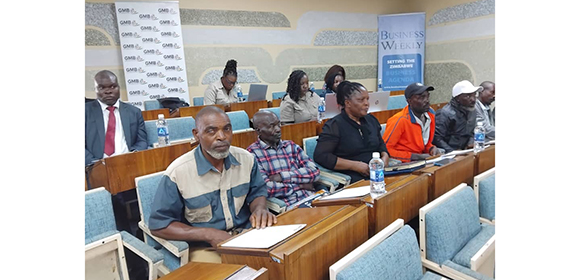
The conference brings together industry farmers, experts, researchers, and stakeholders to explore the latest developments and opportunities within the oilseeds sector.
It is also meant to address challenges currently facing the industry.

Deputy Agriculture Editor Elita Chikwati is in Kadoma for live coverage of the conference.
Stay tuned!
CBZ to fund cotton farmers
CBZ has committed to fund cotton growers without collateral.
The bank’s head of farming operations, Mr Collins Mpofu, said this at the ongoing conference.

Mr Mpofu said farmers could also get inputs from the CBZ facility.
The intervention will help most smallscale farmers who have been experiencing challenges accessing loans from banks.
Most banks require collateral – mostly immovable property – which some farmers do not have.
This has forced many farmers to enter into contract farming to get inputs.
However, the contract system has been presenting challenges as some companies do not give farmers adequate inputs.
In some instances, farmers receive their payments late.
AMA calls for reforms in cotton and oil seeds sector
There is need for reforms in Zimbabwe’s cotton and oilseed sectors to boost production and ensure viability, acting CEO of the Agriculture Marketing Authority (AMA), Mr Jonathan Mukuruba has said.
Speaking at the conference, Mr Mukuruba made some recommendations on how to revitalise the sectors.
He said the biggest cotton contractor must be capacitated to take up cotton production and marketing it effectively.
“Outstanding farmer payments must also be cleared,” said Mr Mukuruba.

To ensure a smoother market for the harvested lint, he urged spinners to put in place adequate financing facilities to take up lint.
Looking to the future, Mr Mukuruba said a credit scheme must be considered to increase investments in the sector, while the creation of a stabilisation fund will help buffer farmers against price fluctuations and market instability.
The conference also focused on strategies to enhance the production of soyabeans and sunflowers, vital crops for the country’s oil expression industry.
Mr Mukuruba called on oil expressing firms to increase production support, suggesting a more proactive role in assisting farmers.
A key recommendation was the expansion of contract farming, a system that provides farmers with guaranteed markets and often, financial and technical support.
To incentivise farmers to grow more, Mr Mukuruba stressed that farmers must be paid lucrative prices.
Finally, he suggested that a small charge must be levied on imports to support local production.
Second-hand clothes threaten textile and clothing industry
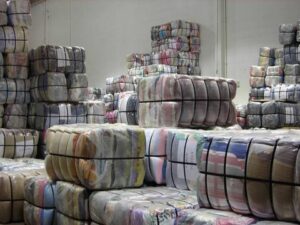
The textile and clothing industry has called for stricter enforcement of laws and regulations to restore order in the sector.
Industry representative, Mr Tendayi Chetse said this at the ongoing conference.
The industry expressed concern over the influx of second-hand clothing, which has severely impacted local production.

“We know there are laws against this practice, which has ripple effects. We hope that one day it will be a thing of the past, allowing our industry to thrive, ” he said.
Mr Chetse emphasised the importance of local production which will create jobs and spur economic growth.
“If farmers produce and there are buyers for their goods, the industry will grow. This creates a whole chain of opportunities, starting from farmers and leading to job creation.”
“We should not use foreign currency to import items that can be produced locally. We hope these loopholes can be addressed.”
The industry remains hopeful for a future where local production is prioritised, benefiting both the economy and the community.
Cottco concerned over side marketing

Cottco has raised concern over side marketing as the company is getting about 35 percent of the contracted crop.
The cotton company contracts around 400 000 farmers countrywide, providing free inputs and a ready market.
However, some farmers have been side marketing the crop, resulting in Cottco failing to recover costs.
Speaking at the conference, Cottco chief operating officer Mr Munyaradzi Chikasha said last season they were giving preference to farmers with good track-records.
“We classified farmers using records from the last three seasons and those in the gold class received inputs of up to five hectares.
“We were cautious to curb side marketing,” he said.
David Whitehead rebounds, eyes 1 000 jobs
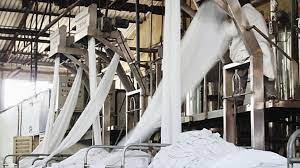
David Whitehead Textiles Zimbabwe Private Limited is firmly back on its feet, with operations in Kadoma and Chegutu now running, an official has said.
Mr Tendayi Chetse from David Whitehead said this signals a significant resurgence for the country’s clothing and textile industry.
David Whitehead, a former giant in the sector, currently employs approximately 400 people and aims to expand its workforce to 1 000 as production scales up.
In Kadoma, the spinning and knitting operations are fully functional, alongside the production of mutton cloth and twine. The facility is now capable of producing 4 000 tonnes of yarn, 1 200 tonnes of knitted fabric, 600 tonnes of mutton cloth, and 600 tonnes of twine.
The Chegutu plant has resumed weaving and processing operations. The facility is geared to produce an impressive 24 million metres of woven fabric annually, said Mr Chetse.
Mr Chetse highlighted that the industry which once employed over 35 000 people now supports less than 10 000 jobs nationwide.
This drastic reduction, he explained, is primarily due to high production costs, intense competition from cheap imports, rampant smuggling of goods, and the widespread availability of second-hand clothing.
Mr Chetse underscored the critical need for strategic investment decisions that align with current demand and supply dynamics.
He stressed that the revival of the entire value chain is anchored by deliberate strong Government support, indicating that policy interventions are crucial for sustained growth.




 Bongani Ndlovu