Chronicle Editor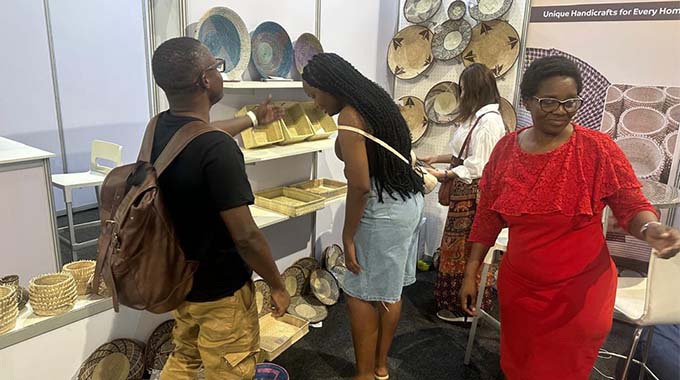
Prosper Ndlovu recently in WINDHOEK, Namibia
THE establishment of export clusters across provinces by ZimTrade has come in handy in uplifting the livelihoods of rural producers through quality standards capacitation and connecting these to lucrative export markets.
The export cluster model has been credited for integrating small players in exports, such as the Matabeleland North Handicraft Cluster, Nyanyadzi Honey Producers Cluster in Manicaland and the horticulture Cluster in the Midlands province, which are expected to contribute immensely towards expanding foreign currency earnings for the economy.
As opposed to operating in silos, which limits smallholder producers’ capacity to meet export orders and exposing operators to manipulation by middlemen, the cluster model has created more value for rural producers.

Through working as a cluster, the Matabeleland North Handicraft producers, for instance, have been able to penetrate lucrative export markets in the region and beyond, Mrs Hildigard Mufukare, who leads the cluster said.
The Matabeleland North Handicraft Cluster is among the country’s businesses that exhibited at the recent Windhoek Agricultural and Livestock Fair, representing nearly 400 members.
“We started as a community, doing this project on a smaller scale and later got help from donors and we started realising that this was big business. We had to organise ourselves as groups and set targets,” said Mrs Mufukare.
“With the help of ZimTrade, we now operate as a cluster made up of handicraft producers from Lupane, Tsholotsho, Binga and Hwange as well as Nkayi.”
Mrs Mufukare said they produce baskets, office and napkin trays and other modern interior decor products for hotels and lodges.

“The cluster model has become very helpful as it allows us to produce more products within a short space of time to meet our bulk orders,” she said.
Through the cluster model, Mrs Mufukare said the handicraft members have been able to weed out middlemen who took advantage of them in the past as they can now deal directly with the export market.
The model further creates a favourable platform for women producers to acquire critical skills training and transfer, as well as a motivational working environment that is socially healthy for women.
She said through high-value proceeds from exporting, their members are now realising the gains of collaboration through transformed livelihoods. According to Mrs Mufukare, women handicraft producers from Matabeleland North are channelling their earnings into buying housing stands, buying livestock such as cattle and goats, making savings clubs for diverse investments including buying groceries in bulk, paying school fees and supporting their families despite the drought.
The collaborative production model under a cluster system is also proving to be a game changer for Zimbabwean honey producers who are now able to produce more to meet local supplies and for exports.
The Nyanyadzi Honey Cluster, which has more than 1 000 farmers is one such success story in Manicaland province.
Working closely with ZimTrade and other partners, the cluster has transformed its operations by embracing quality standards of commercial honey production.
Mr Moses Chimedza of Chimani Delight Private Limited represented the cluster at the Windhoek Agricultural and Livestock Fair to showcase the various honey and honey products from the cluster.
He said Chimani Delight works closely with local farmers who are primary producers of raw honey and provides value-added services, transforming raw honey into different high-value products.
“Coming together as a cluster has helped us unlock more value for farmers as opposed to producing and selling as individuals,” said Mr Chimedza.
He said from the time they started working with ZimTrade in 2023, they have been able to train and equip more farmers with export readiness capabilities including obtaining certification for organic honey production, which has positioned them for higher market acceptance across the globe.



 Online Reporter