admin
admin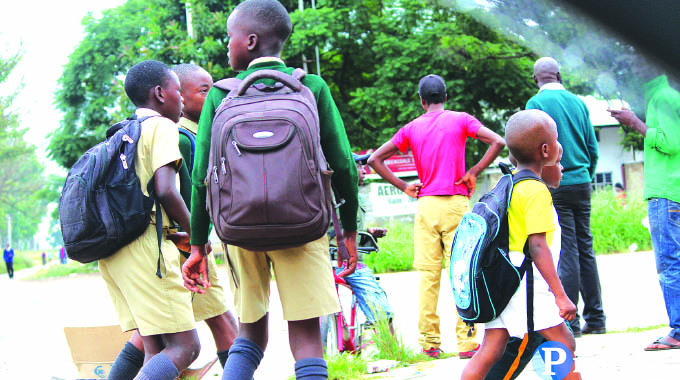
Roselyne Sachiti
Features, Health & Society Editor
In a small room, at a house in Harare’s high density suburb of Rugare, 12 Grade 7 pupils and a teacher are all busy trying to figure out a mathematics problem.
One by one, the unmasked pupils, who have become comfortable around each other as they meet between Monday to Friday for extra lessons, raise their hands to share answers they have come up with.
They do this till one student comes up with the correct answer then move to the next lesson.
At the house used for the extra lessons, several other families rent out rooms.
There is one toilet which services the 12 students, their teacher and 10 occupants of the home. In this part of Harare, water is scarce, hence handwashing by the students almost non-existent.
In other parts of Zimbabwe, teachers have been conducting face to face extra lessons each day in defiance of government’s ban.
The ban was meant to control the spread of Covid-19 at a time schools were closed to achieve the same.
Yet, many parents, maybe scared that their kids may suffer from lockdown fatigue and lag behind in schoolwork continue to defy lockdown regulations.
What is rather unsettling is that the Covid-19 Delta variant spreads faster than the Alpha variant.
Chilling is that preliminary data suggest children and adolescents are at greater risk of becoming infected with this variant, and transmitting it.
An article in The Conversation Africa points out how in the United Kingdom, where the Delta variant has been predominating since May, infections are rising fastest among 17-29-year-olds, who are mostly unvaccinated.
“Infections are also increasing in younger age groups, but at a lower rate,” the authors said in the article. “Overall, increased transmission among children and young people may partly be due to Delta. But also, in countries like the UK, these age groups are most susceptible to infection because older groups have been largely vaccinated.
“While we don’t yet have data on the severity of illness in children associated with the Delta variant specifically, we know with COVID generally, kids are much less likely to become very unwell.”
Extra lessons then become a possible super spreader among young children as some are held under poorly ventilated rooms, and there is no social distancing.
There are concerns children attending physical extra lessons may bring infections home to vulnerable family members like the elderly and those with underlying conditions.
Parents who spoke to The Herald on Saturday said the Delta variant is making them rethink taking their kids for physical extra lessons.
One such mother is Mai Prosper of Unit O in Chitungwiza.
Her two children aged seven and 13 have been going for physical extra lessons for the most last year and this year.
“I paid for the extra lessons because I was afraid that my kids would lag behind in class as they were not having face to face interactions with their teachers,” she said.
Mai Prosper noted all has been well until when the deadlier Delta variant emerged.
“I have been reading a lot around the Delta variant and how it is also affecting children. I took the bold decision to withdraw them from the physical extra lessons,” she revealed.
Mai Prosper added that she asked her two children to return all their school supplies that were being kept at the teacher’s house.
“The teacher asked why I had withdrawn them and I told her that I was scared they would get Covid-19. In Chitungwiza where I stay, police arrested some parents and teachers who were conducting extra lessons. Both teachers and parents were fined for defying Covid-19 regulations,” she said.
According to Mai Prosper, the reality that the lessons are done in smalls and doors will be closed also scared her as this would put her children at higher risk of getting Covid-19.
“Young children cannot take precaution when alone. The sanitiser I gave them was never used each time I checked,” she pointed out.
Another parent Mrs Monica Shumba of Kuwadzana said her children have been going for extra lessons, but the Delta variant now scares her.
“I was afraid of online lessons, which I thought would expose my kids to the internet at a young age. So for me the physical lessons were to avoid online learning. I also believed physical lessons were better until now,” she said.
Mrs Ndlovu added that she has been paying US$1 per day for physical extra lessons meaning she needed US$60 for her three children in a month.
“For now I will use the money to buy data. They will still have online lessons with their teachers. However, I will closely monitor their phones,” she said.
A Mathematics, Physics and Chemistry teacher, Mr Saxon Zvina, urged parents to embrace the new normal and opt for online lessons as the preservation of life is of paramount importance.
“I have seen the effectiveness of online tutoring, especially with platforms like Teams, Google Meet, Zoom as these do provide live interaction like in class,” he said.
Mr Zvina said he has been providing lessons to students in Mozambique and South Africa and these platforms provide the same feel like physical interaction.
“The use of WhatsApp platforms has been proved to be effective with regards to commercials where calculations are concerned,” he said.
Community Working Group on Health Executive Director, Mr Itai Rusike, said it is unbelievable and shocking that some parents and guardians are allowing their children to attend physical extra lessons at a time when the country is battling the highly virulent Delta variant that is now affecting children.
“The risk of Covid-19 transmission for school children are potentially higher if inadequate measures are not put in place for wearing facemasks, handwashing, temperature screening and social distancing measures,” he said.
Mr Rusike said no school should open for physical extra lessons until the situation is certified safe to do so by the government, and only when schools have met the required standards necessary to be deemed safe to reopen.
“CWGH believes that the physical extra lessons should only be done when it is extremely safe to do so, taking into consideration the safety and health of the children, teachers and staff and the wider school communities,” he noted.
“We urge the government to enforce the Standard Operating Procedures related to the risks associated with the Covid-19 pandemic and the essential practical measures to be implemented in schools for the protection, safety, health and well-being of children and staff.”
Mr Rusike pointed out that there should be serious consequences to the school heads and all education managers who may be found to have allowed or unauthorised physical extra lessons as the decision to reopen schools lies first and foremost with the President of Zimbabwe, who shall do so when it is safe.
“The reopening of schools shall prioritize the health and safety of learners, teachers and staff members,” he said.
Schools were scheduled to open for the second term on June 28, but this had to be delayed, first by two weeks and now by another two weeks as part of measures to defeat the third wave of Covid-19.
While the Ministry of Primary and Secondary Education is totally opposed to physical lessons, it has been encouraging parents to spend their money on data bundles, stationery and other means so their children can keep up to date, rather than spend money on unsafe lessons in unsafe conditions.
Ministry of Primary and Secondary Education spokesperson Mr Taungana Ndoro on Wednesday said it was illegal for anyone to conduct face-to-face private lessons.
“The Ministry of Primary and Secondary Education would like to reiterate that it is illegal for anyone to conduct face-to-face private lessons either at schools or any private place,” he said.
“It remains illegal because we need to put all hands on deck as a nation to ensure that we manage the spread of the Covid-19 pandemic.”
Keeping Children Safe
Speaking during a World Health Organisation’s conversations in science series, “Science in 5 Children & Covid-19”, Dr Maria Van Kerkhove said the best way to keep children safe was prevention.
“We want to prevent as many infections as we possibly can all over the world,” she said. “And it’s about doing it all. The comprehensive package of interventions that you hear us talk about all the time apply to children as well.”
She said these interventions include making sure children have clean hands and they wash their hands appropriately with soap and water and sing the songs so that they get enough bubbles and they make sure that those hands are really clean.
“Or use an alcohol-based rub,” she said. “Make sure that they practice respiratory etiquette, where they sneeze into their elbow. Even my littlest one who’s two years old now, will cough and sneeze into his elbow.”
She said these are good habits to be forming for children as they get older.
“Making sure that if they’re age appropriate and they follow the local guidance to wear a mask appropriately.
“With clean hands, make sure that the mask is put on over your ears, covers their nose and their mouth and that the children don’t touch the outside of their masks,” she explained.
She added that when removing their masks, parents should make sure that children have clean hands.
“And then when they take it off, to clean their hands as well. Making sure that you as parents talk to your kids as best you can answering their questions,” she said.
Dr Van Kerkhove said there is a lot of confusing information which is scary. She urged parents to find the time to talk to their children, answer their questions and alleviate their fears, and make sure that they get good information.
“And probably the most important thing that everybody can do is physical distancing. Outside of your immediate family, make sure that you keep your distance from others. That’s the best way to prevent the spread of SARS-CoV-2,” she said.


 Online Reporter