admin
admin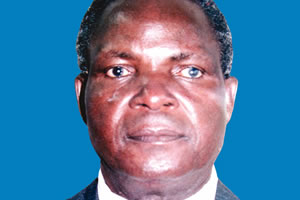
His name is Ezekiel Makunike, the man who died this week at the age of 83 — but as untimely.
(His death was untimely because he was hit by a car while coming from an interview for the book he was writing. He later died in hospital.)
Today, the Press carries his obituary not necessarily because it outlived him, but he will live with it as he trained the greatest minds in journalism that carry his legacy for many years to come.
He was the one who always told journalists to shun giving politicians the space to settle personal battles and dancing along to the tune of “chequebook journalism” because politicians must fear, and not control journalists.
That is what he was well-known for by those he taught, worked with, loved or socialised with when they spoke about the person he was.
At his funeral, they spoke about Makunike’s good work as if he would hear their plea and rise from the dead to heal their crying souls.
I may not have had any interactions with him, but from what they all said about him, it was clear that he was a man of his word.
No one can delete memories from the thousands he taught and interacted with. Being the good journalist he was, he “wrote” his own obituary, and it was easy to download the information from the minds he fed it with in his lifetime.
Zimpapers group chief executive officer Mr Justin Mutasa, who is a nephew of Makunike, described his uncle as a professional journalist par excellence.
“When I joined Zimpapers in July 2002, he visited me two days after the appointment and welcomed me to the media industry.
“We had a long chat about the dos and don’ts. First and foremost, he told me that newspapers belong to the editors, and I had come to Zimpapers to do the business side as the chief executive.
“I still abide by that. I do not interfere in editorial matters for the almost 10 years that I have been here and I got that advice from Sekuru Makunike.
“Secondly, Sekuru Makunike said ethical journalism is the cornerstone of any newspaper. If people want you to read The Herald or other newspapers, write things as they are. Urge your editors because not doing so will affect the business of your newspapers. I still abide by that advice from the wise man,” he said.
Mr Mutasa said his uncle produced some of the best journalists in Zimbabwe and the list is endless.
“Another piece of advice which I learnt and saw in him was his cornerstone conscience and everything he touched in life was guided by that. When we worked with him in Nyakatsapa and Mutasa communities in Manicaland, it was a great pleasure.
“To me, he was an encyclopedia, a source of knowledge operationally, very articulate.
“He could express things and was a prolific writer, God-fearing and loving. These are some of the values which I will sadly miss as a nephew,” he said.
He described his uncle as the thread of their family as he always united them. He also brought the Nyakatsapa community together through his good work.
“During the centenary celebrations of Nyakatsapa, all the meetings were held at number 7 Canon Avenue in Highlands. All the members of a committee, which I chair, always meet at his house to deliberate how we can improve the moral, educational, social and economic upliftment of people in Nyakatsapa and Mutasa.
“He has been sourcing funds for projects in the area. Two weeks ago Sekuru Makunike handed over two documents to me of the correspondences he was having with the headmaster of Nyakatsapa School as he was sourcing funds from the US to try and help the school.
“On this one he was writing to seek funds for construction of footbridges where there is a big river that separates the community. So these projects are on hold and he handed them over to me to complete them because he trusted me,” said Mr Mutasa as he pointed to the two letters.
“His death has devastated us. We are speechless more so it was tragic and painful.
“It is going to be difficult for the Mutasa and Nyakatsapa community to find such a selfless person. Despite his age he worked for the betterment of humanity even if he was not a politician. That’s another thread which united me with Sekuru Makunike,” added Mr Mutasa.
He said that through the inspiration of his uncle, he also worked tirelessly to improve the welfare of schools and churches in Nyakatsapa and Mutasa.
“I did this simply because Sekuru Makunike said I should join hands with him. He once told me that ‘We went overseas, we saw the light, so let’s share so that others can benefit.’ Personally I am left hopeless and devastated because that is what inspired me to help people in our community.
“I am pleased that his daughter Dr Rudo Makunike also shares the same vision with her father. So we still believe that the project he left behind will continue.”
Makunkie always said he missed journalism but was happy because he had passed on the baton stick.
“He was proud that he taught the late Makuwerere Bwititi to be an editor of a regional newspaper. He trained his journalists but he never stopped writing,” said Mr Mutasa.
Media, Information and Publicity Minister Webster Shamu described Makunike as a true journalist who always strived for high ethical and professional standards.
“He was one of the pillars of the country’s quest for a truly objective media that positively and professionally serves the nation.
“Mentor of many journalists in the country whose wealth of wisdom and experience saw him being appointed director of information in the Ministry of Information, Posts and Telecommunications, Makunike will be greatly missed by the profession and the country at large.
He was an objective professional who never tainted his work with emotion, subjectivity or bias.”
He said Makunike was known for his honest and professional conduct that compelled many journalists under his tutelage and supervision to confront themselves as they sought to serve the profession and the nation better.
Minister Shamu also described Makunike as one of the gentlest, most humble and gracious persons.
He said Makunike was a source of inspiration to his subordinates who always felt reassured by his wise and able leadership.
“We are grateful for his invaluable contribution to the journalism profession and the country. We applaud his passion and commitment to his work and country, which will be solely missed. May his soul rest in eternal peace,” Minister Shamu said.
Former Minister of Information, Posts and Telecommunications Cde Nathan Shamuyarira described Makunike as a talented journalist and author.
“We feel we have lost not only a talented journalist but an author who wrote many books, but there is little we can do that is why we came here to grieve with the Makunike family.”
Makunike’s widow Gogo Ella praised her husband for the love that he gave her until his untimely death.
“I am forever grateful for what he did for me. He was the one who educated me. When we married I had only Standard Six but I managed to attain a degree in America. He wanted me to be more educated than him,” she said.
Gogo Ella also described her husband as a visionary and hard working man.
Veteran journalist Kindness Paradza described Makunike’s death as a huge loss to the country and the journalism fraternity.
“I am one of his early students and we have lost a good man who gave us guidance throughout. We have been consulting him on several issues regarding the journalism profession and it is sad that we have lost him at a time when we needed his attention on many things in the journalism industry,” said Paradza.
Another veteran journalist, Reward Mushayabasa, said he got to know Makunike when he visited their group at Ranche House College in 1981 where he was among the first group of journalists to be trained at independence.
“I still remember we were asked to interview Mr Makunike as part of our final examination in interviewing skills. Mr Makunike had just returned from Zambia where he was exiled before independence and was appointed Director of the Zimbabwe Institute of Mass Communication (Zimco). With his enormous experience gained during his time as the Director of the Evelyne Hone School of Journalism in Zambia, Mr Makunike was instrumental in setting up Zimco. Most journalists trained at independence passed through his hands. He was a very humble and unassuming man.
“Most journalists will remember him for his passion in journalism training. The wealth and depth of his experience will be greatly missed by all journalism trainers who knew him,” he said.
Duduzile Ngwawaira said: “I am so sorry for the sad loss of a great man. I got the chance to see him speak quite recently in London at his niece’s wedding anniversary. A very intelligent and eloquent man and may his soul rest in peace.”
Sylvia Vassilatos also said: “What a loss to the fraternity. When I was a student at Zimco he gave me some free unsolicited advice out of concern — which I should have taken! He was a true teacher and gentleman.”
Rev Dr Levee Kadenge said: “Mr Ezekiel Makunike was great man, a hero par excellence. If this man is not a hero, then who is a hero? I last saw him at the late Sarah Kachingwe’s burial. And from nowhere he is dead. Personally, he was my hero too. He became my mentor in matters of writing.”
One, Marara wrote on the Herald website: “Sekuru was a unifier , dedicated , intelligent, indeed we have lost a true father, teacher, lecturer. Surely sekuru has left a gap that will be difficult to fill, especially in our church section — Greendale/Highlands, Mandara.”
A former student only identified as Dandara said the journalism industry has lost a great man.
“He was a great father, teacher, adviser and veteran journalist. He made me discover my journalism profession as my lecturer at Polytechnic.
“Rest in peace Mr Makunike, you will be missed but your values will live forever in the journalism industry,” Dandara said.
Makunike hailed from Nyakatsapa in Chief Mutasa’s area. He went to the then Old Umtali Mission in 1944 and later Old Mutare American Methodist Mission School. He also attended Goromonzi School between 1951 and 1954. Luminaries who were at Goromonzi then included Prof Walter Kamba, Prof Gordon Chavhunduka, the late Dr Herbert Ushewokunze and Dr Simon Mazorodze.
In 1959 — the year he got married to his wife, Ella — he won a scholarship to study journalism at Hislop College, Nagpur University in India 1960, where their first two children, Chido and Batsirai were born. It was during that time that Makunike obtained a BA degree in Political Science and a diploma in Journalism.
Upon his return in 1965, he was appointed director of Methodist publications and communications during which time; he also edited Umbowo, the church’s monthly newspaper.
Prior to his appointment, there had also been illustrious pioneering black editors in the mould of Jasper Savanhu (African Weekly), Mike Hove (Bantu Mirror) and later Lawrence Vambe and subsequently, Nathan Shamuyarira (African Daily News).
In May 1965 he participated in an international seminar on World Literacy and Literature at St George’s College in Jerusalem.
Three years later, he attended an International Seminar on Christian Communication in London and was in 1968, awarded a Second Crusade Scholarship of the United Methodist Church to study for an MA degree in Journalism at Syracuse University in New York.
In 1970, as the editor of Umbowo, he published his most daring editorial commentary in which he called for the then Prime Minister Ian Smith to be tried in court. It shook the very foundation of white power and the edition was sold out, leading to a reprint.
It placed Makunike under government surveillance. That year, he had to escape to Zambia after a tip-off that the police were after him.
Makunike was appointed the first African Director of the African Literature Centre for Journalism and Art Training at Kitwe’s Mindolo Ecumenical Foundation, Zambia, in 1973.
At independence in 1980, the then Ministry of Information, Posts and Telecommunications invited him to be the founding director of the Zimbabwe Institute of Mass Communication.
In 1981 he was appointed the founding director of the Zimbabwe Institute of Mass Communication, now the Division of Mass Communication at the Harare Polytechnic.
He is the author of the book, “I Won’t Call You Sir!”
Sadly, but gloriously, Makunike died doing what he loved most.



 Online Reporter