Chronicle Editor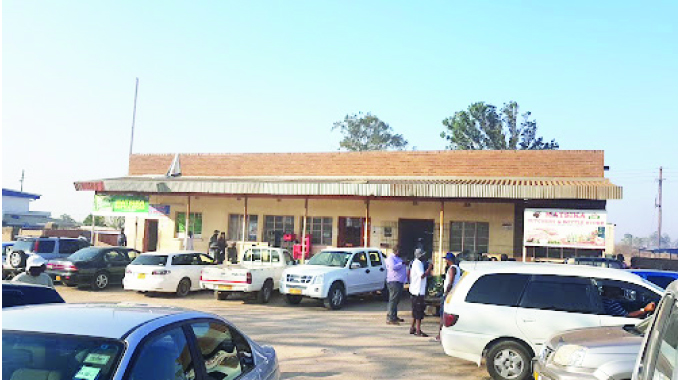
Pathisa Nyathi
CHIGUMIRA is a name that we usually associate with a business centre in Old Luveve, once a native village built in 1936 to provide accommodation to some Government workers in Bulawayo.
The settlement was built a long distance from the central business district (CBD) and the oldest black township of Makokoba, established in 1894.
Its counterpart in Salisbury was Highfield Township, which was home to several early black nationalists such as Enos Mzombi Nkala, Leopold Takawira, Robert Gabriel Mugabe and George Silundika, among several others.
Chigumira is one of several businesses in Bulawayo which were set up by people from Manicaland. Other than Chigumira himself there were several others such as Zwambila (who owned Marisha Cocktail Bar), Patsika who opened a petrol station in Mzilikazi Township in 1958.
There was also Mutasa who ran a petrol station in Mpopoma South. In Luveve, there was Nyaguze who ran a trading store, which still bears his name.
Chigumira Business Centre has taken on a new image as witnessed by several cars, big and small that park there especially over the weekends.
I have seen many braai fires with butcheries selling meat for braaing.
It’s tshisa nyama, full time.
Some businesspeople are very innovative and their enterprising minds have brought changes to the centre.
There is a Puma petrol station, which from the looks of things, hardly runs short of fuel.
My interest was captured by the name of a road that runs east of a butchery where I buy entrails (ezangaphakathi).
The street name is well painted with bold white letters: Kabalanto. I am not seeing the name for the first time.
I still remember quite some time ago when the letters had acquired a brown hue-from rusted iron. Not so any more.
However, the name remains the same with little meaning to the imbibers who may not be familiar with history.
I was very young at the time I read Ndebele history as documented by Afrikaners after trekking from the Cape to settle in the Transvaal under leaders such as Andries Hendrik Potgieter who the Ndebele called uNdaleka.
Piet Uys was another of their leaders in their famous Great Trek in protest against British rule. Corruption is common where names are not given in the speakers’ language.
The name of the road from Chigumira Business Centre to Luveve 5 is one good example of a corrupted name of an illustrious leader both in the military and civilian sectors.
He was among those who distinguished themselves in both 1836 (at Vegkop) and in 1837.
His name, in its uncorrupted version, is Gwabalanda Mathe.
Gwabalanda, as written and pronounced by the Afrikaners was Kabalanto.
In their history books about the wars against the Ndebele that is the version that one finds.
I was able, many years ago, to figure out that Kabalanto was Gwabalanda. A section of Luveve goes by the name Gwabalanda though it appears that is not official.
The name Tshaka was also toyed around with but never stuck.
Gwabalanda is not alone when it comes to corruption of Ndebele names by whites who did not speak IsiNdebele.
Not so long ago I made mention of some History Professor at the University of Paris who wrote the name that I was familiar with — in its corrupted version as given by the Afrikaners.
The man’s name was given as Lang Appie.
It was one of the several corrupted names that I came across in books by expeditionists such as Richard Cornwallis Harris (Wild Sports). After he died, he was buried not very far from the fort situated south of Marula.
Once again, I was able to get the authentic Ndebele name for the man, Langabi Ndiweni who was chief at Osabeni.
He was involved in the 1896 war (Imfazo II) and was captured and taken to Fort Mangwe.
Today there is a police station named Mangwe, not very far from the Mangwe Pass, which was used by travellers from the south to Matabeleland.
His story is a sordid one which depicts the cruelty and brutality of the British in the manner they handled captured Ndebele fighters.
The evil treatment was concealed from the eyes of the British back home.
Another name that I got to know as a corrupted version was that of Kalip.
Once again, the Afrikaners performed the art of corruption.
Kalip features prominently in the literature pertaining to their encounter with the Ndebele.
The man whose name ended up as Kalip was Mkhaliphi Khumalo son of Dlekezela who effectively took over the command of UMzinyathi Village/Regiment when Majijili Gwebu became old.
His rise to prominence led to the Khumalos, right down to Ntola and Meva to maintain a hold over uMzinyathi, which was the chief village within the Amnyama anagankomo section (isifunda).
It is clear that the names that the Afrikaners got to know were those of distinguished fighters whom they got to know by name.
Unschooled in the language of the Ndebele, they ended up corrupting the names of their nemeses.
The three examples given here are those that I could, based on oral testimonies, figure out and correct the names in my mind.
Gwabalanda remains as Kabalanto the chief who ruled over Mhlahlandlela, which was the capital town, located near the Parliament Building in Pretoria (close to the Apies River).
Gwabalanda was among the men and women that accompanied King Mzilikazi when he left Ngome. It should therefore, not come as a surprise when such “home boys” were appointed to prominent positions.
He knew them from back home at Ngome near Esikhwebesini. He had no reason to think they would engage in treacherous activities.
Hence, Gwabalanda was appointed chief over Umhlahlandlela the chief village in the Amhlophe section (isifunda).
Similarly, Majijili Gwebu had also come out of Ngome and was appointed to a lofty position of chief of uMzinyathi, which was the chief village in the Amnyama angankomo section of the State.
This contrasted with the Dlodlos who joined the bandwagon at Ezinyosini near the Vaal River (uLikhwa) along the way.
Mehlomakhulu was their leader after the death of Mpangazitha.
Qaqa Ndiweni who had been chief of a subsection of Mhlahlandlela (Kwesincane) held fort following the death of Gwabalanda.
Bavayi, Gwabalanda’s son moved to Nkayi and was not keen to take over the chieftainship, which he believed was jinxed.
In fact, he ended up joining the syncretic Zionist Church. Umhlahlandlela chose Qaqa’s son, one Bafana as chief.
His son, Amon however turned down the offer insisting that the chieftainship should revert to the Gwabalanda line.
Indeed Shadreck, okaBavayi, took over and was succeeded by Mdungazwe who died in 2016.


 Online Reporter