Online Reporter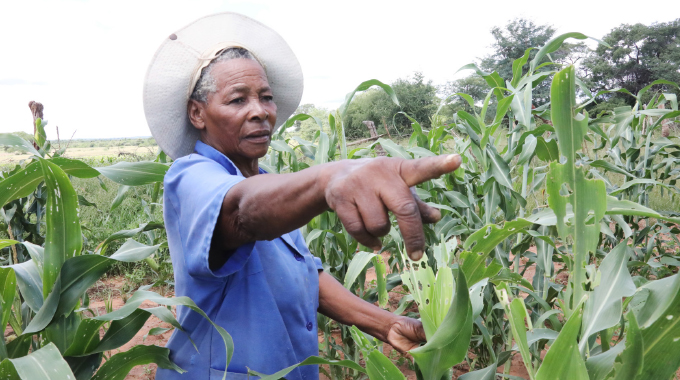
Raymond Jaravaza and Patrick Chitumba, Chronicle Writers
COMMUNAL farmers in Matabeleland North and the Midlands provinces are battling an outbreak of African armyworm and fall armyworm, threatening their crops and national food security.
In response, the Government has intensified efforts to distribute essential chemicals to curb the spread of these destructive pests before they reach other parts of the country.
The African armyworm and fall armyworm, which typically emerge following good rains, can be effectively controlled if farmers detect infestations early and apply appropriate pesticides.
However, delayed intervention can lead to widespread destruction of crops, impacting household food supplies and national agricultural output.
Earlier this week, the Government announced that an outbreak of African armyworm had affected 25 districts across seven provinces, with Matabeleland South remaining one of the few provinces yet to record cases.
Farmers in Umguza District, Matabeleland North have reported severe crop losses, with entire maize fields decimated within days.
l To Page 5
Mrs Siphathisiwe Ngwenya of Village 2 resettlement area in Ward 9, Umguza District, said her one-hectare maize crop is under attack by the fall armyworm.
“I’m battling an outbreak of fall armyworm that started over a week ago, and every day I wake up to find more maize stalks damaged. The pest targets young maize cobs before they mature, at this rate, I will be lucky if I harvest two tonnes of maize this season,” she said.
Like many small-scale farmers, Mrs Ngwenya cannot afford the chemicals needed to control the pests. A snap survey of agro-chemical outlets in Bulawayo showed that pesticides for fall armyworm cost between US$22 and US$25 per hectare when applied using a foliar spraying method. For subsistence farmers, such costs are prohibitive.
Another farmer, Mr Bukhosi Nxumalo, said his half-hectare maize field was completely destroyed by African armyworm within a few days.
“Unlike the fall armyworm, which attacks plants individually, African armyworms move in swarms and can clear an entire field in no time. I first noticed a section of my field under attack last week, and before I could act, the entire maize crop, which was a month old, was gone,” he said.
Agricultural and Rural Development Advisory Services (Ardas) provincial director for Matabeleland North, Mr Mkhunjulelwa Ndlovu, confirmed that the outbreaks are widespread across the province and beyond.
“Outbreaks are prevalent in grazing areas, and we have observed infestations spreading beyond Umguza into other districts. Government is working swiftly to supply affected farmers with pesticides to contain the spread of both African armyworm and fall armyworm,” he said.
Mr Ndlovu urged farmers to consult their local Agritex officers to access Government-supplied chemicals and receive training on proper pesticide application.
“These chemicals can be harmful to livestock if they contaminate water sources, so our officers are monitoring application processes closely to prevent environmental damage,” he said.
Farmers who can afford pesticides are encouraged to purchase them and act swiftly to prevent further losses. However, many believe a coordinated approach is necessary.
“Since our maize fields are close to each other, controlling the pests individually is difficult. We need a collective effort where all farmers in an area spray their fields simultaneously to halt the infestation,” said Mr Mthandazo Nyoni of Ward 11, Umguza District.
The African armyworm’s rapid spread is not unique to Zimbabwe. Neighbouring countries such as South Africa, Namibia, and Botswana are also experiencing outbreaks. The situation is exacerbated by the moth form of the pest, which is carried by strong winds across borders.
Agricultural experts note that the African armyworm originates from regions such as Zambia, Uganda, and Tanzania, where humid conditions enable it to thrive and reproduce rapidly. The moths, characterised by dark brown wings with black spots, can travel long distances, increasing the risk of recurring outbreaks.
“The armyworm’s ability to reproduce quickly means that even small infestations can escalate into large-scale problems if not controlled early. Daily vigilance is critical, as early detection makes control more manageable,” said Dr Mark Ndou, an agricultural expert.
Ardas Midlands provincial director, Ms Busiso Olga Mavankeni, confirmed reports of African armyworm infestations in Chirumhanzu, Zvishavane and Mberengwa districts, with Mberengwa being the hardest hit.
“In Mberengwa, an estimated 307 hectares of cereal crops and over 2 400 hectares of grazing land have been affected. Government has availed pesticides for application in affected areas,” she said.
Ms Mavankeni urged farmers to notify their nearest extension officers immediately upon spotting the pests so that interventions can be made before infestations spiral out of control.
“Above 95 percent of the 307 hectares of affected crops are still at an early vegetative stage, meaning we can still save some of the fields with timely pesticide application,” she said.
Other affected districts across the country include Uzumba-Maramba-Pfungwe, Murehwa, Mudzi, Goromonzi, Shamva, Chipinge, Mutasa, Mutare, Chimanimani, Buhera, Chiredzi, Zaka, Bikita, Gutu, Masvingo, Mwenezi, Hwange, Hurungwe, Mazowe, Guruve, and Zvimba.