admin
admin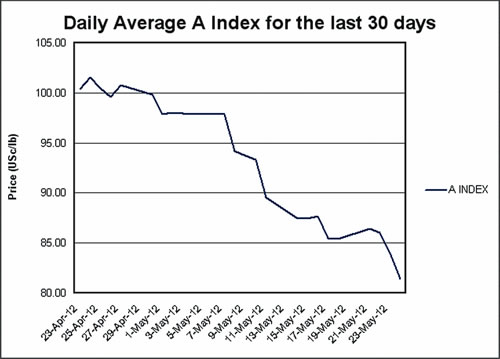
been in constant freefall since 23 April, thereby making it difficult for ginners and farmers to come up with any meaningful price levels. Why is there no agreement between ginners and farmers on cotton pricing
The cotton sector has been a victim of a massive correction in the pricing of seed cotton as evidenced by the drop from a 200-year price high in the world price of cotton of 243c/lb to the current level of 81c/lb on the spot market and 70c/lb on the futures market.
The world price of cotton has continued to drop since 23 April and is projected to reach the 30-year average of 69c/lb before stabilising. This correction has been triggered by excessive production on the back of very high producer prices in the last cotton season and subdued consumption by textile mills.
Practically this means that whereas farmers received prices averaging 91c/kg in the prior season, this year’s minimum prices are likely to be at substantially lower levels. Whilst relevant stakeholders were warned of this development in time, there has been a practical challenge in terms of clearly communicating the adverse implications of this situation to farmers on the ground.
The continued decline in world lint price since the commencement of discussions between ginners and farmers has also created a moving target that makes price setting a huge challenge. There is, however, commitment on the part of both parties to resolve the matter without further delay.
What is a normal seed cotton producer price
Seed cotton producer price averaged 32c/kg in the 2009 buying season and 37c/kg in the 2010 buying season. From the above it is clear that the 91c/kg producer paid in 2011 was clearly very anomalous and this was due to the anomalous conditions that prevailed on the world lint market in 2011.
The attached graphs show the huge correction that has occurred and still continues to occur in the world cotton price. What would happen if new buyers were brought in to buy the crop
Levels of production in the cotton sector had sunk to all time lows prior to the enactment of a regulatory framework for cotton marketing. The entry of new buyers who have not funded the crop will destroy the existing contract growing schemes founded on Statutory instrument 142 of 2009 as amended in Statutory instrument 63 of 2011. The amendments in SI 63 have addressed concerns raised from both the ginner and farmer perspectives.
The enactment of legislation to protect farmers and ginners has had the following beneficial effects:
- Increased confidence amongst stakeholders in the cotton value chain.
- Debt recoveries by merchants have improved from an average of 50 percent to levels of 88 percent.
- Cotton quality is on the path to recovery due to the requirement for seed cotton grading.
- Cotton production has increased from 207kt in 2009 to the current levels of 280kt due to contracting of more farmers and the increase in the levels of inputs support. Levels of inputs support have increased from US$13,2million in 2009 to US$42million in 2011.
- Increased levels of support from the banking sector for cotton production.
What is the way forward
Urgent dialogue needs to be pursued at the highest levels to curtail further quality losses as well as price related losses with the current price freefall in the market. There is also need to maintain order in all cotton producing areas for the protection of farmers and ginners.



 Online Reporter