admin
adminIn addition to their challenged personal efforts, they require some external assistance to control stress.
A strong network of supportive friends and extended family members is an enormous buffer against life stresses.
Family members are used to access services from family psychologists, sociologists, marriage counsellors, lawyers, hunters and herbalists.
This implies that the extended family serves as an important set up used to provide free of charge services such as counselling, dispute resolution, sharing ideas and family gene protection (using totems) diseases which the extended family is known by most family members.
This also enables family members to assess herbs easily because the family has been subjected to these diseases for a long time.
This mitigated family stress levels in the event of such occurrence because the solutions were housed in the extended family.
It was also easier to counsel family members in the event that members contracted disease such as cancer if such diseases were common in the family.
Another important contribution of extended family was sharing of burdens.
In farming set up, there were shared harvesting days (nhimbe) where the community would assist a farmer in harvesting produce (kukohwa nekupura), in particular millet, sorghum, and rapoko.
This reduced the stress related to harvesting. In addition to assist in harvesting, these were fun days where people would network and interact in a productive, though carnival atmosphere.
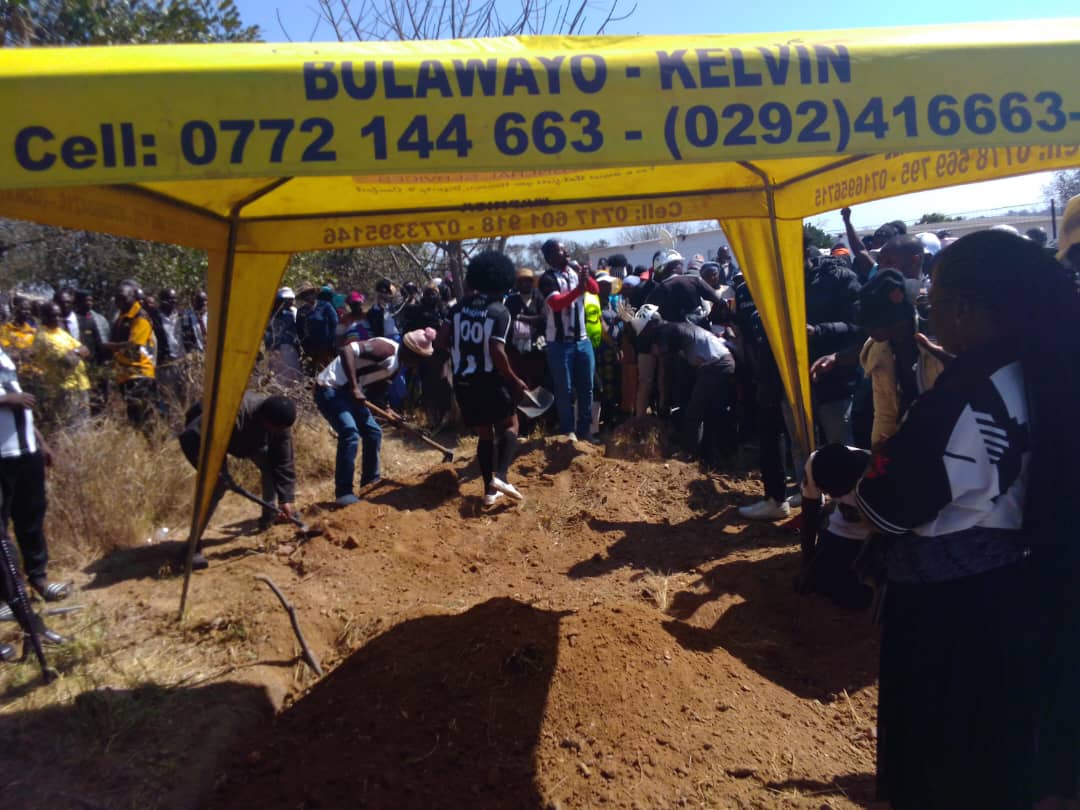
In times of bereavement the extended family used to gather for a couple of days to comfort the family, which would have lost their dear member.
In addition, the extended family shared the burden of providing for the mourners.
Then the wealthy were very visible which made it relatively easier to ask for help.
Wealth then was in form of cattle. On the contrary, it is now difficult to coerce extended family members to support other family members because money is less visible.
Some members share their monetary resources but some do not.
Visibility of barter related assets forced an individual to share while money is easier to conceal.
The introduction of burial societies and savings clubs was a way to encourage communities to share burdens though most of them collapsed under the weight of inflation.
This left many city dwellers vulnerable to burdens and this inevitably increases stress levels among people.
Sad to mention, the extended family unit is fast collapsing. Our sons and daughters hardly know our own blood brothers and sisters.
Our daughters and sons are getting into complicated arrangements such as marriage without getting counselling from the extended family.
No wonder why marriages are collapsing left, right and centre. Some even leading to high stress levels and death.
Everyone is now compartmentalised. Most of us are caught in between cultures that we don’t quite understand.
The newly imported way of life is based on the belief, each man for himself and God for us all.
Selfishness (in the name of pursuing business interests) is a thorn in the flesh of extended family.
No one thinks beyond his or her family. Many people now live like islands in an ocean not realising that the more lonely and isolated you are the greater your vulnerability to stress becomes.
A lot of people don’t realise that people who live in forests are less susceptible to high stress levels than those who live in semi-desert conditions.
The simple explanation could be that the natural environment (i.e. trees and fauna) has simple and natural therapeutic effect.
We are therefore encouraged to appreciate and accentuate the environment where we are.
We need to conserve what is good so that we continue to enjoy and experience of the environment.
Zimbabwe is known for having the best climatic conditions in the world. It’s neither too cold nor hot. This will never be permanent if people at their individual level fail to take the responsibility of conserving them.
In Zimbabwe, we have trees and features which we can continually use for recreation and stress reduction purposes.
To illustrate this point think about the fast disappearance of sleigh in our sporting calendar.
The trees (nhanzwa) which are used for sleigh are also fast disappearing though the granitic rock formation is still present.
Have you ever wondered how these games which originated from Africa have never been documented nor commercialised.
Most of the PC games, internet games are either Chinese or European and nothing African about them.
A deep sense of nostalgia engulfed me when I visited my rural home on Africa day this year.
A lot of devastating changes have occurred over the past 30 years.
Major stress relievers such as Pada, Nhodo, Tsoro, Ota, Play button, Chitsvare have literary disappeared.
Who is going to teach our children about our beautiful heritage if it is fast disappearing without anyone noticing it?
The rivers where we use to go to for fishing no longer exist due to siltation. Again this is caused by human neglect.
Where are our children going to fish if we cannot look after our own rivers and natural resources?
How is bad stress going to be militated against if we continually destroy the environment and the games that we play in that environment?
Ladies and gentleman we can safely be branded as “thieves”.
In our small ways we have contributed immensely in stealing from the future generations.
We are in a way working towards fast trekking the aging process of our future children.
You can imagine the amount of loss that our children and grandchildren will be subjected to in the next 30 years.
The bible says: “A good man leaveth an inheritance to his children’s children” (Proverbs 13v22).
In some Shona bible versions it is literary translated as: “murume benzi haasiiri vana nevazukuru vake nhaka.”
Over the past few years I have witnessed a systematic wanton destruction of the environment and the games played in that environment by each one of us.
We are denying our children this cultural heritage.
We are systematically working against passing on our cultural inheritance to our children and thus depriving future generations of natural stress relievers and beauty.
My experience in the hunting industry demonstrated that extremely wealthy people from the East and West are interested in our wilderness and certainly not our urban settings (except the airports).
They spend thousands of dollars to enjoy our therapeutic environment.
The writer is a managing consultant at CLC Training International.



 Online Reporter