

 admin
admin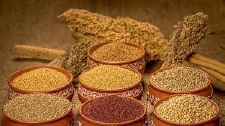
Ashton Mutyavaviri
IN a move that echoes Government’s growing calls for farmers to grow traditional grains and climate-proof their operations, the Food and Agriculture Organisation (FAO) has urged smallholder farmers to tap into millets’ high resilience to drought and upscale
In a recent X (formerly twitter) post, FAO urged smallholder farmers to embrace millets as a sustainable and nutritious choice for enhancing food security and fight hunger thereby contributing to food security and nutrition as they can grow in dry, hot or cold conditions.
“Greater consumption of millets can offer opportunities to smallholder farmers to improve their livelihoods and high trade can improve the diversity of global systems,” explained in the post.
In the post, FAO indicated that proper handling of millets was key to maintain their high quality and nutritional benefits.
Cultivating millets would help protect soil health, prevent erosion and restore land, FAO explained
“Millets are tolerant to harsh conditions. Innovation in the millet production and processing can expand markets and improve livelihoods, including those of women and youth,” FAO added.
The post also highlighted that millets accounted for less than three percent of the global grains trade.
Government recently announced compulsory traditional grain production in agro-ecological regions 4 and 5, as it outlined guidelines for Pfumvudza/Intwasa programme in the 2023/24 agriculture production season to counteract the forecast dry spell.
The need to plant drought-resistant traditional grains is meant to ensure adequate staple grain production in view of the forecast El Nino weather pattern.
Government has always urged farmers in arid areas to opt for traditional cereals, as they exhibit greater drought resilience than maize.
Farmers were also encouraged to diversify their cropping systems by cultivating locally adapted drought-tolerant and nutrient-dense crops such as sorghum, sweet potatoes, cowpeas and Bambara groundnuts.
Farmers in region 4 should prepare two mandatory plots for small grains, which should be either sorghum or millets and one obligatory sunflower plot.
Knowledge and Transfer Africa (KTA) chief executive Dr Charles Dhewa said Zimbabwe’s mass markets were witnessing a notable increase in demand for traditional seeds as farmers strived to ensure food security amid unpredictable weather patterns.
Dr Dhewa added that there was an increase in the purchase of traditional grain seeds as people across the country sought to ensure food security in view of climate change, which requires farmers to believe in traditional grain crops’ capacity to withstand drought.
Traditional seed varieties have adapted over generations to local climatic conditions, making them more resilient to droughts, pests and diseases that are prevalent in the region.
Zimbabwe Commercial Farmers Union (ZCFU) president Dr Shadreck Makombe concurred that farmers were diversifying to traditional crops because of their high demand on the market and the awareness campaigns being carried out on the importance of healthy foods.
“More people are now health-conscious with some restaurants even serving traditional food. Long back, demand for traditional food was low as the food was perceived to be for the poor. Now the affluent are the ones who demand traditional food and this has increased the crops’ demand and value on the market,” he said.



 Peter Tanyanyiwa
 Online Reporter