

 admin
admin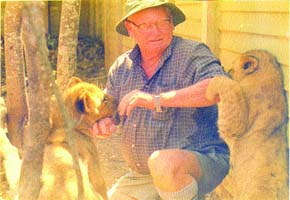
True to his words, his understanding of wildlife is proof to the legacy he left behind, one of the largest animal wildlife orphanages and sanctuaries in the country. Back then when I had visited his Waterford home in Bulawayo for an exclusive interview, he was in his research laboratory in the company of two lion cubs.
He seemed quite relaxed in the company of his feline friends. Outside his house different species of wildlife and birds were also relaxed, even the more infamous mongoose was friendly.
The founder of world-acclaimed Chipangali Wildlife Orphanage, Mr Wilson, a mammalogist and wildlife expert died quietly at his home a week ago, succumbing to renal failure.
He was 79.
I personally knew Mr Wilson as a passionate man who never discriminated against people on whatever basis. He was instrumental in the shaping up of my environmental journalism career and I owe much of my success to him.
He would constantly call me and remind me that many journalists preffered to write about people and not about animals and trees. I told him there was nothing much to write about animals, but he assured me that I should take my time with them and learn their habits. I started visiting his orphanage learning about different animals and reading about them.
What followed was an obsession with animals. I found myself writing about trees, ants, bees and all sorts of wildlife. Different people also started bringing in injured animals and birds to me. I would call Mr Wilson who would pick them up for treatment.
“You have finally become the voice of these animals. They will respect you,” were his last words to me two years ago. Since then I have been visiting the orphanage checking on the new arrivals, while Mr Wilson devoted his energy on research at his home.
His death has robbed the wildlife and conservation community as his wealth of experience spanning more than 50 years has helped in the improvement of conservation efforts as well as the enhancement of lion and leopard populations in the country. The populations of these animals had seriously declined over the past 10 years.
Mr Wilson hated the suffering and indiscriminate slaughter of wild animals. This led to his founding of Chipangali Wildlife Orphanage which is situated 23 kilometres out of Bulawayo on the Masvingo Road in 1973. Since then he devoted his life to the conservation and tendering of sick and orphaned wild animals of different species.
Mr Wilson was never deterred by the countless snake bites or the fevers like malaria that come with constant contact with animals, all because he cared for them. His right index finger was snapped off by a lion he was trying to feed some years ago.
Despite some of the negative stories that were published about his orphanage, he continued to talk passionately about the conservation of wildlife resources and advocated for indigenous people to also benefit from them.
“White people made money in the wildlife industry as well, now it is the indigenous people’s turn. I still believe this country will make money from wildlife. Everyone including politicians have realised that,” said Mr Wilson in one of my interviews with him.
It is almost 10 years since he said these words and wildlife resources remain an issue as some whites are still holding on to the most lucrative conservancies.
Mr Wilson was a former industrial laboratory technician at the African Explosives and Chemical Industries in Natal, South Africa.
In 1954 he set aside the test tube to pursue his calling, that of tendering for wildlife. He first worked in the Luangwa Valley in Zambia as a game ranger.
During his stay there he tended wild animals that were brought in for treatment.
Luangwa is one of the largest wildlife sanctuaries in Africa. It has spectacular riverine scenery with abundant game such as elephants, leopard, lion, buffalo, cheetah and more than 400 species of birds. It was in this park that Mr Wilson honed his wildlife management skills.
The plight of the sick and injured animals touched him, hence the idea of starting the orphanage in 1973. He came to Bulawayo from Zambia and joined the Bulawayo Museum as a curator of mammals and was later promoted to the post of director.
Looking after orphaned animals took his time and eventually he had to make a choice between the museum job and the orphanage. He resigned from the museum so that he could devote most of his time to the orphanage.
He started a running a local television series Orphans of the Wild, which helped him raise money to run the orphanage.
Mr Wilson was instrumental in the rhino breeding programme where he helped the Zimbabwe Parks and Wildlife Management Authority. He also took part in the leopard and cheetah capture and relocation project that was carried in the Matopos National Parks.
The programme saw the release of dozens the spotted cats into Hwange National Park. He also studied the biodiversity of the park and produced a comprehensive and detailed report on the feeding habits of the dassie, leopard and other species.
His love for wildlife saw him travel to more than 30 African countries where he carried out research on different animal species in their habitats.
He was also involved in the Duiker Project which saw him publishing an 800-page book about the species in Africa.
Mr Wilson authored and co-authored more than 80 books, periodicals and research papers on different mammals of Southern Africa, and wildlife and forest conservation from 1962 until the time of his death.
He received more than 20 honours and recognitions for his conservation efforts in Zimbabwe and Africa.
May the Wilson family continue with the good work that Mr Wilson started and may his dear soul rest in peace.


 Online Reporter