Chronicle Editor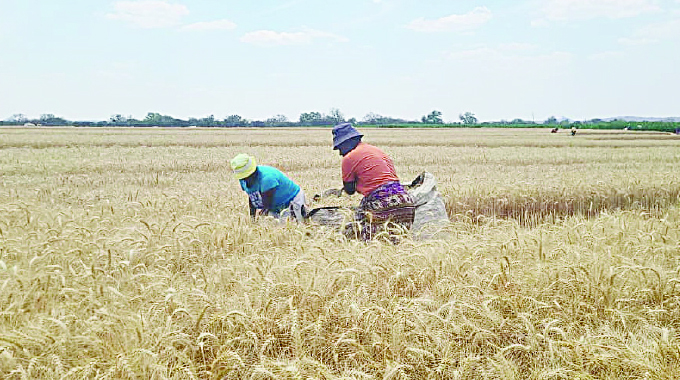
Sikhulekelani Moyo, [email protected]
ZIMBABWE has harvested about 153 000 tonnes of wheat so far from 30 000 hectares out of 121 000ha planted this year, according to Government.
The country has ramped up winter wheat production in recent years and this year expects to produce over 600 000 tonnes against a national consumption of 360 000 tonnes.
About 468 000 tonnes were harvested last year, the highest ever recorded since wheat production started in the country in 1966.
The jump in wheat production is a milestone achievement for Zimbabwe and buttresses the Agriculture and Food Systems Transformation Strategy, the Agriculture Recovery Plan and the National Development Strategy, which build the momentum towards an empowered and prosperous upper middle-income society by 2030.
Various measures including collaboration with private sector players have been implemented to ensure that the country meets its target, including the provision of adequate electricity and water.
In an interview on the sidelines of the ongoing three-day strategic planning and review workshop in Bulawayo, Lands, Agriculture, Fisheries, Water and Rural Development permanent secretary, Professor Obert Jiri, said the ministry targets completion of harvesting in the next two weeks.
“We are continuing with the wheat harvesting and it is the main headache that we are having now,” said Prof Jiri.
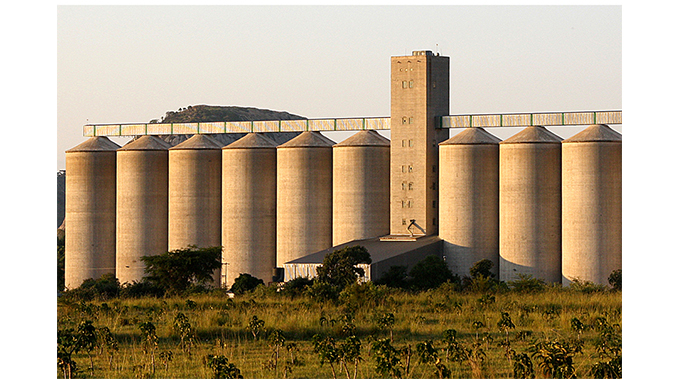
He said nearly half of the 153 000 tonnes of wheat so far harvested have been delivered to the Grain Marketing Board (GMB).
“We expect to complete harvesting in two weeks’ time and we are appealing to farmers to ensure all the wheat is harvested before the onset of the rains,” said Prof Jiri.
He said the yields were again good this year as farmers were harvesting between 5,2 and six tonnes per hectare.
“We are appealing to those with combine harvesters to prioritise wheat harvesting across the country so that we are able to remove the crop from the fields before the rains,” said Prof Jiri.
Earlier in his remarks at the strategic planning and review workshop, Prof Jiri applauded stakeholders for showing determination to deal with El Nino-induced droughts by coming up with the 17-point plan, which includes wheat-based food security strategy, designation of Agricultural and Rural Development Authority (Arda) as the national food security agent and the drought mitigation and resilience building measures among other initiatives.
He said plans for the 2025 financial year were underway and stakeholders should not lose track of the nation’s overarching vision of becoming an upper-middle-income society by 2030.
“It is only through collaborative stakeholder engagements through platforms like these that we can collectively contribute to the ministry’s and national vision,” said Prof Jiri.
“Every stakeholder is of critical importance in our planning process as this helps us to achieve the ultimate goal of ‘Food Security Everywhere, Everyday’.
“As we conclude the fiscal year 2024 and prepare to enter 2025, it is crucial that we identify and emphasise key focus areas that will guide our efforts throughout the year,” said Prof Jiri. — @SikhulekelaniM1.



 Online Reporter