admin
admin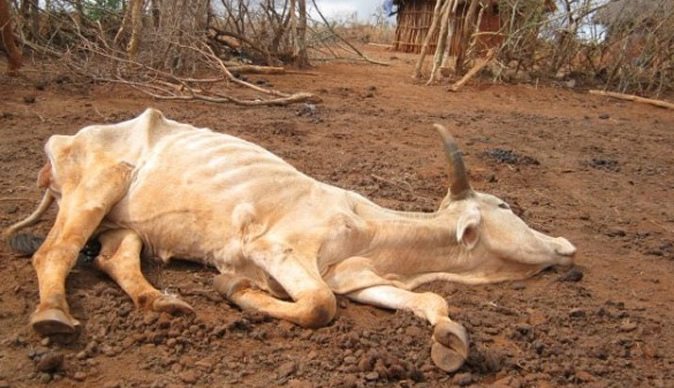
Yoliswa Dube, Features Reporter
All hope evaporates each time the Zimbabwe farmer looks up the sky in anticipation of rains.
A look up the heavens breeds despair and anguish.
On many occasions, the communal farmer watches the pregnant clouds turn blue without delivering the rains.
The barren skies are clear blue in most parts of the country, it’s another “write-off” season for the communal farmer.
Tonnes of seed maize and other seed varieties were planted only for them to be burnt by the scorching heat that has turned the soils into “furnaces”.
Unlike farmers of yesteryear who could easily predict when it would rain by simply looking at the sky, today’s communal farmer has to rely mostly on blind faith. That is the predicament of today’s farmer who relies mainly on rain-fed agriculture.
Pregnant skies never failed the farmer back then. Rains would fall, and the yesterday farmer could plan ahead and most of the time realised bumper harvests.
Rainfall patterns were consistent and it was easy for most to plan their agricultural activities.
Today’s farmer finds it difficult to plan.
The advent of climate change has made things worse for the farmer who has to contend with a series of failed cropping seasons.
Drought is slowly creeping in with most farmers in remote areas who rely on rain-fed subsistence farming starting to feel the pinch.
It spells doom for many households who have over the years entirely relied on farming as a source of income and food.
Drought is an extended period of months or years, in which precipitation is less than the annual average, resulting in water scarcity.
Reduced yields and death of livestock are the immediate economic impact of drought.
“We started planting at the start of the farming season but as you can see, it has just been a waste of time, money and energy. The little we invested has gone down the drain after we received inadequate rains,” said Una Ndebele, who practices urban farming.
Unlike previous seasons when her family used to have enough food, things have become tough owing to the change in rainfall patterns.
“From my small piece of land, I could get maize to eat and eventually dry some to take to the grinding mill. I knew I could get mealie-meal to last me a while and my children would never go hungry,” said Ndebele.
Since she can no longer supplement food in the house with agricultural produce, Ndebele, who is a domestic worker in one of the eastern suburbs in the city, has to work extra hard to feed and educate her three children.
“I now have to do extra work over the weekends so that I can get more money. The $20 I get from the extra work I do is not enough as I have to also send money to my relatives in the rural areas who are also looking up to me for food,” said the widow.
Climate change demands a change in farming methods and crop choice, if farmers are to put food on the table and send their children to school.
Also referred to as global warming, climate change refers to the rise in average surface temperatures.
Agriculture and soil science expert, Professor Sheunesu Mpepereki, said the 2015/16 cropping season has proved a real challenge for farmers because of the erratic rains.
“Our state of preparedness as farmers and as the agricultural industry in Zimbabwe for a drought situation has been severely tested. In most cases, it has been found to be woefully inadequate. The common denominator is human factor challenges,” said Prof Mpepereki.
He said the first human factor challenge is often the slow progress in the processing of the application to obtain agricultural finance.
“Bank officials often take time to approve loans. They have little or no appreciation of the need to timely release the required cash. Late disbursement equals late planting which equals reduced yields with negative implications for loan repayment,” he said.
To improve agricultural productivity, Prof Mpepereki said, Zimbabwe needs to invest in developing the human factor dimension of its production systems through appropriate practical skills training, mentoring and tutelage.
“We need less theory and more practice at universities, colleges and schools,” he said.
An overwhelming scientific consensus maintains that climate change is due primarily to the human use of fossil fuels, which releases carbon dioxide and other greenhouse gases into the air.
The gases trap heat within the atmosphere, which can have a range of effects on ecosystems, including rising sea levels, severe weather events, and droughts that render landscapes more susceptible to wildfires.
The environmental impacts such as increases in average atmospheric temperature, pasture-forest degradation, deteriorated water quality, damage to fish habitat-wild life, and groundwater depletion are also problems faced by farmers due to the change in climatic conditions.
“What we need to clarify first is that this season is not affected by climate change alone, there’s also the El Nino phenomenon,” said Zimbabwe Farmers Union executive director Paul Zakaria.
He said as a result of climate change, the rainfall season has become shorter and temperatures have gone more than two degrees higher.
“Now, when rain falls, it easily evaporates so it means there’s less and less water. What we need is investment in irrigation and water harvesting through construction of dams,” said Zakaria.
The ordinary farmer, he said, cannot do this.
“This is what government, private sector and donors should be doing. We need to make sure we harvest that water for irrigation.”
Zakaria said with irrigation, seasonal cropping will end. Farming will take place all year round resulting in a surplus.
El Niño is a climate cycle in the Pacific Ocean with a global impact on weather patterns.
The cycle begins when warm water in the western tropical Pacific Ocean shifts eastward along the equator toward the coast of South America. Normally, this warm water pools near Indonesia and the Philippines. During an El Niño, the Pacific’s warmest surface waters sit offshore of northwestern South America.
Forecasters declare an official El Niño when they see both ocean temperatures and rainfall from storms veer to the east.
According to the International Research Institute (IRI), El Nino conditions are forecasted to prevail throughout the summer season that is from October to March.
The Meteorological Services Department said Region 1, which constitutes the northern and eastern parts of the country, will experience mostly below normal rainfall.
On the other hand Region 2 and 3, mostly the western and southern parts of the country are expected to have mostly normal rainfall with a bias towards below normal rainfall.
For the other half of the season, January-March 2016, Region 1, has a high likelihood of experiencing mostly normal rainfall with a bias towards above normal rainfall while Region 2 and 3 are expected to maintain mostly normal rainfall with a bias towards below normal rainfall.
“El Nino is forecast to remain above 90 percent throughout the forecast period which ends officially in March. We’re still expecting rainfall activity from time to time up to the end of the season; however the accumulated rainfall is expected to be in the normal category with a bias towards below normal in most parts of the country. The least rainfall is expected over the southern provinces of the country,” said the MSD in a statement.
During this time, experts believe, it would be prudent to harvest water that will be used for irrigation purposes and do away with rain-fed agriculture.



 Online Reporter